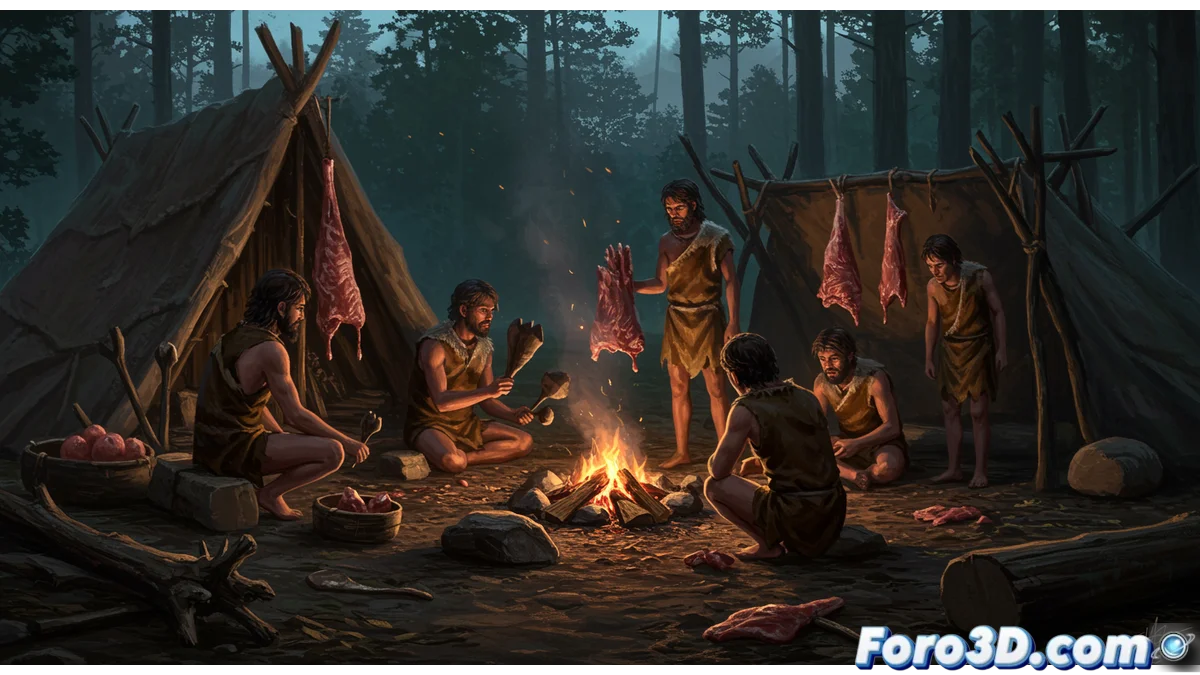
Hunter-Gatherer Groups Are Not as Egalitarian as Believed
A recent study challenges a long-held belief in anthropology and popular imagination: that hunter-gatherer societies represent models of pure social equality. The analysis of data from numerous contemporary groups reveals a much more complex and less idyllic picture. 🧐
Hierarchy Manifests in Access to Resources
The research shows that, in many of these communities, certain individuals or families control more resources, such as food or valuable tools. This control allows them to exert disproportionate influence over decisions affecting the group. Inequality, though not always extreme, is an observable fact and often passed down through generations, undermining the notion of absolute egalitarianism based on data.
Key Evidence of Inequality:- Differential control of essential goods like food and tools.
- Unequal influence in collective decision-making processes.
- Intergenerational transmission of advantages or status within the group.
The idea of absolute egalitarianism is based more on idealization than on empirical data.
The Concept of Equality Needs Nuance
Researchers argue that the term "egalitarianism" in this context does not describe a total absence of hierarchy. Instead, it refers to social systems that limit coercive power and encourage sharing. However, even within these parameters, status differences persist based on individual skills, gender, family lineage, or age.
Factors Generating Social Distinction:- Outstanding skills in hunting, healing, or leadership.
- Gender, which can define roles and access to certain resources.
- Family lineage, which grants prestige or rights.
Revisiting the Prehistoric "Egalitarian Paradise"
These findings suggest that human social structures are inherently complex and diverse, even in small nomadic communities. The next time someone evokes the egalitarian paradise of prehistory, it will be useful to remember that the tendency to establish distinctions and hierarchies appears to be a deep constant in the human experience, much older than the romantic view led us to believe. 🦣