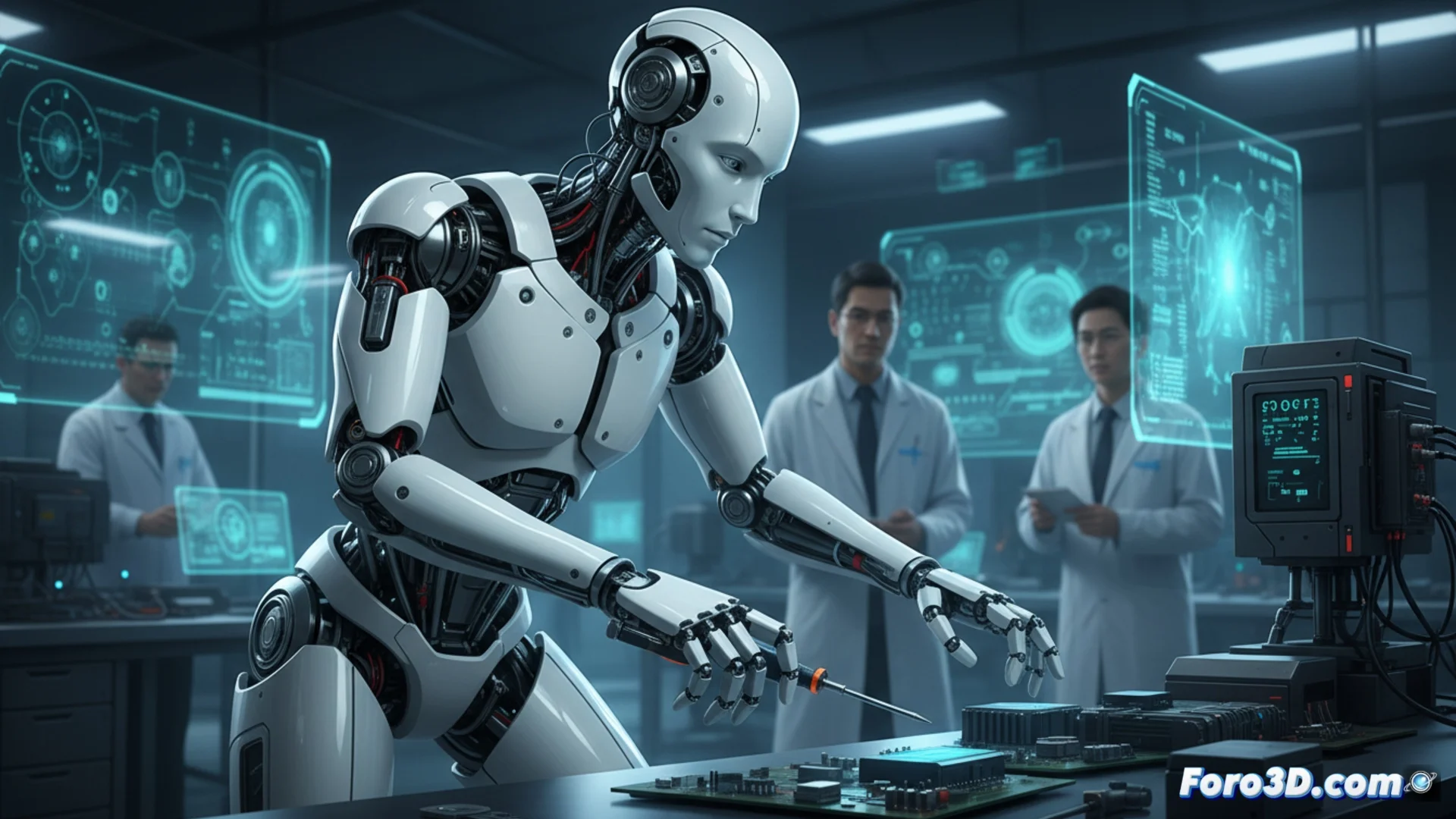
Humanoid Robotics Advances to Transform Industry and the Home
The field of humanoid robots is expanding significantly, with the clear goal of replacing workers in manufacturing processes and, in the future, providing support in household tasks. This technological evolution unleashes competition among various companies to develop models with superior capabilities. 🤖
Evaluating the Current Performance of Androids
Statements from companies like UBTech Robotics offer a realistic view. They acknowledge that their most advanced creations only achieve between 30% and 50% of the efficiency of a human operator. This data highlights a notable technical advance, which requires processing environmental information, planning trajectories, and executing actions autonomously. However, it also reveals persistent limitations.
Areas that need improvement:- Dexterity to manipulate small and delicate objects.
- Ability to make decisions in complex and undefined scenarios.
- Quick adaptation to unexpected events or changes in the environment.
For now, a humanoid robot would probably take longer to prepare a coffee than to spill it on the computer.
Obstacles to Full Integration
For these systems to be fully incorporated into industrial plants and later into homes, engineers must overcome several challenges. The path is not just about copying the human form, but about replicating the versatility and judgment of human intellect and hands.
Key challenges to resolve:- Perfecting sensory perception systems and artificial intelligence to understand contexts and everyday language commands.
- Creating more durable hardware that consumes less energy and has an accessible cost.
- Achieving machines that operate with the necessary fluidity and safety in spaces shared with people.
Future Outlook
Although they promise to free society from repetitive tasks, the journey ahead is long. The declared efficiency percentage serves as a reminder that technology must evolve a great deal to match human skill. The race continues, driven by the ultimate goal of creating truly competent robotic assistants. ⚙️