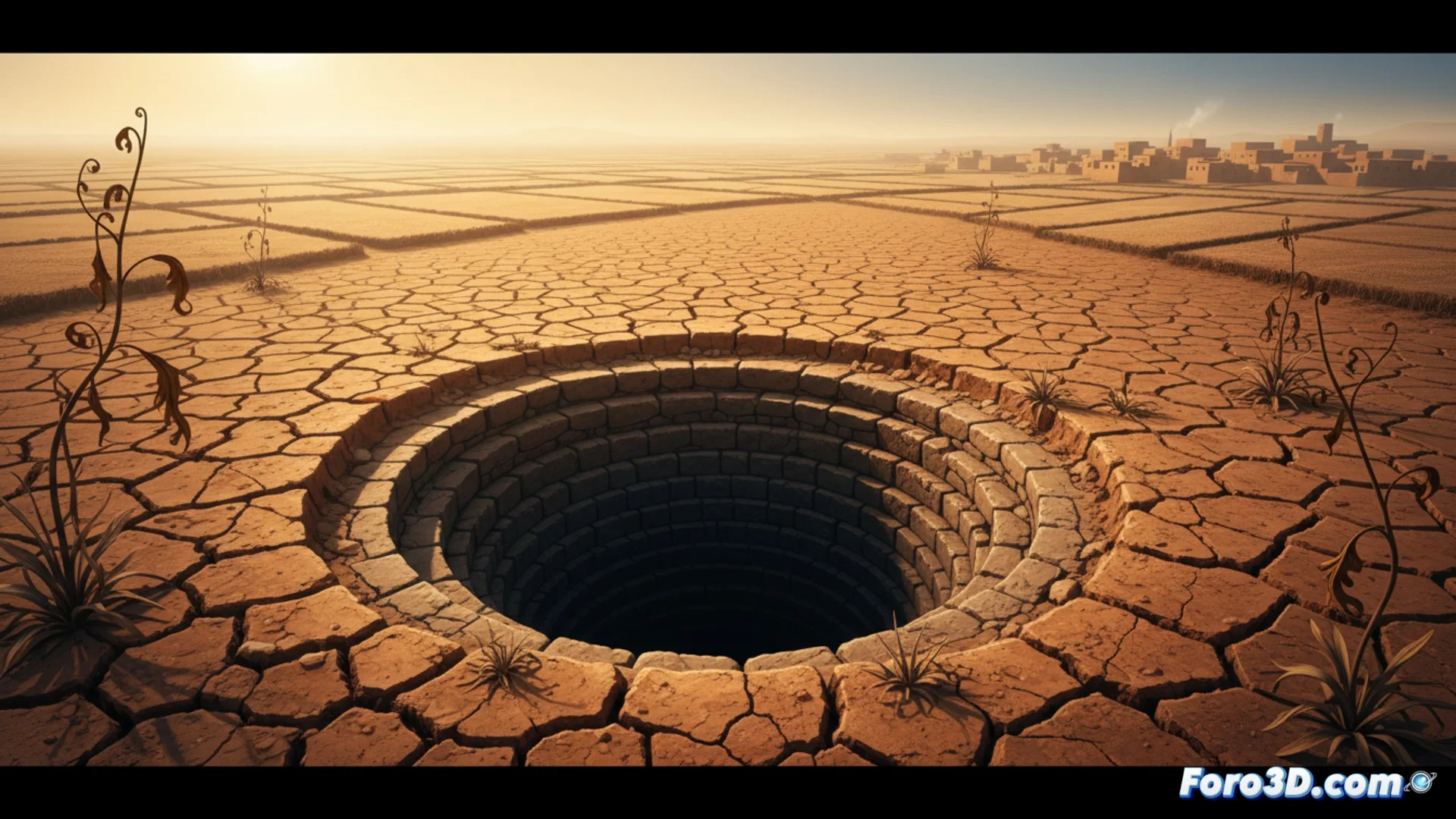
Humanity is depleting the planet's aquifers at an unsustainable rate
A new analysis indicates that we are consuming water stored underground much faster than nature can replenish it. The global demand for fresh water far exceeds the rate at which these hidden reserves recharge. This imbalance endangers essential crops and social peace in various areas, as agricultural irrigation systems deeply depend on these non-renewable sources. Current data suggest that, without changing how we manage water, numerous major underground deposits could dry up in the coming years. 💧
Overexploitation dries up underground reserves
Information obtained from satellites, such as those from NASA's GRACE mission, confirms a massive loss of liquid in the subsoil. Nations like India, the United States, and Saudi Arabia lead in extraction. Agricultural producers drill deeper wells to supply their fields, causing the water table to drop faster. This phenomenon not only leaves wells dry but can also cause the land to collapse and seawater to salinize aquifers near the coast. 🌍
Main consequences of over-extraction:- Accelerated decline in underground water levels.
- Risk of subsidence or land sinking.
- Contamination of fresh water reserves with saltwater in coastal areas.
Managing water as if it were an infinite savings account, without ever checking the balance, is a strategy doomed to failure.
It is imperative to transform water management
Experts demand the implementation of urgent measures that promote more efficient water use, especially in the agricultural sector. This involves incorporating precision irrigation techniques, choosing to plant species that require less liquid, and treating and reusing wastewater. It is also essential to better monitor underground reserves to know exactly how much remains and the rate at which it is being consumed. Without a coordinated global response, the struggle for this indispensable resource could fuel tensions and population displacements. ⚠️
Key actions for sustainable management:- Adopt precision irrigation systems to reduce waste.
- Shift crop types to varieties that demand less water.
- Invest in infrastructure to treat and reuse gray and wastewater.
A future that depends on present decisions
The current situation demands an immediate change of course. Continuing to extract groundwater without control is equivalent to depleting a natural capital on which millions of people depend for food and livelihood. The stability of entire regions is linked to the health of these aquifers. Implementing the technical and policy solutions already available is the only way to avoid a water crisis of global proportions in the near future. 🌱