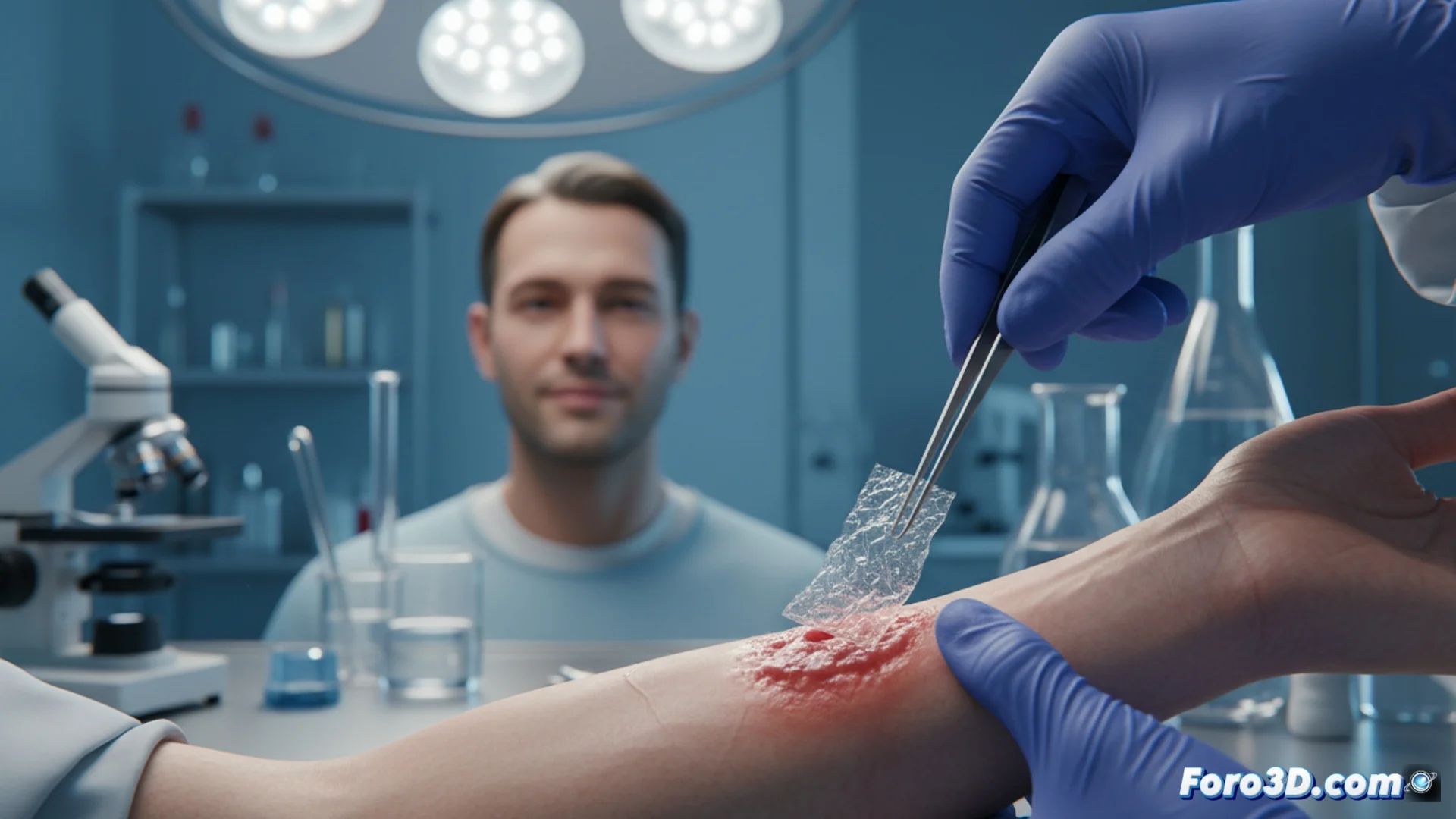
The Human Placenta Transforms into a Dressing to Regenerate Skin
A group of researchers has found a new use for an organ that is normally discarded after birth. They have managed to process the human placenta to convert it into a material that can help skin repair more effectively and with better aesthetic results. This advance leverages the natural potential of this tissue 🩹.
From Medical Waste to Therapeutic Resource
The method, developed at Tel Aviv University, consists of cleaning and dehydrating the placental tissue. This special process preserves the key bioactive molecules it contains. The result is thin, manageable sheets that can be stored without refrigeration. When placed over an injury, these strips act as an active biological dressing.
Mechanism of action:- The strips release growth factors and proteins in a controlled manner.
- These substances modulate the inflammatory response, preventing it from being excessive.
- They guide skin cells to rebuild in an orderly manner, preventing the formation of thick, fibrous scar tissue.
This approach turns the first biological 'home' into a tool to repair the second: our skin.
Encouraging Results in Preclinical Studies
Tests conducted on animal models with skin damage have yielded very positive data. The use of these placental strips accelerates wound closure significantly. But the most notable aspect is the quality of the new tissue generated.
Characteristics of regenerated skin:- It has a greater number of hair follicles and sebaceous glands.
- The collagen network that forms is better organized, mimicking the structure of healthy skin.
- The final appearance closely resembles the original skin, with minimal and less visible scarring.
A Promising Future for Complex Wounds
This discovery offers a viable alternative to the synthetic dressings currently in use. Due to its properties, this biological material could be very useful for treating severe burns, non-healing ulcers in diabetic patients, and wounds resulting from surgeries. It represents an important step in the search for therapies that not only close a wound but truly restore the functionality and appearance of the skin 🔬.