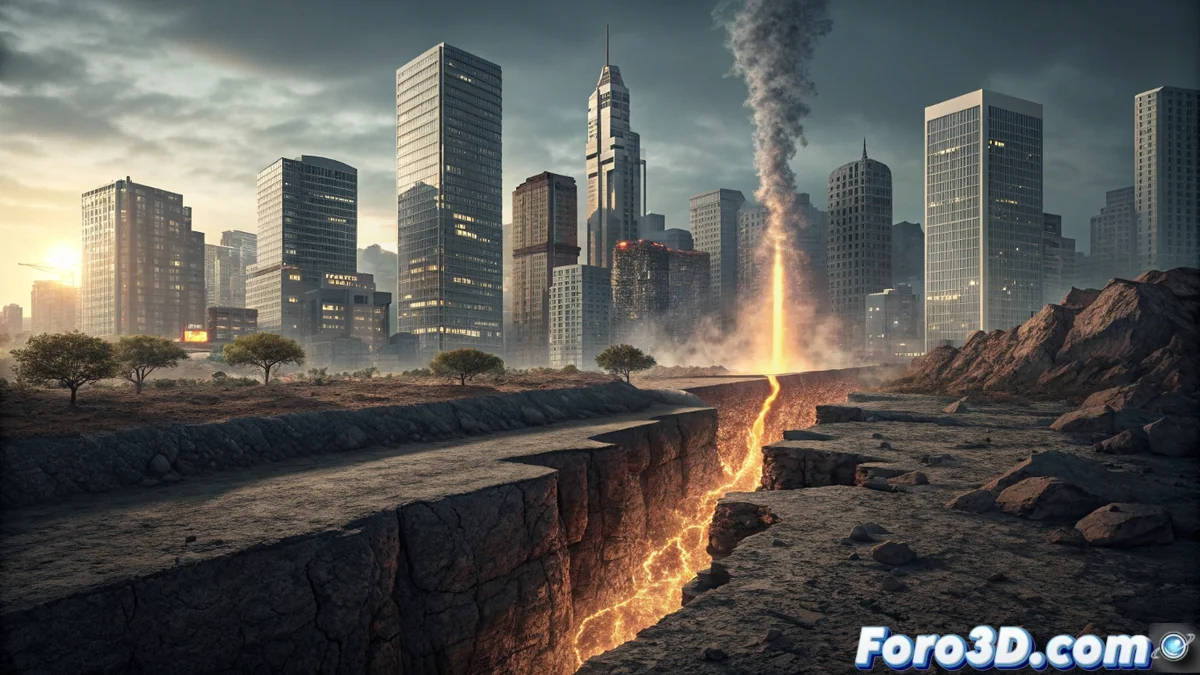
Human-Induced Earthquakes in Geologically Stable Regions
In an increasingly documented phenomenon, human industrial intervention is triggering seismic activity in areas where the earth used to remain calm. Processes such as massive fluid injection or intensive extraction of subsurface resources are altering millennial pressures, releasing accumulated energies in hidden fractures and rewriting seismic risk maps 🌍.
Mechanisms Behind Induced Seismicity
These anthropogenic tremors are not random; they are a direct consequence of altered pressure in deep geological systems. Operations such as hydraulic fracturing for gas or the disposal of injected wastewater act as a trigger, lubricating and mobilizing faults that had remained inactive for centuries, connecting them to deeper stress networks.
Main Triggering Activities:- Fluid Injection: For waste disposal or enhanced oil recovery, increasing pore pressure in rocks.
- Large-Scale Extraction: The removal of massive volumes of oil, gas, or mineral water alters crustal stress equilibrium.
- Geological Storage: Projects like CO2 sequestration or gas storage, which modify subsurface conditions.
The Earth responds to our intrusion: every deep drilling can be an invitation to dormant geological forces, which arrive with an unpredictable entourage of vibrations.
Impact and Challenges for Society
The consequences transcend the geological. Communities that never planned for seismic risk now face recurrent tremors. This generates constant uncertainty about the integrity of dams, power plants, bridges, and homes, forcing costly reevaluation of building codes and emergency plans.
Critical Mitigation Measures:- Real-Time Seismic Monitoring: Implementation of dense seismograph networks around sensitive industrial projects.
- Predictive Modeling: Use of advanced geotechnical software to simulate subsurface response to different operations.
- Response Protocols: Establishment of vibration thresholds that, if exceeded, require immediate suspension or modification of operations.
A Balance of Forces with the Planet
This phenomenon represents a modern geological irony: in our quest to dominate and exploit subsurface resources, we awaken natural forces that remind us of our vulnerability.