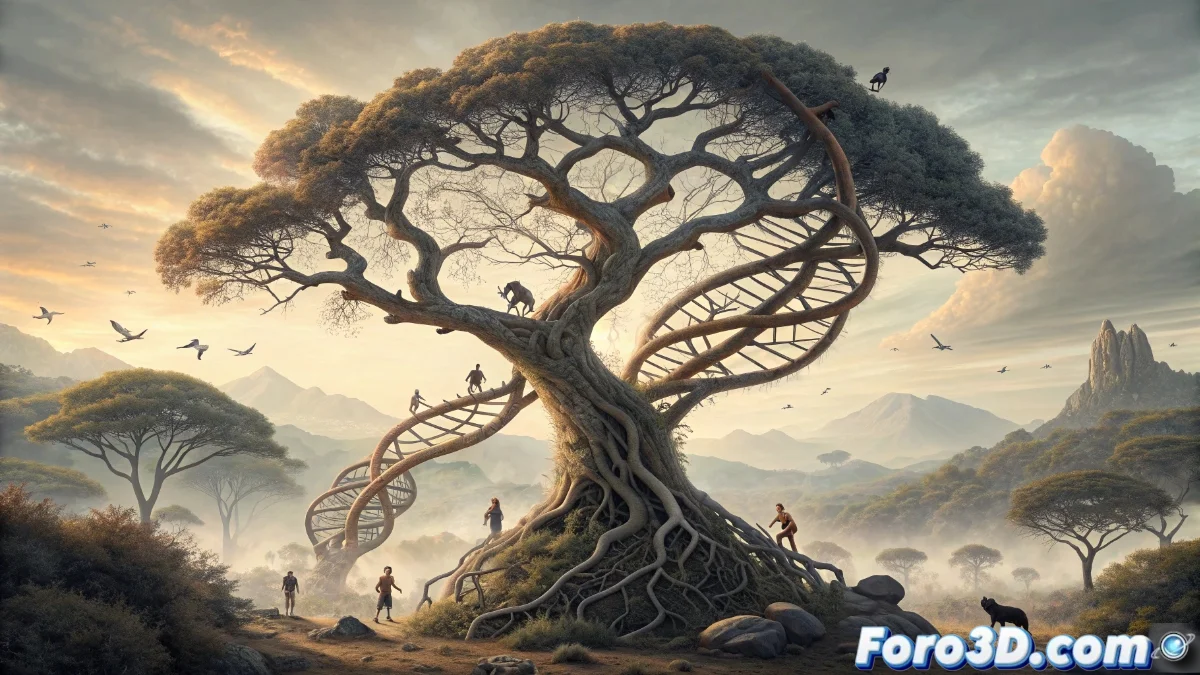
Human Evolution as a Complex Network of Interconnected Species
An international paleoanthropological analysis is radically transforming our view of human development, demonstrating that various species of the genus Homo coexisted and exchanged genetic material over extensive historical periods 🧬. This revolutionary perspective replaces the old model of linear succession with one where multiple human lineages interacted in complex relational networks.
Rediscovering Our Evolutionary Past
The research integrates fossil evidence with advanced genomic analyses to reveal that species like Homo erectus, Homo habilis, and Homo naledi formed an intricate web of interconnected populations. These groups maintained recurrent genetic flows through migrations, population mixtures, and parallel adaptations that shaped our current biological heritage.
Key Findings Redefining Human Evolution:- Prolonged coexistence of multiple Homo species for millennia
- Regular genetic exchanges between groups considered separate species
- Formation of complex relational networks instead of isolated lineages
Human history resembles a complex network of rivers that converge and diverge more than a simple straight evolutionary line
Implications for Understanding Our Identity
These discoveries fundamentally challenge traditional boundaries between human species and force us to reconsider what characteristics truly define a human being from an evolutionary perspective. If intergroup genetic flow was as common as the evidence suggests, our current diversity represents the legacy of multiple ancestral contributions rather than a single predominant lineage.
Paradigmatic Changes in Paleoanthropology:- Abandonment of the single evolutionary trunk model
- Adoption of branched perspectives with interconnections
- Reinterpretation of hominid relationships based on genetic evidence
New Perspectives on Our Social Nature
The research suggests that our ancestors demonstrated extraordinary sociability, establishing the first multiespecies genetic exchanges much earlier than imagined 🤝. This view transforms not only our understanding of the past but also how we relate to our biological and cultural identity in the present, revealing that connection and exchange have been fundamental forces in our evolutionary trajectory.