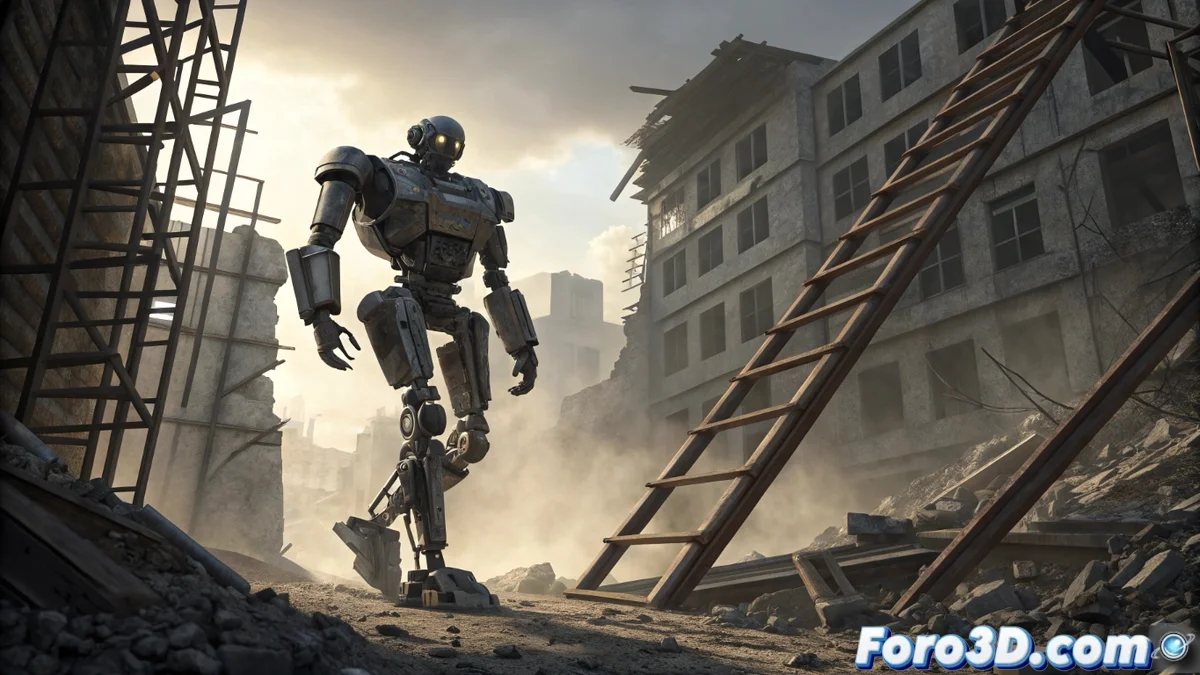
Hubo: The Humanoid Robot that Conquered the DARPA Challenge
In the competitive world of advanced robotics, one name resonates strongly: Hubo. This humanoid, created by the prestigious Korea Advanced Institute of Science and Technology (KAIST), achieved worldwide fame by winning the demanding DARPA Robotics Challenge. This competition, designed to advance the development of machines capable of operating in disaster scenarios, found in Hubo a champion whose autonomy and versatility redefined the limits of the era. 🤖🏆
A Set of Skills for Hostile Environments
Hubo's true genius lay not in a single skill, but in its integrated capability to execute a chain of complex and diverse tasks sequentially and without constant human intervention. The robot demonstrated impressive technical mastery by navigating unstable terrain and debris, operating a vehicle to a designated point, manipulating power tools to drill surfaces, and, as a finale, climbing a staircase to complete the mission. This sequence, seemingly intuitive for a human, represented a monumental achievement in the integration of perception, planning, and motor control systems into a single platform.
Milestones Demonstrated by Hubo:- Robust Locomotion: Walking stably over irregular surfaces and simulated disaster terrain.
- Autonomous Driving: Independently driving a utility vehicle to a predefined location.
- Tool Manipulation: Using a power drill to perform a controlled drilling on a wall.
Hubo's victory was not just a trophy, but a practical demonstration of the potential of humanoid robots to access human-designed infrastructure and perform useful work in dangerous scenarios.
Legacy and Potential in Rescue Operations
The triumph in the DARPA Challenge went beyond mere recognition; it was a tangible proof of concept of the value of humanoid robots in rescue operations. Its design, which prioritized functional efficiency over excessive anthropomorphism, established a new paradigm in robotics engineering applied to real-world problems. This success paved the way for new generations of automata that continue to refine these capabilities, bringing closer the reality of mixed response teams where humans and machines collaborate in high-risk environments, such as collapsed buildings or damaged industrial facilities.
Impact and Legacy of the Hubo Project:- Design Precedent: Focus on functionality and efficiency for practical rescue applications.
- Gateway to New Generations: Inspired the development of more advanced and specialized humanoids.
- Concept Validation: Demonstrated the viability of using robots in human infrastructure without adaptations.
An Achievement that Normalized the Complex
Perhaps Hubo's most ingenious legacy was its ability to make complex actions, such as driving a vehicle or using a drill with precision, seem like simple and fluid tasks. It achieved a feat that, ironically, many humans find challenging: performing manipulation work without collateral damage. This robot not only won a competition; it consolidated the credibility of humanoids as practical tools and opened a crucial chapter in the history of robotics in service to society. 🔧🚗