Hubble Solves the Mystery of a Disappearing Exoplanet
The Hubble Space Telescope has provided key observations that explain a persistent astronomical enigma. What was cataloged as an exoplanet in 2004, named Fomalhaut b, faded in later data. The new hypothesis points to a catastrophic event rather than a stable world. 🔭
A Head-On Collision, Not a Forming Planet
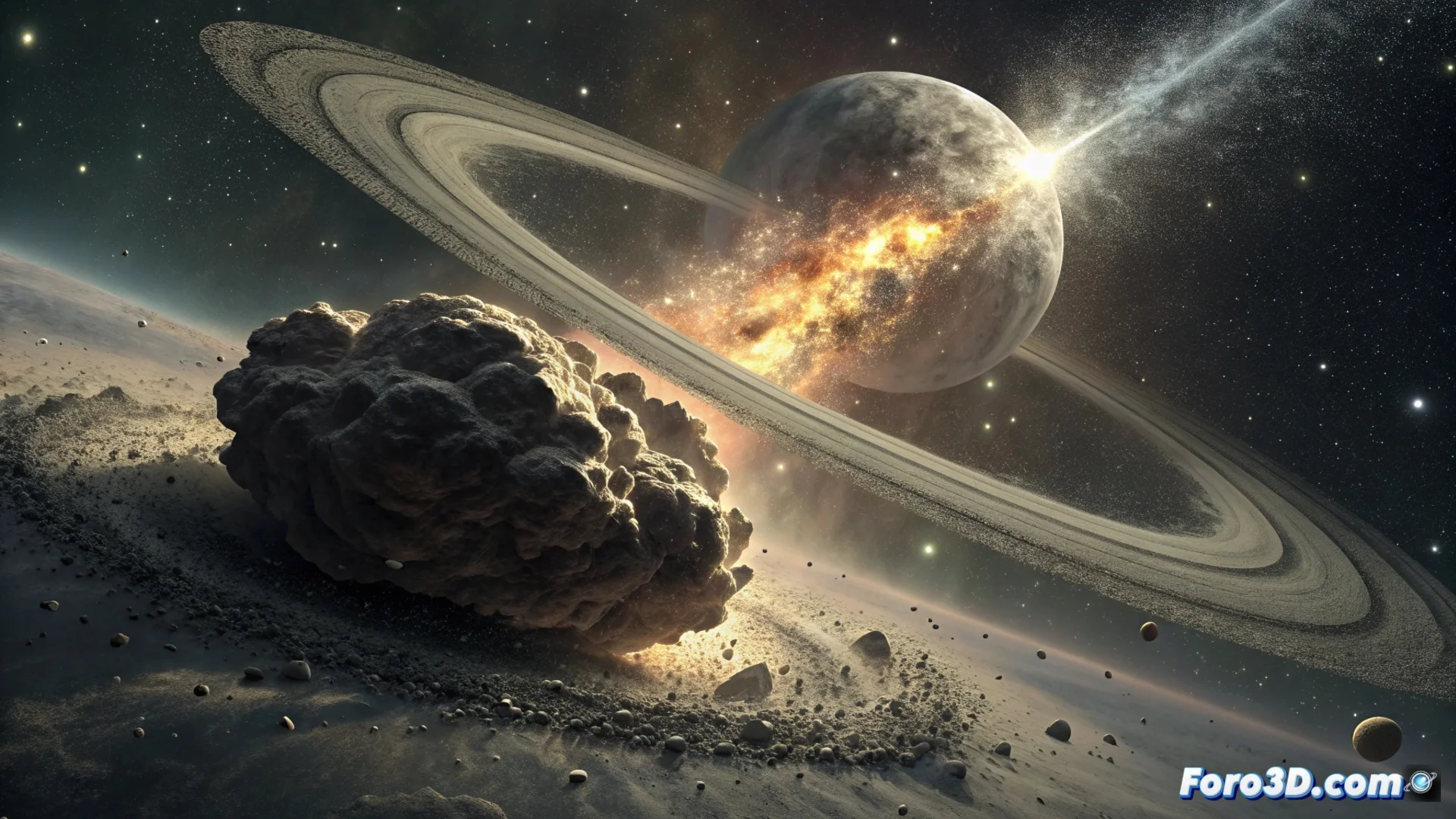
Astronomers analyzing Hubble images now propose that a giant planet was never observed. The object's characteristics didn't fit: its brightness was intense in visible light but invisible in infrared, and its orbit seemed anomalous. The evidence suggests a huge expanding dust cloud was detected, a direct result of two solid bodies, like asteroids or protoplanets, colliding head-on.
Behaviors that revealed its true nature:- Very high brightness in the visible spectrum, but total absence of signature in infrared.
- An estimated orbit that did not follow expected patterns for a planet.
- Progressive expansion and fading of the signal over the years.
It seems the planet didn't vanish by magic, but literally shattered before our eyes.
The Violent Dynamics of the Fomalhaut System
This discovery underscores the chaotic environment surrounding young stars. Fomalhaut, a nearby star, is enveloped by a vast debris disk where material constantly collides. Observing the aftermath of such an extreme impact allows scientists to better understand the processes that shaped planetary systems like ours in their earliest epochs.
Implications of the discovery:- Illustrates how head-on collisions can generate debris clouds detectable from afar.
- Reinforces the idea that young planetary systems are places of great violence and activity.
- Provides an analog for studying similar events that occurred in our primitive solar system.
Conclusion: From Ghost Planet to Evanescent Cloud
The case of Fomalhaut b closes with an explanation based on collision physics. The impact event occurred just before the first observations in 2004, and the resulting cloud of fine particles was large and bright enough to be captured. Over time, this cloud expanded and diluted in space, becoming undetectable to our instruments. What appeared to be an exoplanet was, in reality, the ephemeral testimony of a cataclysmic destruction. 💥