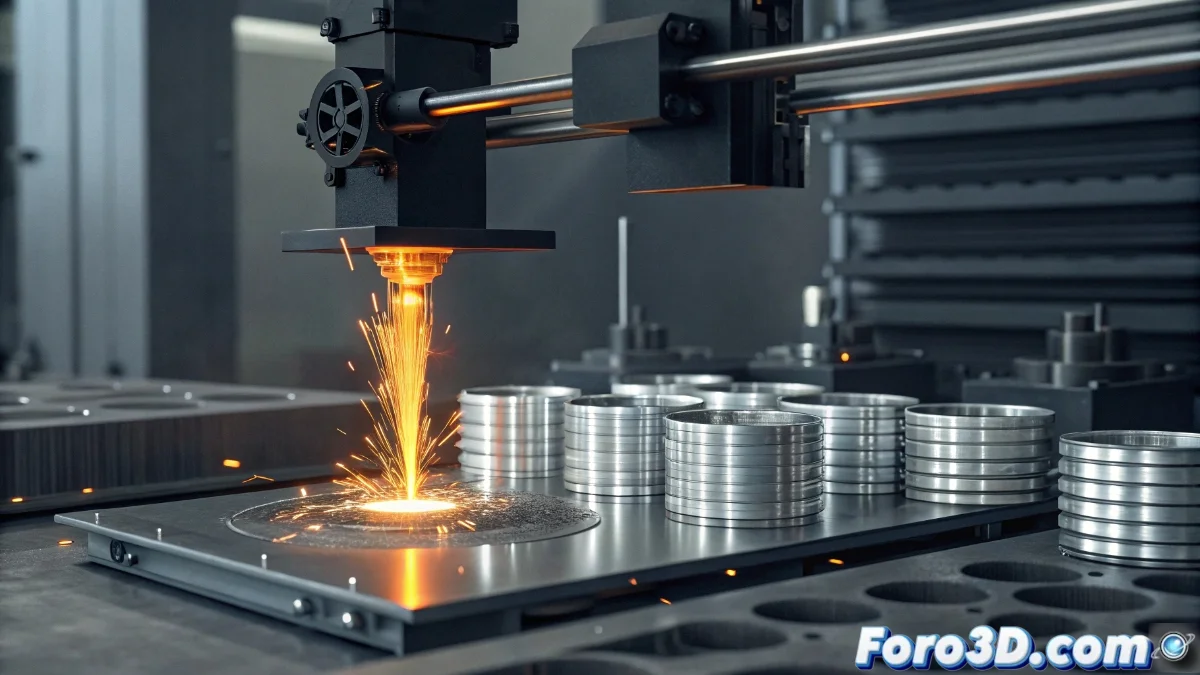
HP presents new industrial 3D printer for high-temperature filaments and expands metallic materials
At the Formnext event, HP has unveiled an innovative industrial 3D printer specifically designed to process high-temperature filaments, representing a crucial advancement in modern additive manufacturing capabilities. Simultaneously, the company has enriched its catalog with a notable expansion of metallic materials, offering industrial users advanced solutions for complex technical applications 🚀.
Printer optimized for high-performance polymers
The new HP 3D printer is specifically calibrated to handle technical materials that require extremely high extrusion temperatures. This capability allows working with high-performance polymers such as PEEK, PEKK, and ULTEM, responding to the growing industrial need for components that withstand severe operating conditions in critical sectors.
Main features of the new printer:- Optimization for filaments requiring temperatures above 400°C
- Compatibility with advanced polymers such as PEEK, PEKK, and ULTEM
- Designed for applications in aerospace, automotive, and medical sectors
This technology enables the manufacture of critical components for aircraft and medical equipment, while home printers remain ideal for simpler projects like keychains and decorative figures.
Expansion of the metallic materials portfolio
Parallel to the printer launch, HP has carried out a significant expansion of its range of metallic materials for additive manufacturing. The new collection includes specialized alloys with improved mechanical properties that surpass traditional materials.
Advantages of the new metallic materials:- Alloys with improved strength, durability, and thermal conductivity
- Production of final metal parts with superior mechanical characteristics
- Reduction of dependence on traditional manufacturing methods and shortening of development times
Impact on the manufacturing industry
The combination of this specialized printer and the materials expansion represents a transformative advancement for industrial additive manufacturing. Manufacturers can now produce complex technical components that withstand extreme temperature, pressure, and chemical stress conditions, marking a milestone in the evolution of modern production technologies 🔧.