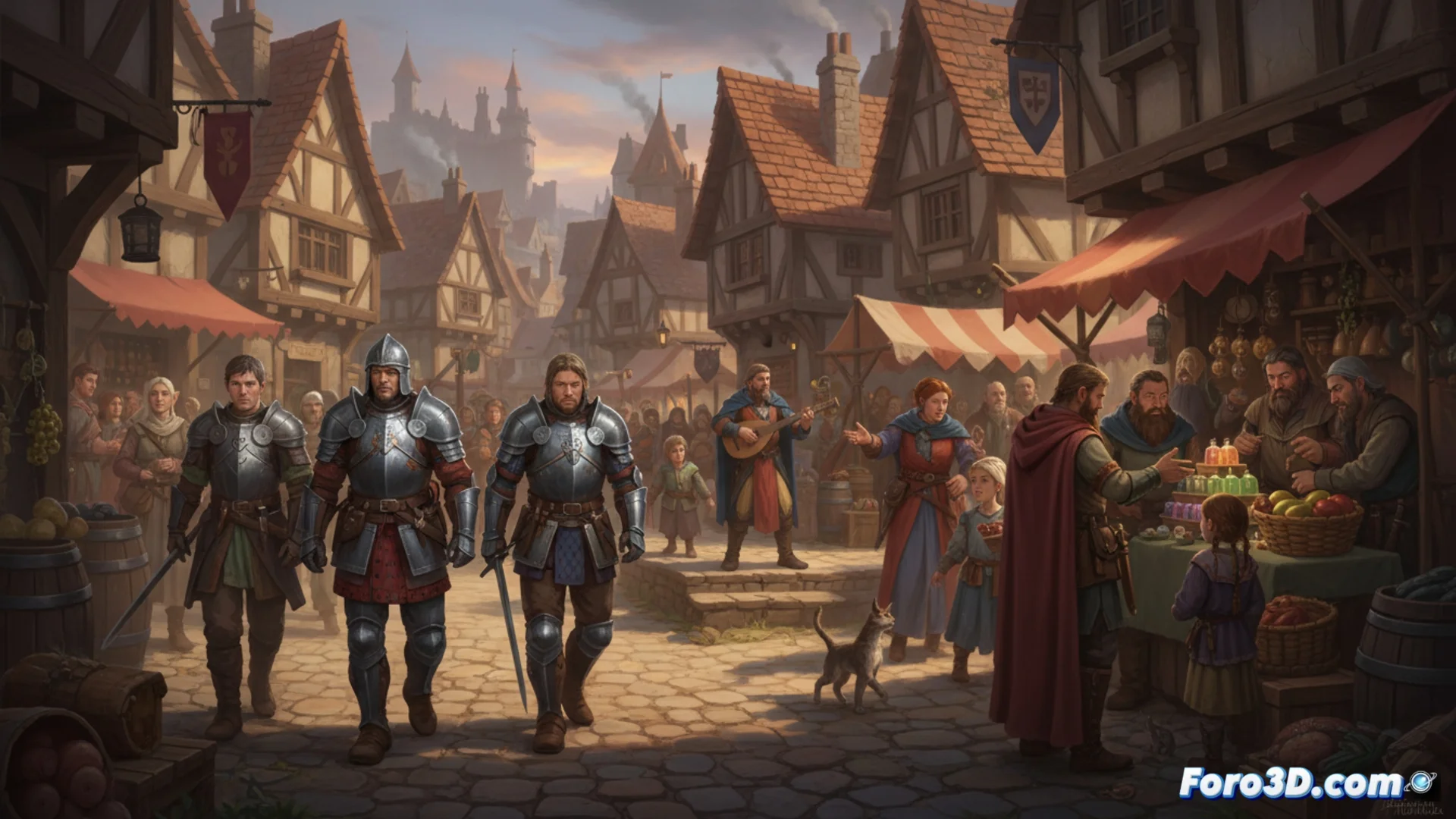
How Unity and Unreal Engine Use AI to Create Believable NPCs
The most popular development engines, Unity and Unreal Engine, incorporate advanced artificial intelligence tools to design non-player characters that interact convincingly. These technologies allow NPCs to think and respond to their environment in complex ways, enriching the player's experience. 🎮
AI-Driven Logic and Behavior
To define how these characters act, developers use systems like behavior trees and state machines. These structures organize decision-making, allowing the creation of everything from enemies that patrol areas to allies that offer dynamic help. The goal is for the virtual world to feel coherent and alive, reacting organically to each user action.
Key tools for defining AI:- Behavior trees: Structure complex decisions into logical and branched sequences.
- State machines: Manage transitions between different behaviors or modes of an NPC.
- Reactive systems: Allow characters to evaluate environmental stimuli in real time and adapt their behavior.
AI not only makes NPCs act, but endows them with the appearance of thinking, a fundamental pillar for immersion.
Intelligent Navigation with Pathfinding
Moving through the scene is a critical task. Both engines solve this by generating a navigation mesh or NavMesh, which marks the areas where characters can travel. Over this mesh, algorithms like A* calculate the optimal route between two points, autonomously avoiding static obstacles. If the environment changes, the system updates instantly to find new viable paths. 🗺️
Components of the navigation system:- Generate NavMesh: Automatically define traversable surfaces in the 3D geometry of the level.
- Calculate routes: Use efficient algorithms to find the shortest and fastest trajectory.
- Avoid obstacles: Adapt the route in real time to changes in the scene.
Adaptive and Natural Animation
AI intervention also extends to physical movement. Instead of just playing recorded animations, procedural blending techniques are used. The system combines and adjusts animation clips on the fly, adapting steps, postures, and gestures to the terrain geometry. This produces fluid movement where a character climbs a slope or walks on uneven ground without the animator having to create a unique animation for each case. This detail, like avoiding feet sinking into staircase steps, is crucial for not breaking the player's immersion. 🤖