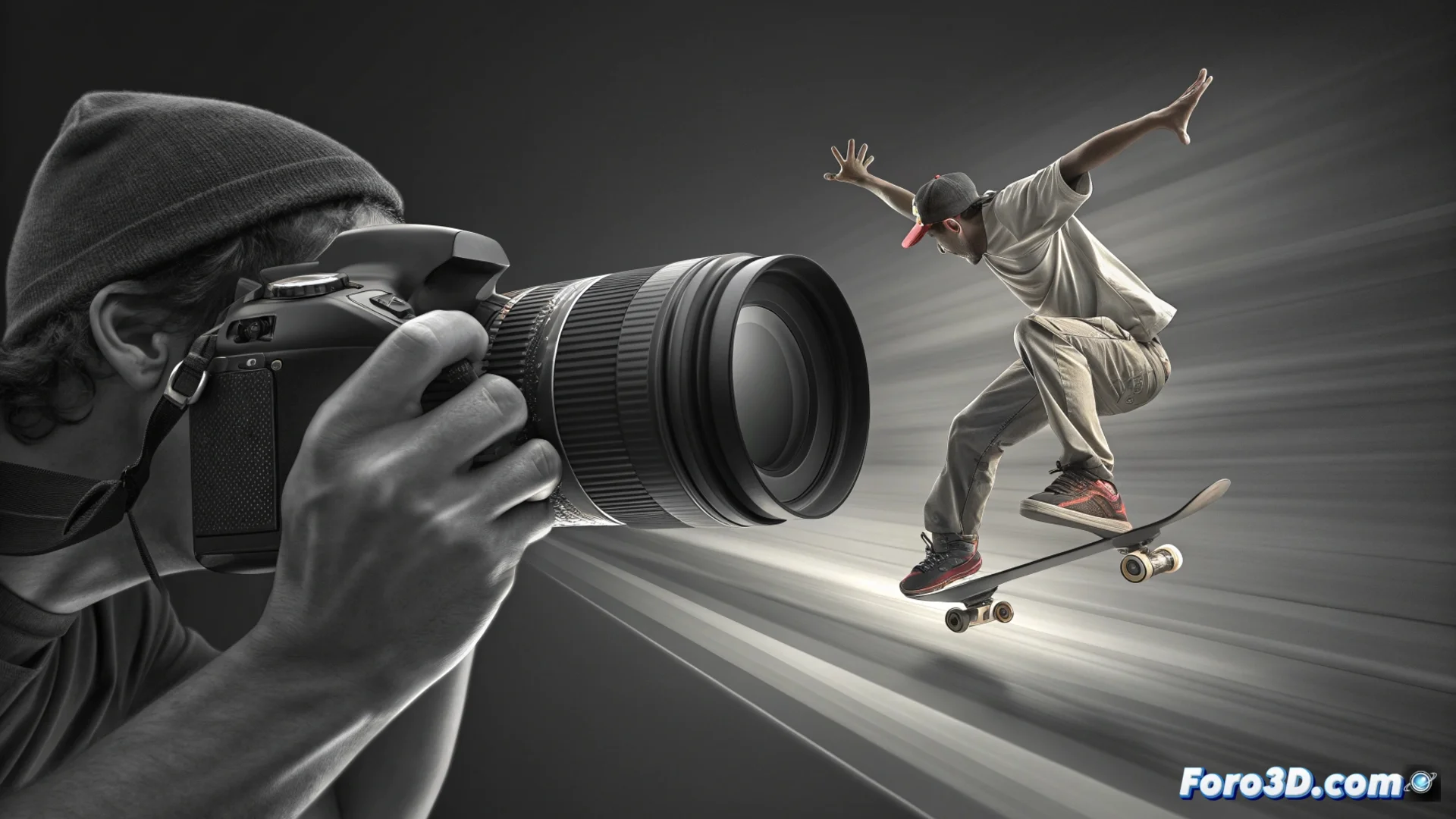
How to Use Burst Mode to Analyze Movement
Capturing a fleeting instant is a challenge, but breaking down a complete movement into its fundamental parts requires a specific technique. The action or maximum burst mode on a camera becomes the essential tool for this purpose, allowing multiple frames to be recorded in a fraction of a second. This method is invaluable not only for creating dynamic visual content, but also as an analysis tool for sports and artistic disciplines. 🎯
Setting Up the Camera for Success
The first step is to activate the high-speed continuous shooting mode, often identified as CH or High-Speed Continuous. Technical setup is crucial: a high shutter speed (1/1000s or faster) is necessary to freeze the movement without the image blurring. To compensate for the low light entering at that speed, the aperture must be opened to the maximum or the ISO value increased, keeping noise under control. A fast-focusing bright lens significantly improves results.
Key elements to prepare:- Select the high-speed continuous shooting mode in the camera menu.
- Adjust the shutter speed to a value that can effectively stop the action.
- Set up the continuous autofocus system (AI-Servo/AF-C) to track the subject precisely between each shot.
Patience is fundamental, because the perfect moment may occur in frame number forty-three of a fifty-frame burst.
Planning the Shot and Anticipating the Action
The technique is not just in the camera. The photographer must plan the framing and anticipate the subject's trajectory to keep it within the frame throughout the sequence. This involves studying the movement beforehand and choosing a viewpoint that allows capturing the entire progression. Good scene preparation ensures that the burst of images is useful and complete.
Considerations during shooting:- Anticipate where the action's peak will occur to start the burst on time.
- Keep the focus point on the moving subject, relying on the continuous AF system.
- Verify that the memory card has sufficient capacity to store the long sequence.
Extracting Value from the Captured Sequence
Once on the computer, the real analysis work begins. Reviewing the images allows observing the complete progression of the movement. Key frames can be exported to create a smooth animated GIF showing the sequence, or examined individually to study the subject's technique. Using software that allows viewing the images as a contact sheet or as a stack of layers facilitates comparing positions and details between one instant and another. This process transforms a simple burst of photos into a powerful resource for understanding, teaching, and perfecting fast actions. 📊