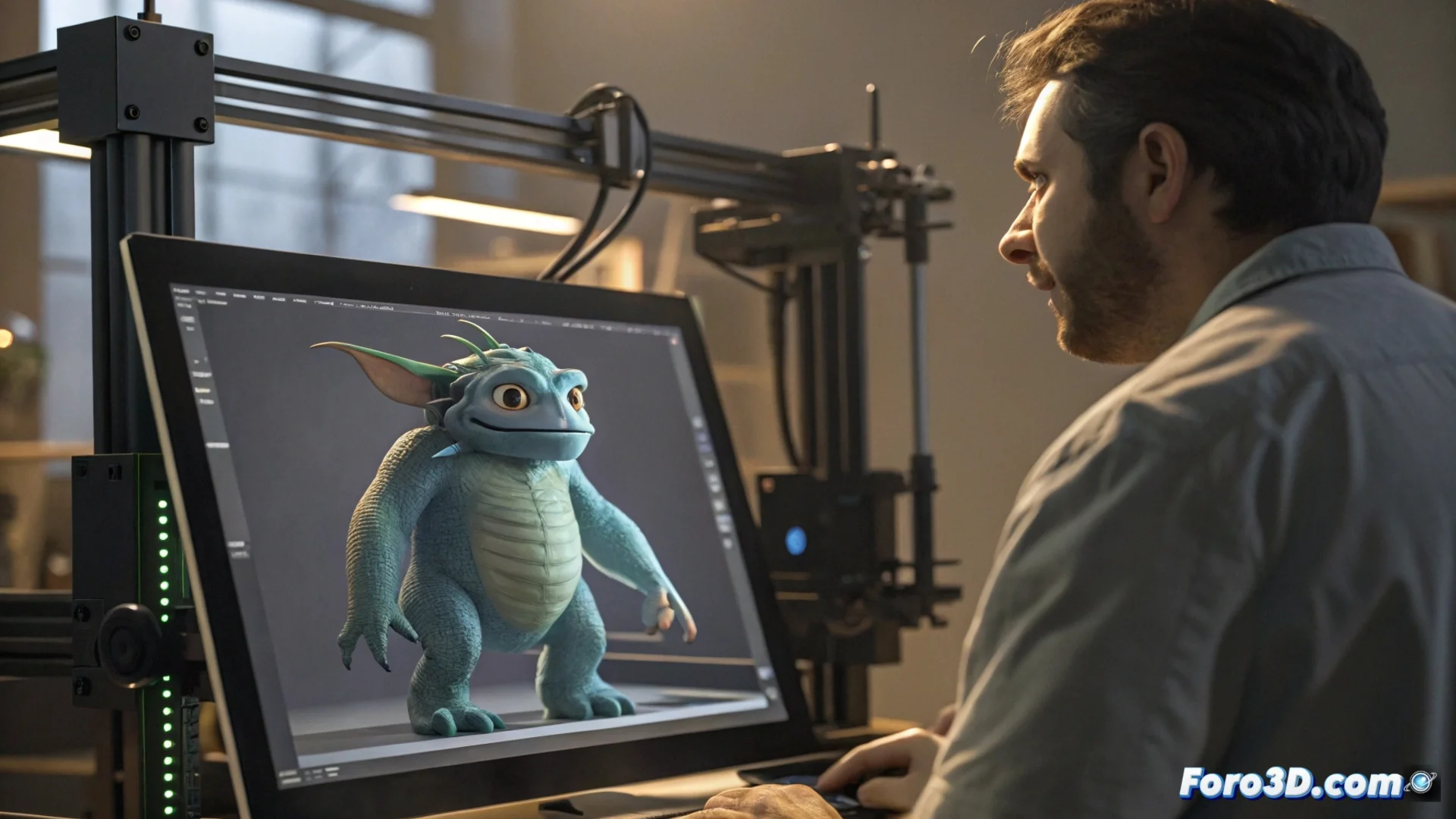
How to prepare 3D models generated with artificial intelligence for printing
Converting an artificial intelligence design into a tangible physical object is not straightforward. 🖨️ These digital files often include imperfections that make them unsuitable for manufacturing with a 3D printer. To overcome this, it is vital to process and correct the mesh before sending it to print.
Detect and fix mesh issues
The process begins by using a program to analyze the geometry. You must look for loose faces, open edges, holes, and areas where the surface intersects itself. Applications like the mesh modifier in Blender or the Make Solid option in Meshmixer are essential for creating a closed and consistent shape. It is important to remove random protrusions, often called AI bumps, and smooth the areas so that the model is stable. 🔍
Key actions to repair:- Examine the mesh with specialized software to locate defects.
- Use automatic tools to close holes and join non-manifold edges.
- Smooth the surface to eliminate irregularities and abrupt transitions.
A model that looks perfect on screen can reveal its true nightmare geometric nature when passed through the slicer.
Improve the structure and export correctly
Once the mesh is solid and sealed, the next step is to optimize. This includes reducing the number of polygons in flat sections and strengthening areas that could suffer under physical stress. Finally, the file must be saved in a compatible format, such as STL or 3MF, ensuring the ideal scale and orientation for the printing platform.
Final steps before printing:- Reduce polygon density where detail is not needed.
- Reinforce critical areas that will support weight or stress.
- Export with the correct settings and review in slicing software.
The final verification is crucial
Reviewing the model in a slicing program allows confirming that no hidden errors remain and adjusting parameters such as support structure and infill percentage. This final check reminds us that artificial intelligence, for now, does not fully understand the physics rules that govern the real world. ✅