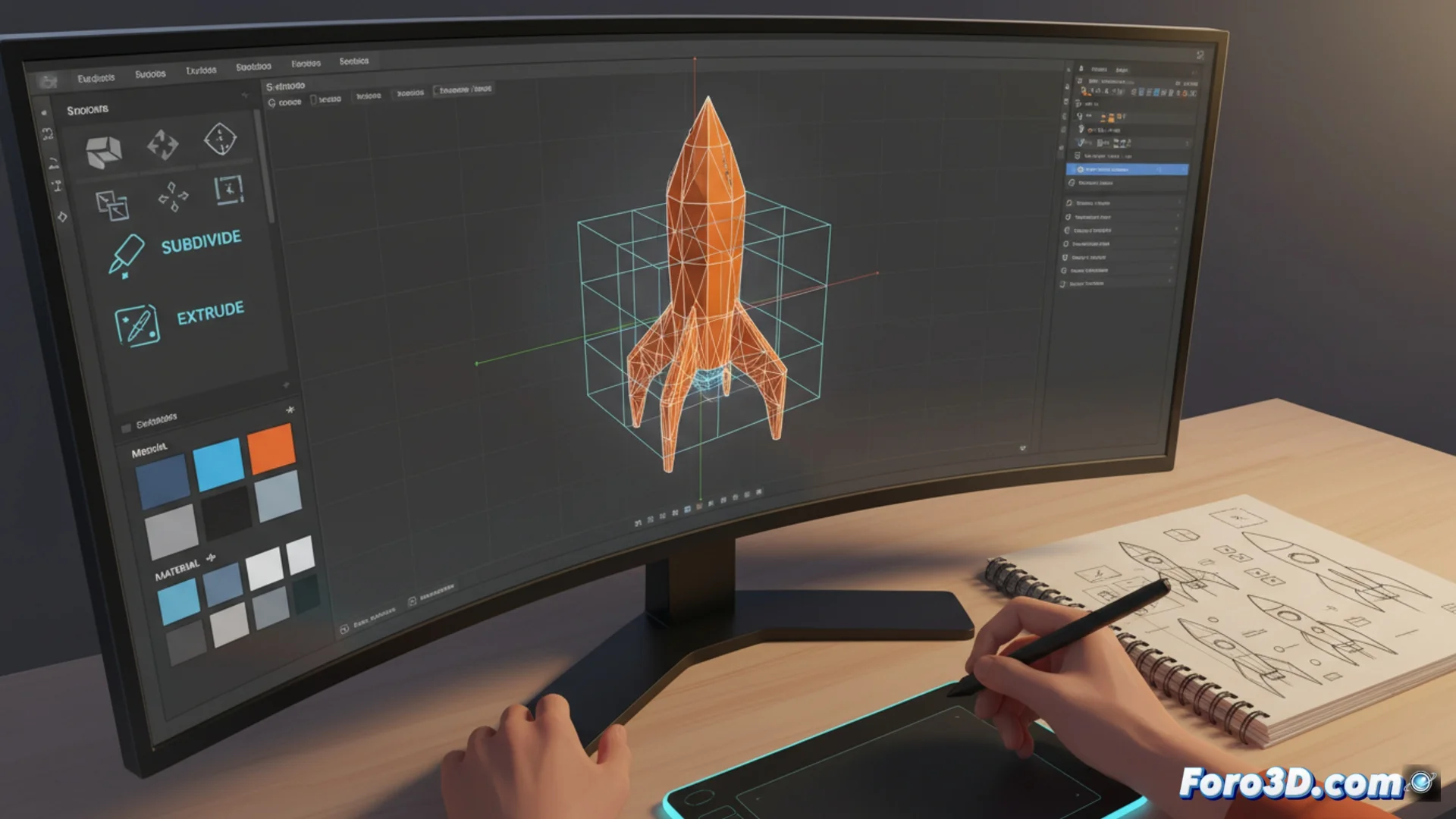
How to Get Started in 3D Modeling Without Complications
Delving into the 3D universe can raise doubts, but the first step is simpler than many perceive. The initial choice falls on selecting a tool to create models. Blender stands out as an ideal alternative, being open-source and having a very collaborative user ecosystem. It's not necessary to know every function at the start. 🚀
Establish a Solid Foundation from the Beginning
The crucial thing is to focus efforts on learning to build basic geometry, to apply textures, and to set up lights in a basic environment. Constant repetition is the engine for progress. Define a concrete goal, like designing an everyday object or a non-moving figure.
Key Points for Your Workflow:- Follow tutorial guides that show the complete path, from a primitive to a final asset.
- Avoid scattering yourself by trying to master animation, simulations, and hyperrealistic rendering simultaneously.
- Learn the essentials: navigate the interface, edit vertices and edges, and assign simple shaders.
Your first model may resemble an ambitious tuber more than a classical work, but it's a phase everyone goes through.
Explore the Vast Available Help Ecosystem
Platforms like this forum, numerous YouTube channels, and official documentation provide support material. When facing a problem, search for specific concepts like topology, UV unwrapping, or Cycles render engine. Interacting in groups allows solving obstacles and observing how other artists resolve their projects.
Essential Resources for Learning:- Specialized forums and online communities to ask questions.
- Step-by-step video tutorial content to visualize techniques.
- Official software manuals and wikis to understand tools.
Patience is Your Best Ally
Every mistake made is a lesson learned. With a solid foundation, you can later delve into more advanced disciplines, like bringing characters to life or creating complex visual effects. Progress comes with dedication and making use of the resources at your disposal. 💡