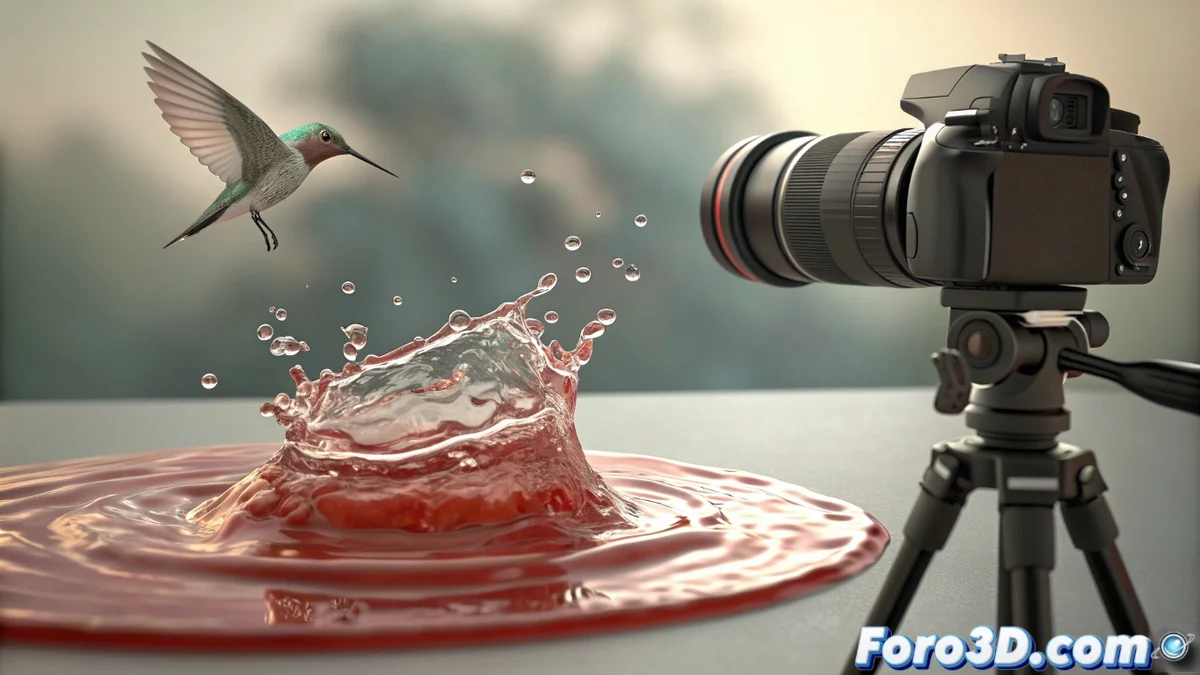
How to Freeze Motion in Photography
Capturing a fleeting moment that escapes our visual perception is possible in photography. The key technique lies in using a very high shutter speed. This involves setting your equipment to manual mode or shutter priority and selecting a short exposure time, for example, 1/1000 of a second or even less. Operating at such a speed effectively freezes the action. 🚀
Adjusting the Camera to Capture Speed
When the shutter opens and closes in a minimal fraction of time, the amount of light reaching the sensor is very reduced. To balance the exposure and avoid an underexposed image, you must compensate by opening the aperture or increasing the ISO value. It is preferable to take photos in scenarios with abundant lighting or use powerful light sources. To keep focus on a fast-moving subject, activate continuous focus mode and use burst shooting. 📸
Ideal Scenarios to Apply This Technique:- Action sports, such as an athlete jumping or a cyclist racing.
- Photographing wildlife, such as a bird in full flight or an animal running.
- Capturing liquid phenomena, such as a water drop impact or splashes.
Freezing motion allows isolating and studying instants that would otherwise be invisible to the human eye.
Choosing the Right Equipment
Although many cameras offer high shutter speeds, a body with a large buffer manages rapid burst sequences better. Luminous lenses, with a large maximum aperture (for example, f/2.8), allow more light in, offering greater flexibility in settings. For predictable actions, you can manually prefocuse on a specific point and wait for the subject to enter that plane. 🎯
Key Factors to Optimize Results:- Prioritize lenses with wide maximum apertures to capture more light.
- Use a tripod or high speed to avoid camera shake blur, a concept different from freezing the subject's action.
- Plan the shot in scenes with controlled or very intense lighting.
Conclusion on the Technique
Mastering how to freeze motion requires understanding the relationship between shutter speed, aperture, and ISO sensitivity. It's not just about setting the camera, but anticipating the action and preparing the equipment to respond instantly. Remember that this technique visually stops the subject's action, but to eliminate camera vibration you need complementary methods, such as a stable support.