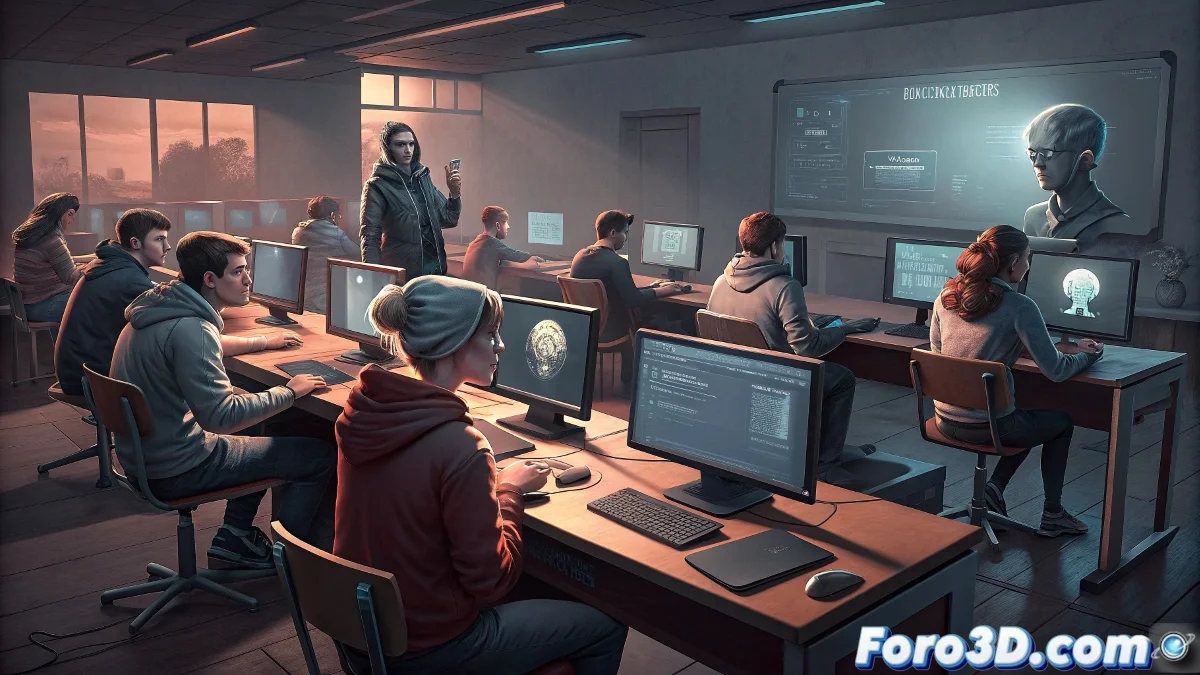
When the Curriculum Needs a Generative Update
Evaluating whether your training center is truly integrating generative AI tools into its curriculum has become a crucial issue to ensure the professional relevance of your training. While some educational institutions are at the forefront, strategically incorporating these disruptive technologies, others continue to teach exclusively traditional software, creating a training gap that can leave students at a competitive disadvantage. The difference between both approaches is not only technical, but philosophical: it's about preparing artists for the future versus training technicians for the past.
What makes this evaluation particularly important is the speed at which the industry is adopting these tools. The most innovative studios are already integrating generative AI into their production pipelines, and they expect new talent to arrive not only with mastery of traditional software, but with an understanding of how these new technologies can enhance and accelerate creative work. A center that ignores this reality is, consciously or unconsciously, preparing its students for a job market that may soon cease to exist in its current form.
Signs That Your Center Is Up to Date
- Inclusion of specific modules on generative AI tools
- Integration of AI plugins and extensions into traditional software
- Focus on hybrid human-AI workflows
- Discussions on ethics and best practices in generative AI
The Key Questions You Should Ask
To truly evaluate the integration of AI into your training, you must go beyond the official curriculum and examine the educational philosophy. Ask how they teach students to work alongside intelligent systems, not just to operate software. Investigate whether final projects require demonstrating competence in directing generative tools, and whether critiques and evaluations consider the ability to curate and refine AI outputs as a fundamental skill. True integration is not measured by the number of new tools in the curriculum, but by how they transform the approach to the creative process.
An up-to-date center doesn't just add AI to the curriculum, but redefines what it means to create in the algorithmic era
Also observe the profile of the teaching team and their practical experience. Instructors who are active in the industry and use these tools in real projects will bring invaluable insights on practical applications, current limitations, and emerging best practices. Conversely, professors who see AI as a threat or a passing fad will hardly be able to prepare you adequately for the real professional challenges you'll face upon graduation.
Indicators of Training Lag
- Total absence of references to AI in the curriculum
- Exclusive focus on manual techniques without generative alternatives
- Lack of discussion on the impact of AI in the industry
- Generalized resistance or skepticism toward new tools
If you discover that your training center is significantly outdated, all is not lost. You can complement your education with online resources, specialized communities, and personal projects that allow you to develop these critical skills. However, it's important to consider whether you're getting the full value from your educational investment, and perhaps raise these concerns with the center's management. After all, education is not just about what you learn, but about how it prepares you for the world you'll face. For professionals in training, understanding this transition and positioning yourself strategically can make the difference between a thriving career and a constant struggle to stay relevant. 📊
And so, between curricula and technological revolutions, we discover that the most important question is not whether your center teaches the tools of the moment, but whether it's teaching you to learn the tools of the future - even though we'll probably still need to explain to the director that "that's how it's always been done" is not a valid argument when everything is changing. 🎯