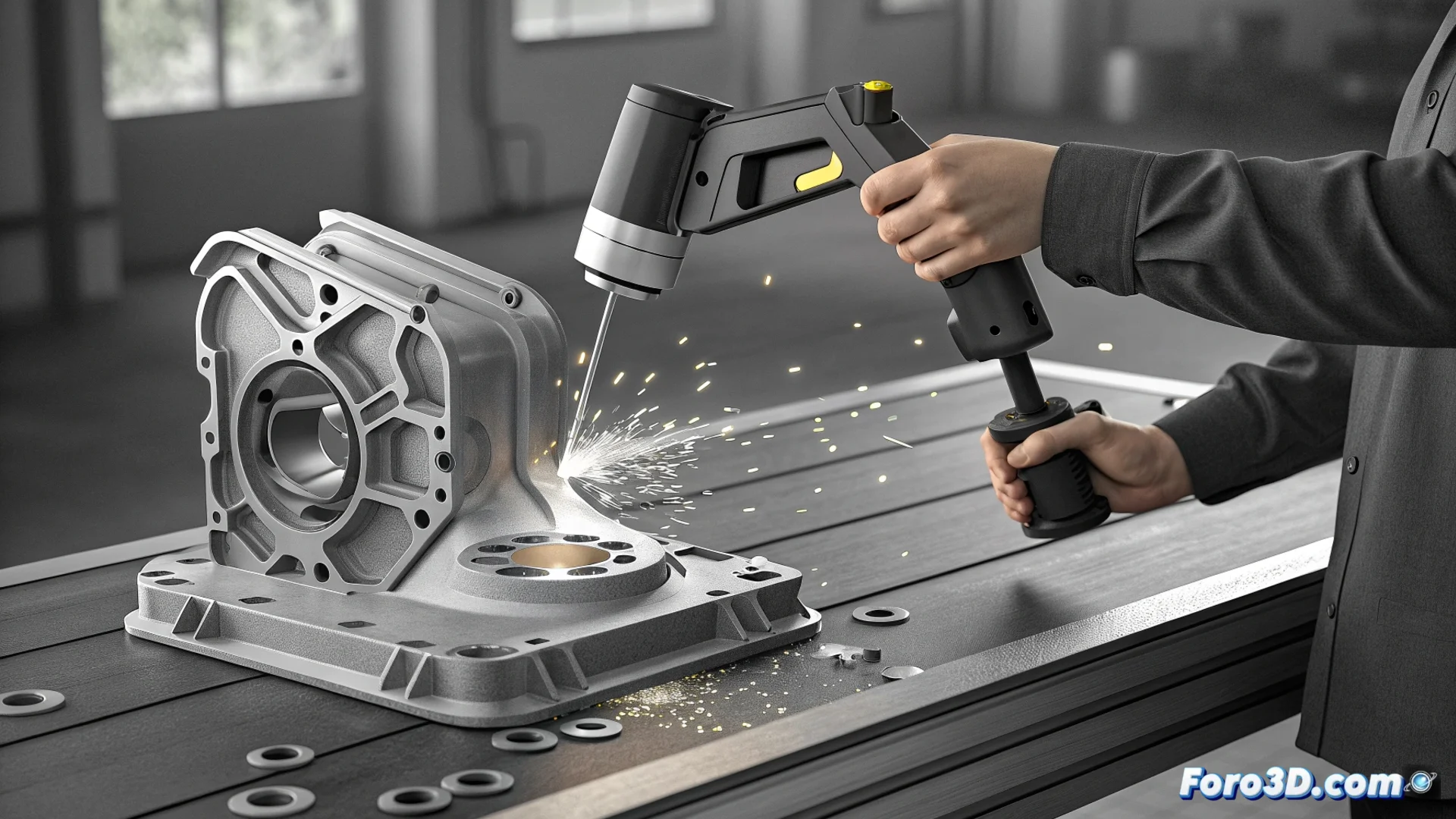
How the Creaform HandySCAN 3D Scanner's Self-Positioning Works
Portable 3D scanning technology takes a leap with systems that position themselves. Creaform's HandySCAN stands out for dispensing with articulated arms or external tracking systems, using an intelligent reference network. 🎯
The key lies in the reflective targets
For the scanner to calculate its position, small adhesive reflective markers are placed on the object and the surrounding area. These points form a spatial mesh that the device's cameras constantly observe.
Advantages of this reference system:- Eliminates the need for a fixed and complex measurement environment.
- Allows moving and rotating the part during capture without interruption.
- Adapts to intricate geometries and objects of different scales.
The system readjusts its position calculation instantly, maintaining metric precision.
Real-time processing for a coherent point cloud
Two integrated cameras track the target pattern. By processing this data, the scanner accurately determines its orientation and location relative to the object. This process occurs continuously as the operator moves.
Results of this dynamic processing:- Generates a coherent 3D point cloud without losing spatial reference.
- Ensures the digitization maintains precision throughout the movement.
- Offers a truly portable and flexible solution.
An agile workflow with a prior manual task
Although the scanner positions itself, preparation requires patience. Someone must manually place all the reflective points on the surface, an essential step for the self-positioning magic to work. The reward is total freedom of movement during capture. ✨