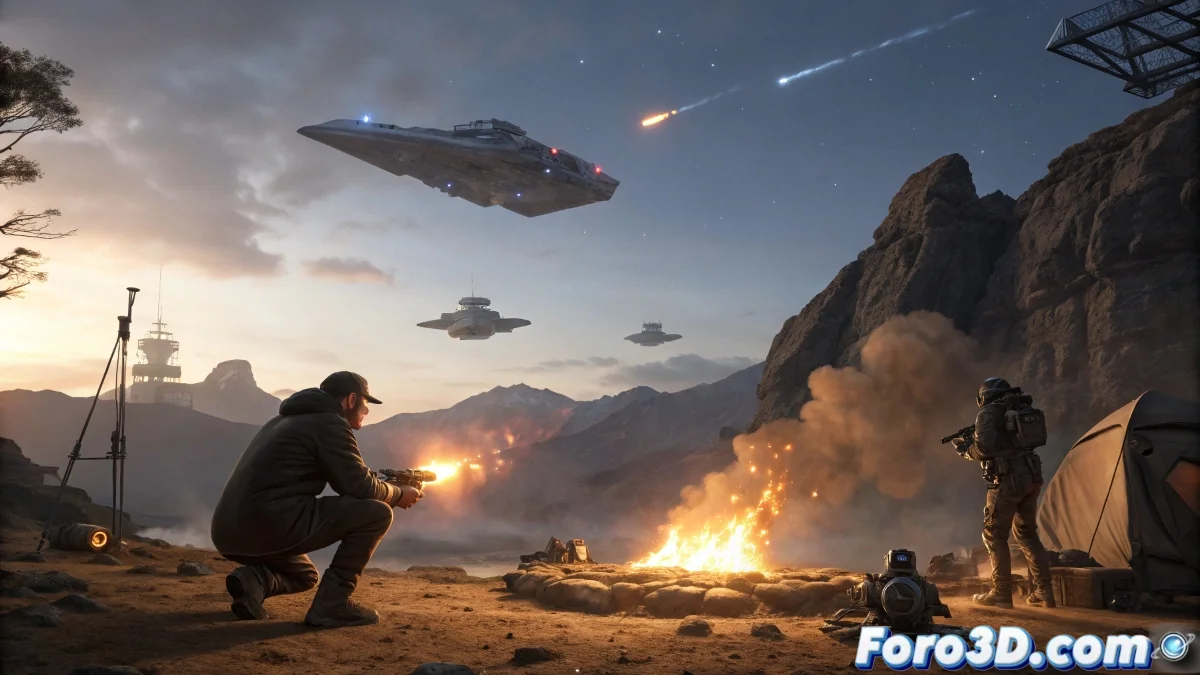
When Space Needs More Fire (and Good Renders)
In Rebel Moon Part Two - The Scargiver, Rodeo FX demonstrated that creating an intergalactic epic requires more than shiny ships and explosions. Alongside heavyweights like Framestore and Weta, the studio helped build a universe where every detail, from a campfire to an imperial fleet, serves the narrative. 🚀💥
"It wasn't about making the biggest thing, but about making every element tell a part of the story" - Marcus Taormina, VFX Supervisor
The Visual Effects Dream Team
The production brought together a dream team for different aspects:
- Rodeo FX: Environmental effects and key sequences
- Framestore: Creatures and digital characters
- Weta: Weapon and vehicle design
- Scanline: Large-scale simulations
Technology in Service of Veldt
The technical pipeline combined the best of each software:
- Houdini for fire, smoke, and debris with precise physics
- Maya in ship modeling with realistic damage
- Nuke integrating thousands of layers with visual coherence
- RenderMan handling complex space lighting
Details That Make the Difference
In sequences like the campfire, Rodeo FX achieved:
- Realistic interaction between firelight and characters
- Subtle reflections on armor and ships
- Seamless transitions between live-action plates and CGI
- Atmospheres that change according to the emotional state
As a technician joked: "Our biggest challenge was getting Zack Snyder to stop asking for more particles... we already had enough". ✨
Battles That Breathe Narrative
What distinguishes this work is how each effect:
- Reinforces the arc of the main characters
- Maintains coherence with the established visual style
- Balances spectacle with narrative clarity
- Creates a sense of realistic physical weight
From the dust kicked up by landing ships to the wear and tear on armor, every detail contributes to making Veldt a believable world.
The Real Challenge: Not Letting the Render Crash
With hundreds of ships, thousands of digital characters, and complex simulations, the team developed ingenious strategies:
- Instancing systems to manage crowds
- Real-time previsualization with Unreal Engine
- Optimization of simulations to maintain reasonable render times
As one artist aptly summarized: "When your scene has more polygons than inhabitants in your city, you know you're making real space cinema". In the end, they achieved that magical blend where the technology disappears and only the emotion of the battle for Veldt remains. 🌌