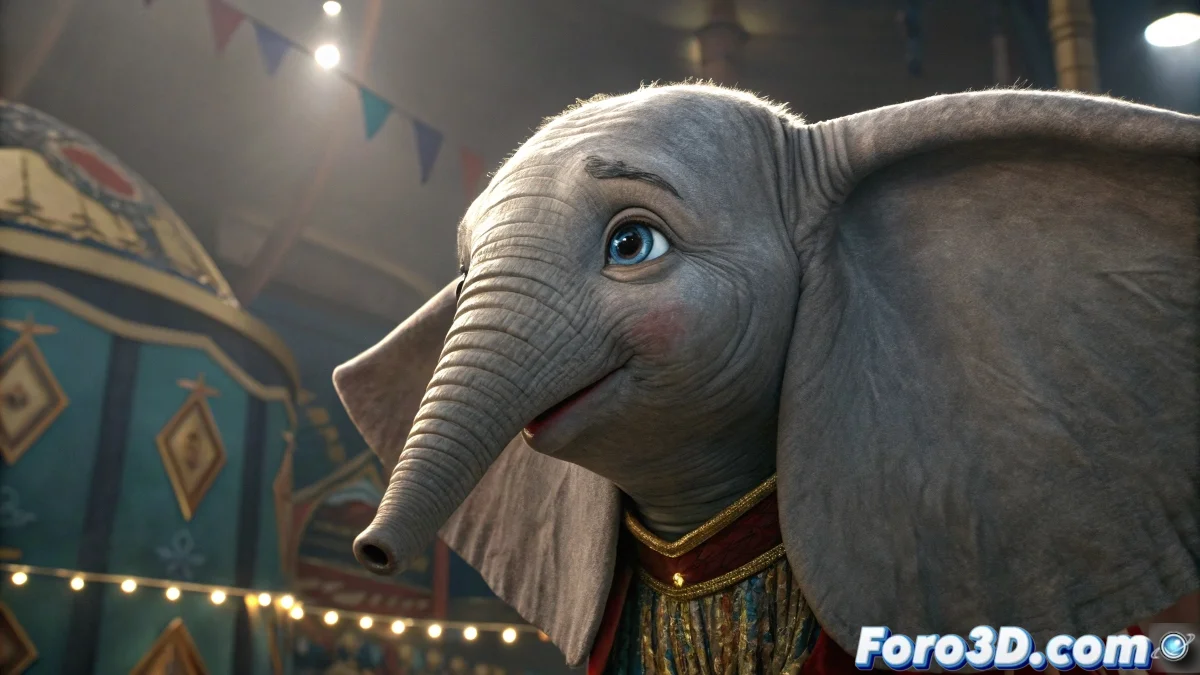
When a Digital Elephant Needs to Fly (and Emote)
Creating Tim Burton's Dumbo was like juggling technical feats with heart 🐘💓. Rodeo FX not only had to design an elephant that flew, but one that made the audience suspend their disbelief and let out an "Poor little thing!" at key moments. The secret: blending cutting-edge technology with artistic sensitivity worthy of the best circus.
The Art of Making an Emotional Elephant
To make Dumbo connect with the audience, the team focused on three crucial elements:
- Advanced facial animation in Maya, where every blink and trunk movement told a story.
- Hyperrealistic textures in Mari, including those translucent ears that looked like illuminated rice paper.
- Grooming in Houdini for those little hairs that made you want to pet the screen (even though it was digital).
The acid test: when an animation shot made the entire studio say "aww"... and it ended up in the movie.
Tricks Under the VFX Big Top
Burton's world required a perfect balance between fantasy and realism. Some ingenious solutions included:
- Subsurface scattering applied with care so the skin didn't look like rubber.
- 3D matte paintings to extend the circus beyond what was filmed.
- Integration in Nuke so perfect that even the actors doubted if Dumbo was really there.
The result was so convincing that even the animators sometimes forgot they were working with pixels... until Maya crashed and brought them back to reality 😅.
Lessons for Aspiring Digital Magicians
This project teaches that:
- Emotional rigging is as important as the technical kind.
- Small details (like the dust on the skin) make the difference.
- Even in a Burtonesque world, realistic physics is your best ally.
So the next time you see Dumbo fly, remember: behind that adorable trunk there are terabytes of animated love, hours of renders, and probably several animators who needed therapy after so much facial work... but it was worth it ✨.