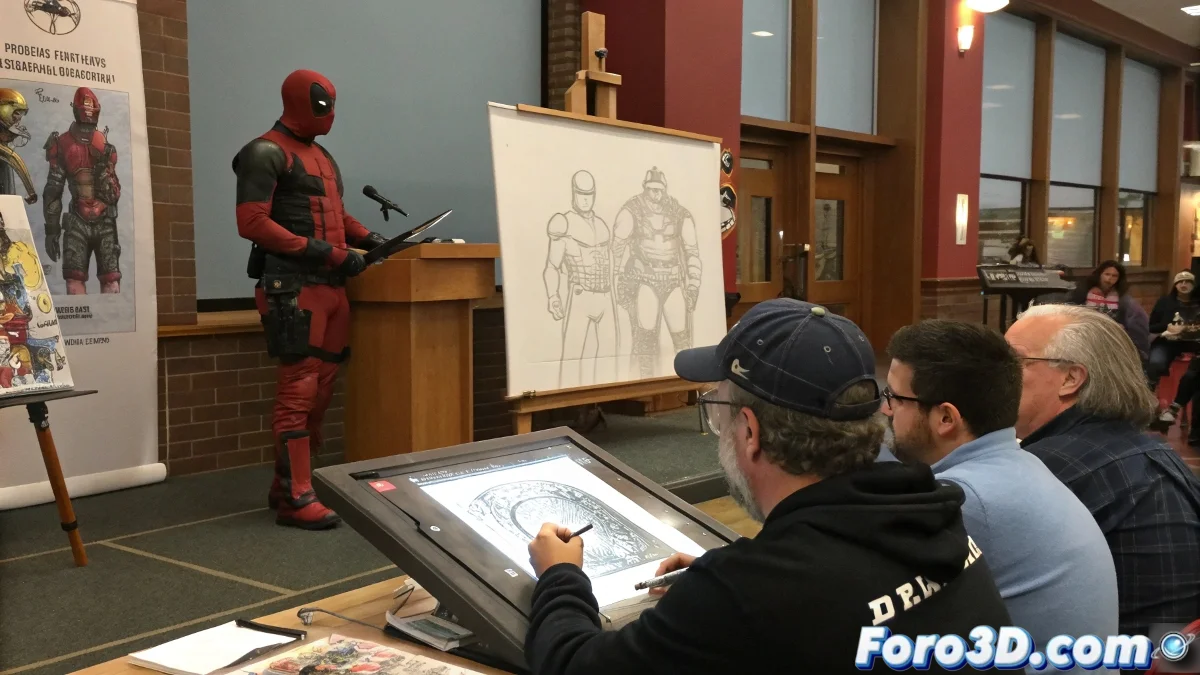
Marvel Comic Secrets: How Professionals Use 3D to Draw Superheroes
Behind every epic Marvel panel, there's more technology than you imagine. Jerry DeCaire, veteran illustrator of Wolverine, Iron Man, and Deadpool, is revealing how professional artists combine traditional pencil with 3D tools like Blender to create those perfectly anatomical superheroes that leap off the page. And the best part: you can apply these techniques at home. ✏️🦸
"When your 3D model can hold an impossible pose longer than you can hold a plank... it's time to stop suffering and start using digital references"
The Hybrid Workflow: Traditional + 3D
Artists like DeCaire use this process:
- Base modeling in Blender/ZBrush:
- Proportional human figure
- Simple rig for poses
- 3D composition:
- Dramatic lighting
- Forced perspectives
- Drawing over reference:
- Comic style with clean lines
- Muscle and motion exaggeration
5 Key Advantages of 3D for Comics
Why professionals adopted it:
- Impossible poses without a human model
- Anatomical consistency in every panel
- Complex perspectives without errors
- Preliminary lighting for precise shading
- Time savings on detailed backgrounds
Quick Tutorial: Spiderman in Blender
To try the Marvel method:
- Download a basic human rig
- Pose in heroic free fall
- Add dramatic side lighting
- Export to Clip Studio Paint/Photoshop
- Draw over it with comic style
That simple! While purists argue, professionals are already using all available tools. 🛠️
The Secret Math of Comics
DeCaire reveals these numerical tricks:
- Golden ratio in composition
- 8 heads tall for heroes
- Dynamic triangles in poses
- Rule of thirds in panels
Essential Software for Aspiring Artists
| Function | Tools |
|---|---|
| 3D Modeling | Blender, ZBrush |
| Drawing | Clip Studio, Photoshop |
| Reference | PureRef, DesignDoll |
So the next time you admire a comic book cover, remember: behind that seemingly spontaneous stroke, there are probably hours of 3D modeling, geometric calculations, and reference renders. Though if you prefer the traditional method... no one said drawing the same hand 200 times until it comes out right isn't also a valid path. ✍️
Where to Learn More
To master these techniques:
- Follow DeCaire on social media (posts processes)
- Try the "Drawing Comics the Marvel Way" course
- Experiment with Grease Pencil in Blender
- Study 3D anatomy with medical scans
Professional comics were never just talent - it's art, technology, and math working together. And now, those tools are within everyone's reach.