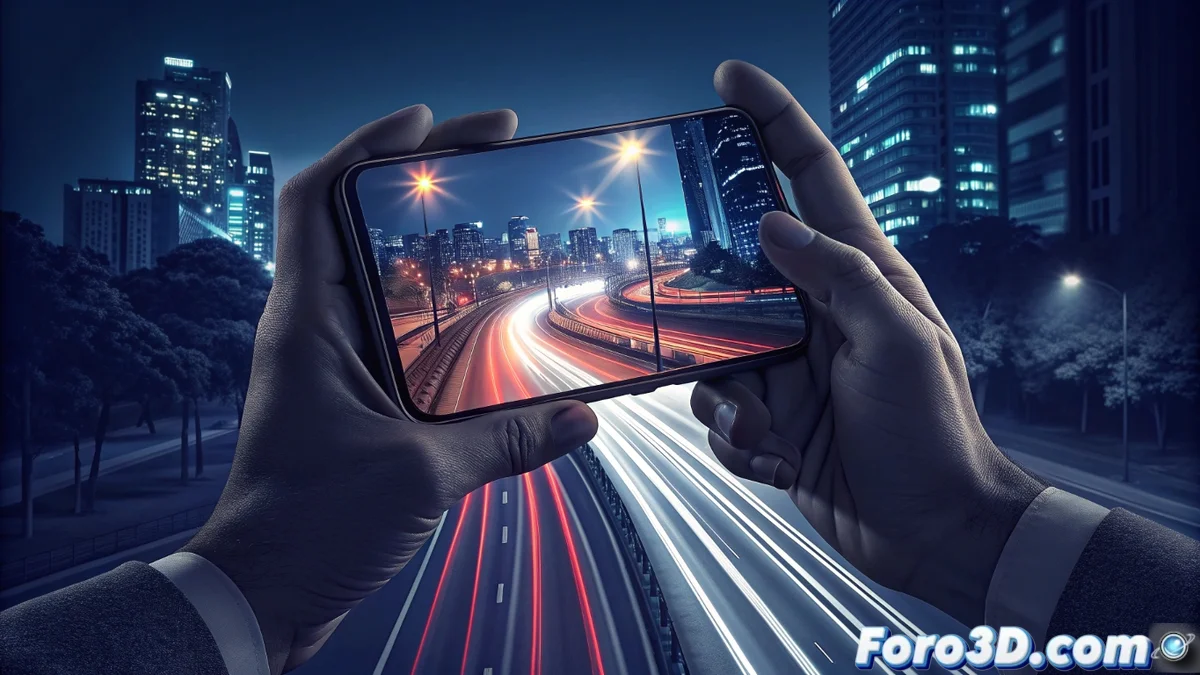
How Night Mode Works on Your Phone: Capture and Process Data
The well-known night photography feature on smartphones goes beyond a simple long exposure. It is a complex system that captures and processes light information intelligently to reveal dark scenes with clarity. 📱✨
A Two-Phase Process: Capture and Combine
When you activate night mode, the camera does not take a single photo. Instead, it captures a rapid burst of dozens of images in just a few seconds. Each frame has a different exposure level, from very dark to very bright. A specialized algorithm then aligns, analyzes, and fuses all this information into a single final photograph.
Key Steps in Computational Fusion:- Capture Multiple Shots: Under-exposed and over-exposed photos are recorded in rapid succession.
- Analyze and Align: Software, often using neural networks, compares frames to correct minor movements.
- Select the Best: The system chooses the best-lit areas with the least noise from each shot to combine them.
The result is not a photo; it is a computational reconstruction of the scene with maximum light information.
Overcoming the Limits of Physical Hardware
The small sensors in phones have a major disadvantage in the dark: they capture little light, resulting in grainy images. Computational night mode solves this by mathematically stacking many exposures. This process simulates the performance of a larger sensor, allowing colors to be more faithful and visual noise to decrease dramatically.
Advantages of This Approach:- Reduce Digital Noise: By averaging many frames, random grain is canceled out.
- Recover Details: Textures in shadows are revealed, and bright lights are controlled.
- Automatically Optimize: AI can recognize if it is a portrait or landscape and adjust parameters for better results.
The Final Trick is in Your Hands
Achieving a good photo with night mode still requires the user to keep the device as stable as possible during the seconds the capture lasts. Although the software corrects small vibrations, a steady hand is essential for the algorithm to align the images correctly and obtain that sharp, detail-filled result that seems like magic, but is pure computation. 🤳🔭