How NASA Protects Its Space Missions from Contaminating Other Worlds
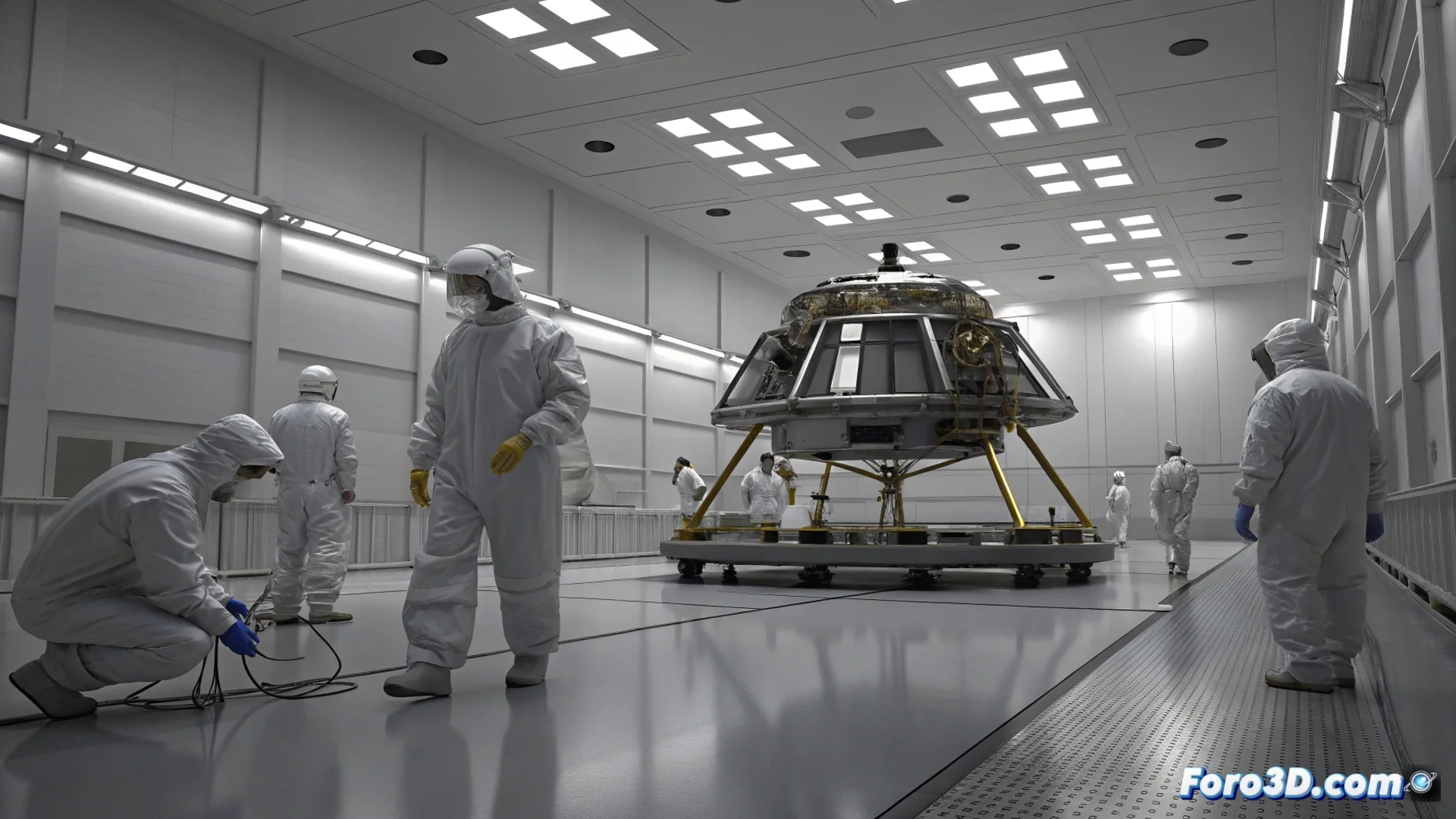
In the space agency's laboratories, there are spaces where the concept of clean takes on a cosmic meaning. These clean rooms are the setting where probes and rovers are built, with a primary mandate: prevent any form of earthly life from traveling to space. It's not just about neatness, but a fundamental scientific principle to preserve the integrity of exploration. 🚀
An Environment That Challenges the Microscopic
The cleanliness standard in these facilities transcends what humans can perceive. The goal is to eradicate particles at the microscopic level, such as cells, spores, and organic remains. To achieve this, complex systems are implemented that include high-efficiency air filtration, precise control of humidity and temperature, and the use of chemical agents and ultraviolet light. This set of measures creates a hostile environment where it is almost impossible for microbes to survive or spread.
Key Environmental Control Measures:- HEPA/ULPA Filters: Trap extremely small particles, constantly purifying the air.
- Strict Climate Control: Humidity and temperature are regulated to suppress biological proliferation.
- UV and Chemical Sterilization: Additional methods are used to decontaminate surfaces and tools.
The biggest paradox is that the greatest vector of contamination, the human being, is the one who must build the spacecraft seeking life on other planets.
The Human Protocol: The Most Critical Barrier
Anyone entering a clean room must follow a meticulous ritual. The central element is the full protection suit or bunny suit, which completely covers the body with a hood, gloves, booties, and mask. Before entering, personnel pass through an airlock and undergo cleaning with compressed air to remove particles from the surface of the sterile suit. Inside the room, movements are slow and deliberate to avoid dislodging particles from the floor.
Entry and Work Process:- Sterile Clothing: Mandatory use of the bunny suit and all its barrier accessories.
- Airlock Cleaning: Process with compressed air to dislodge contaminants.
- Controlled Movement: Technicians move slowly to avoid altering the environment.