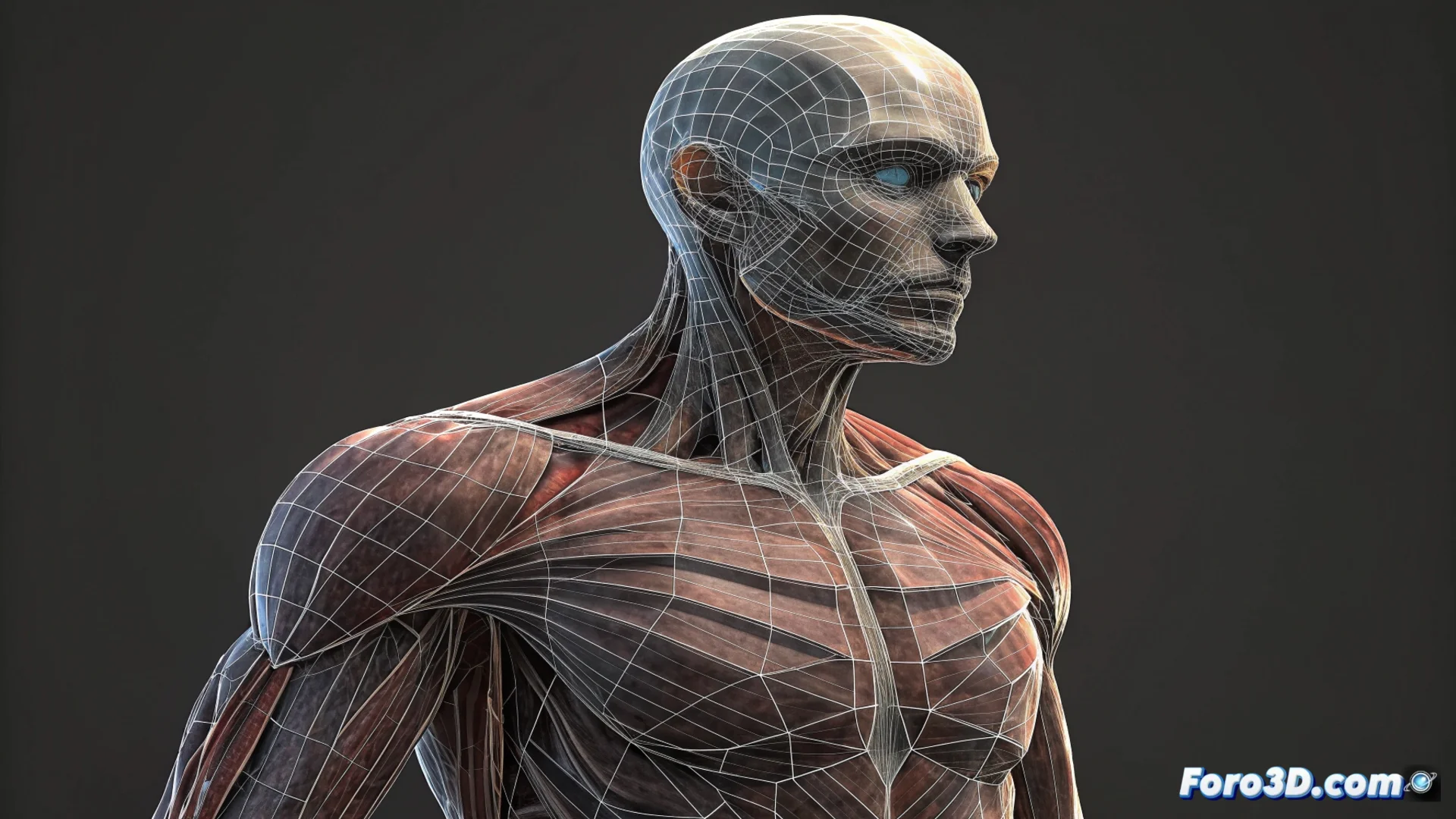
How Inconsistent Shadow Lines Fragment the Perception of Volume
In 2D illustration and 3D styles with flat shading, the lines that delimit shadows are fundamental. When these terminator lines do not obey a unified lighting logic, the object's shape is perceived as broken and the volume loses its solidity. This can cause the viewer to misinterpret the three-dimensional structure. 🎨
The Logic of a Single Light Source Defines the Shape
For a character or object to convey volumetric solidity, the lighting must be coherent. All shadows on its surface must respond to the same main light vector. If an arm casts a shadow at one angle and a leg at an opposite one, the brain processes two separate light sources. This inconsistency reveals a lack of understanding of the underlying form rather than an artistic choice. Keeping the light direction clear in the mind is the first step to drawing or shading clearly.
Consequences of Fragmented Lighting:- The object seems to exist under multiple unreal light sources, like "under two suns."
- Visual confusion makes the viewer question what they see, rubbing their eyes at the incoherence.
- It creates the impression of a technical error, not a deliberate aesthetic decision.
A poorly lit character doesn't seem to be under one sun, but under a lighting diagram that short-circuited.
Strategies to Unify Lighting When Designing
There are practical methods to ensure volumetric coherence. In illustration, an effective resource is to use a reference sketch, like a lit sphere or cube, next to the main drawing. This visual guide helps apply shadows with the same orientation to all parts of the model. In 3D environments, when using a cel shading shader, it is vital to verify that the terminator calculation uses the same directional light for the entire model, whether through the dot product of the normal or a texture ramp.
Key Points to Review in 3D:- Ensure that the shadow calculation uses a single ambient light vector for the entire model.
- Review and correct the normal map, as incorrect or erroneously smoothed normals can create chaotic shadow lines even with a single light.
- Verify the consistency of flat shading across all parts of the character to avoid visual fragmentation.
Conclusion: Coherence Builds Credibility
The perception of volume depends directly on how we handle light and shadow. Both in 2D and 3D, disciplining oneself to follow a single mental light direction prevents shapes from appearing broken or unconvincing. Reviewing normals in 3D and using reference guides in 2D are not minor technical steps, but the foundation for communicating solid and convincing forms. Consistent lighting is what makes a design perceived as a unified and credible whole. ✨