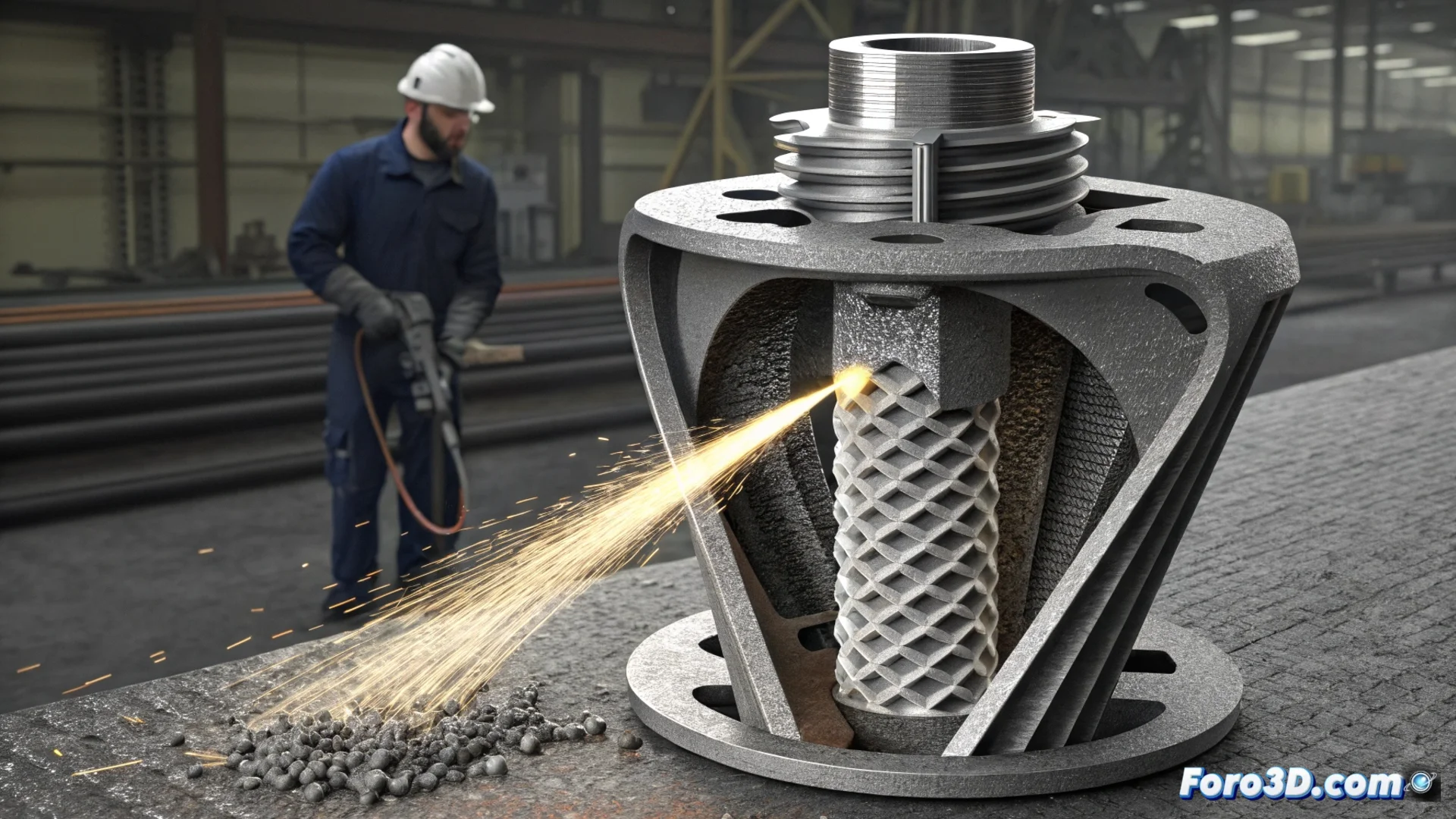
How Hardened Nozzles Can Clog with Composite Filaments
When printing with composite filaments reinforced with fibers, such as carbon or glass, a wear-resistant nozzle is needed. Although steel or ruby nozzles withstand abrasion, the microscopic fibers can detach and create a different problem: accumulating inside the nozzle channel. This risk increases significantly when using small diameters, where the space for material to flow is minimal. 🌀
The Mechanism of a Partial Clog
Particle buildup rarely blocks the outlet completely. Instead, it forms a restriction that interferes with the flow irregularly. This causes episodes of under-extrusion that make the printed part lose quality and layers fail. It's a deceptive problem because the print doesn't stop, but degrades progressively.
Factors that Worsen Buildup:- Reduced Nozzle Diameter: A 0.4 mm orifice offers very little margin for fibers to pass without getting stuck.
- Unstable or Low Temperature: If the base plastic doesn't flow with sufficient viscosity, it doesn't effectively carry the particles.
- Print Length: The more composite material is used, the greater the chance that residues will accumulate.
Material designed to make stronger parts can, paradoxically, weaken the most critical point of the extruder.
Strategies to Prevent Particle Buildup
Prevention is key to maintaining consistent flow. Opting for a 0.6 mm nozzle is one of the most effective decisions, as the larger internal diameter reduces resistance to fiber passage. Additionally, it is vital to set a stable temperature at the high end of the range suggested by the filament manufacturer. This ensures the base polymer is fluid enough to carry the residues.
Recommended Preventive Actions:- Check and clean the nozzle regularly after long printing sessions with these materials.
- Perform purges with standard filament (PLA or ABS without filler) to try to expel accumulated residues in the hotend.
- Use fil