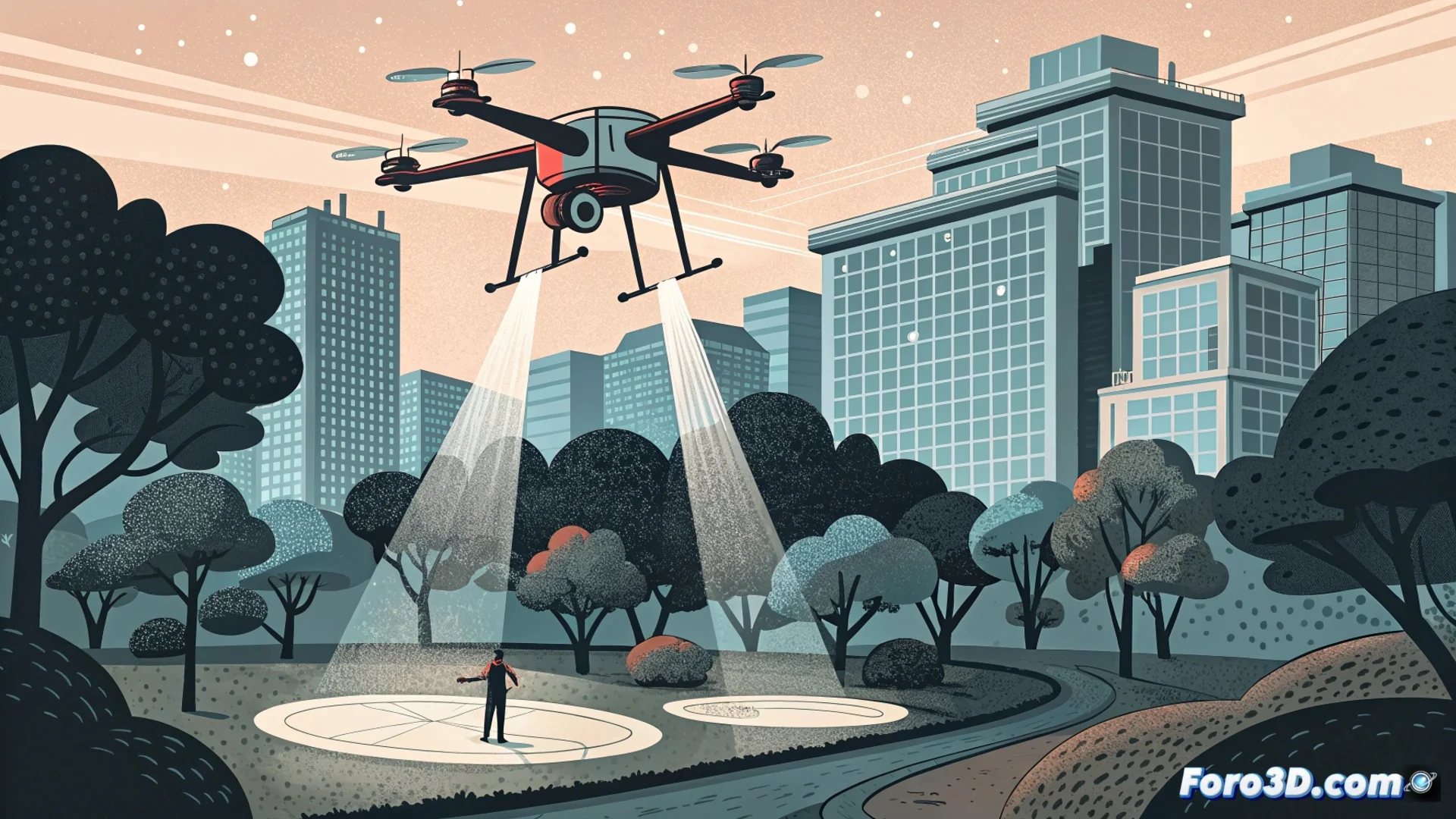
How Drone Autonomy with Computer Vision Works
A drone's ability to fly autonomously is achieved through a combination of physical components and programmed logic. This system perceives the world, understands it, and acts without direct control from a pilot. 🚁
The Core of the System: Perceiving and Understanding in 3D
Several cameras capture the environment from different angles. An integrated flight brain in the drone fuses this data in real-time to generate a three-dimensional model of the space. This map is constantly refreshed, allowing the drone to know where it is and what is around it.
Key Perception Features:- Process computer vision data directly on the device, without sending it to the cloud.
- Reduce latency so flight decisions are nearly instantaneous.
- Identify objects, calculate distances, and predict safe trajectories.
Edge artificial intelligence is what enables reactions in milliseconds, essential for flying between trees or inside structures.
Planning the Route and Executing the Action
With the 3D map active, the software chooses the safest path. It not only actively avoids obstacles but can also follow a moving subject, maintaining an optimal camera frame.
Advanced Navigation Capabilities:- Move autonomously in complex indoor and outdoor spaces.
- Dynamically follow a target, adapting the route in real-time.
- Make immediate decisions in response to unforeseen changes in the environment.
The Limits of Intelligent Autonomy
Although the system is highly capable, its performance depends on conditions. The onboard logic can face challenges with erratic movements or in adverse environmental situations, where sensory perception may be compromised. 🤖