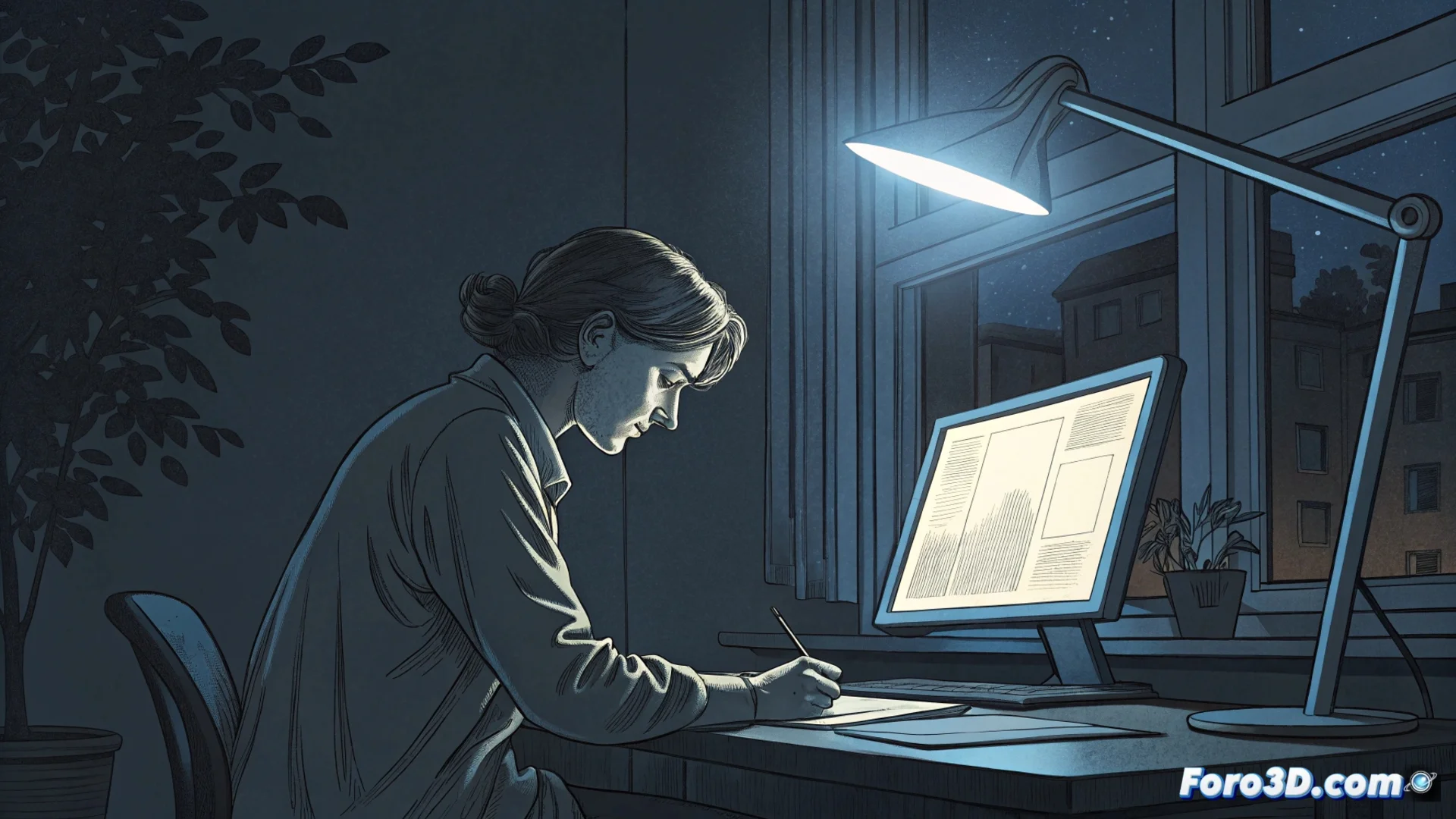
How Blue Light from Screens and Cool Lights Disrupts Your Sleep
The artificial lighting we use at night, especially cool or white light, contains a high component of blue wavelengths. This type of light has a direct and powerful effect on our body, suppressing the secretion of melatonin. Without this hormone, the body does not receive the signal to prepare for sleep, which completely disrupts our natural rhythm. 😴
The Internal Mechanism That Loses Synchronization
In the retina of our eyes, there are photosensitive ganglion cells specialized in detecting blue light. These cells connect directly to the suprachiasmatic nucleus of the brain, which acts as our central pacemaker or master clock. When they perceive this light spectrum at inappropriate times, such as in the afternoon or at night, the brain mistakenly interprets it as daytime.
This misinterpretation triggers a cascade of events:- The suprachiasmatic nucleus sends an alert signal to inhibit the pineal gland.
- The pineal gland stops producing and releasing melatonin into the bloodstream.
- The body remains in a state of wakefulness and alertness, contrary to what is necessary to initiate restorative sleep.
It seems that maximum nighttime productivity under hospital lights may have the small drawback of turning your rest into a distant memory.
Real-Life Results and Strategies to Counter Them
Persistently altering this cycle not only delays the moment of falling asleep but also causes fragmented and less deep sleep. The lack of quality rest affects cognitive performance, mood, and long-term health. The good news is that we can take measures to protect our circadian rhythm.
Practical Actions to Mitigate the Effect of Blue Light:- Reduce exposure: Avoid screens (phones, tablets, computers) and cool lights at least 1-2 hours before bedtime.
- Use technology in your favor: Activate night mode or warm light filters (like Night Shift or Flux) on all electronic devices at dusk.
- Change ambient lighting: Prefer lamps with bulbs in warm and yellowish tones and dim the light intensity in the hours before sleep.
Regain Control of Your Nighttime Rest
Understanding how blue light interferes with our biological clock is the first step to taking control. Implementing simple habits, such as creating an environment with dim and warm lighting at night, allows the body to initiate its natural preparation process for sleep. Protecting melatonin production is essential to ensure restorative sleep and maintain a healthy and synchronized sleep-wake cycle. 🌙