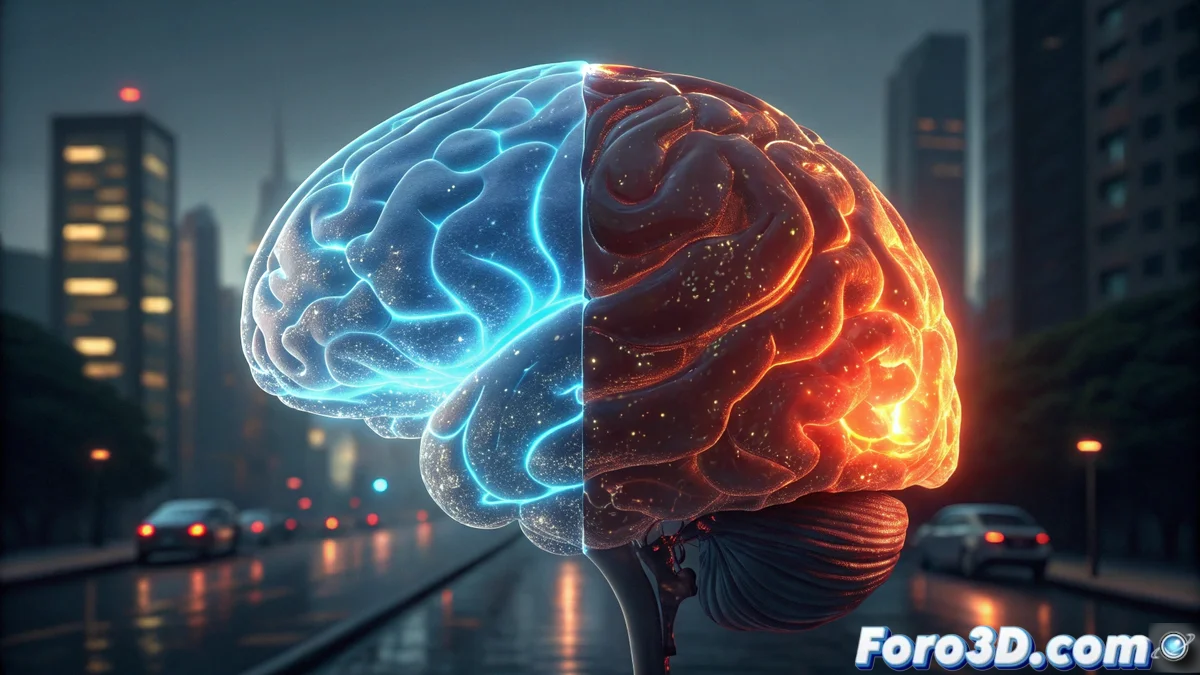
How Advertising Alters Your Brain to Make You Buy
Exposing yourself to ads doesn't just show products; it actively modifies how your mind works 🧠. The logic you use to analyze information can drastically reduce its effectiveness, a phenomenon backed by neuroscience.
The Internal Conflict: Emotion vs. Reason
Powerful advertising stimuli activate the limbic system, the center for managing emotions and desires. When this area is excited, the ventromedial prefrontal cortex, crucial for making rational decisions and weighing costs, reduces its activity by 20% to 60%. Basically, your brain switches to a mode where feeling predominates over thinking.
Key Findings from a Neuroscientific Study:- When showing recognized brands, activity in the nucleus accumbens (associated with desire) increases by approximately 65%.
- Simultaneously, activation of the insula, the area that processes prices and potential risks, can decrease by up to 40%.
- This imbalance causes the brain to prioritize the emotion of wanting something over the task of evaluating its real need or price fairness.
The brain, essentially, prefers desire when analyzing risks.
Consequences for Your Decision-Making Ability
This neuronal mechanism explains impulse buying. Advertising doesn't just generate longing; it also silences the part of your mind that questions that longing. The ability to compare options and make thoughtful decisions is directly compromised. It's not that you become irrational, but rather that the brain tools for being rational operate with limited capacity when emotions dominate.
What Does This Mean in Practice?- Your critical capacity is diminished during and after viewing effective advertising.
- You evaluate risks and negative aspects of a potential purchase less.
- The emotional impulse can override conscious deliberation processes.
Regaining Conscious Control
Therefore, when you feel a strong impulse for that latest gadget, remember it may not be entirely your choice. It could be your prefrontal cortex taking an unsolicited break 😅. Knowing this bias is the first step to counteracting it. The final choice is yours: avoid exposing yourself to ads or allow them to continue influencing your brain circuits in this way. Understanding the biology behind marketing gives you power to decide with greater freedom.