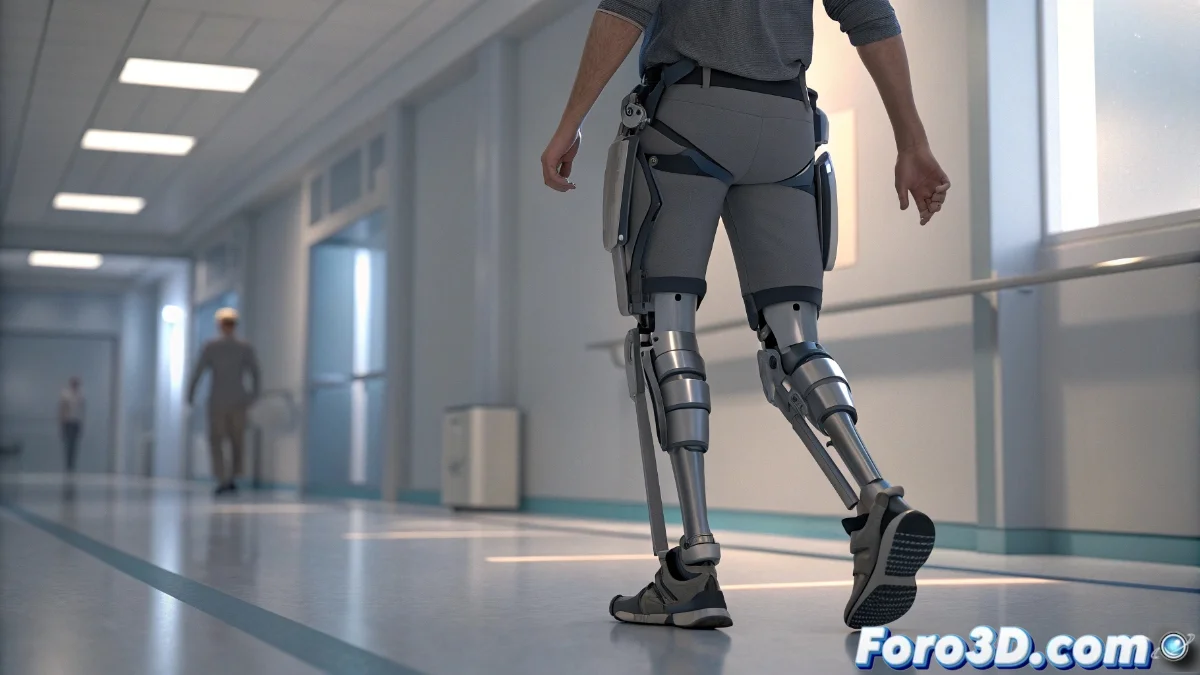
Honda Walking Assist: Exoskeleton to Improve Mobility
The Honda Walking Assist is a lightweight robotic device that is worn on the hips and lower limbs, designed to assist individuals with walking limitations. This advanced exoskeleton incorporates sensors and actuators that monitor joint movement and provide smooth, coordinated support during the swing phase of the gait. Its purpose is to reduce physical effort when walking, increase balance, and promote a more natural gait pattern, being especially valuable in rehabilitation processes or for older adults with diminished motor abilities. 🦿
Technology and Internal Operation
The system is based on an intelligent control algorithm that continuously evaluates the hip angle and walking speed, modulating assistance proportionally. It includes a rechargeable battery that ensures hours of autonomy, and its open frame design allows for easy adjustment to various body types. Users experience a reduction in muscle fatigue, enabling them to cover longer distances with less wear, ideal for extended therapies or daily tasks.
Main Features:- Real-time algorithm that adapts assistance according to movement
- Long-lasting battery for prolonged sessions
- Adaptable structure that fits different body builds
Technology does not replace human effort, but complements it to achieve more efficient and safe mobility.
Practical Applications and Advantages
This exoskeleton is mainly used in clinical settings for the recovery of patients with mobility impairments resulting from strokes or spinal injuries. It also benefits people with muscle weakness associated with aging, supporting them in maintaining their autonomy. Research indicates that regular use can strengthen muscle power and coordination, promoting faster recovery and a higher quality of life.
Key Benefits:- Reduction of fatigue in leg and hip muscles
- Increase in stability during walking
- Promotion of a natural and efficient gait pattern
Final Reflections
The Honda Walking Assist represents an innovative solution in the field of robotic assistance, combining advanced technology with ergonomics to empower those facing mobility challenges. Although it might evoke ideas of advantage in competitions, it is crucial to remember that it requires muscle activation from the user—it is not a wheeled chair, but an intelligent companion for the journey toward a more active life. 🌟