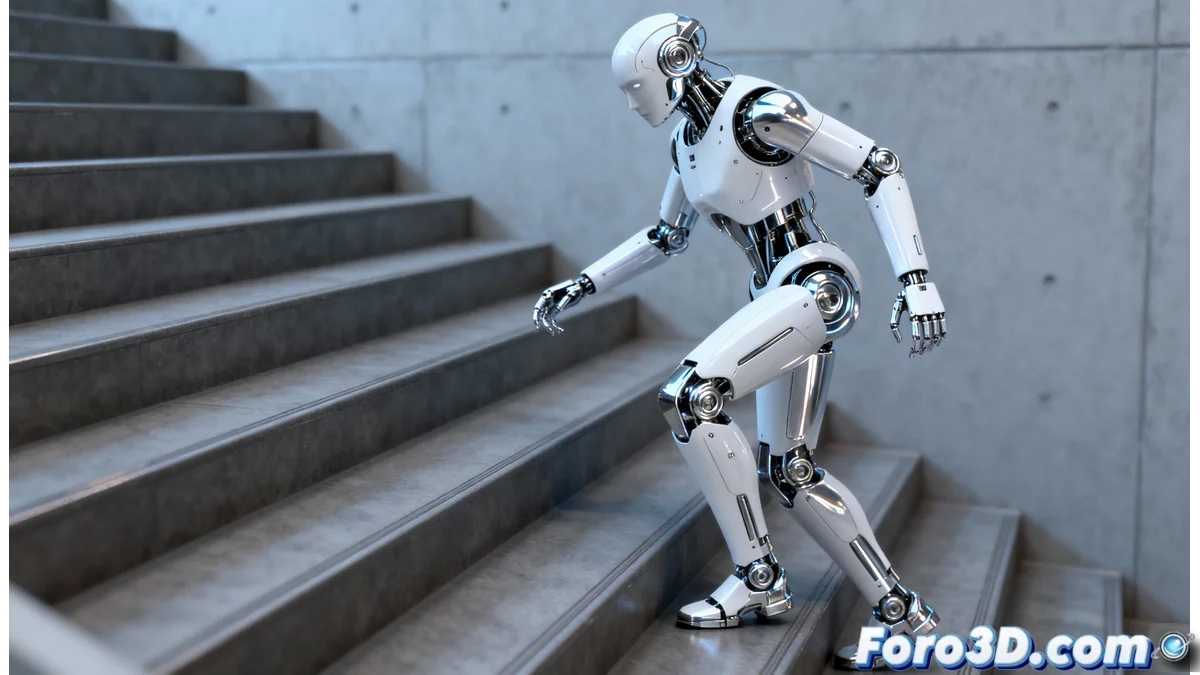
Honda presents ASIMO as a benchmark in humanoid robotics
The humanoid robot ASIMO developed by Honda marks a milestone in the evolution of machine-human interaction. This technological marvel not only demonstrates exceptional bipedal locomotion capabilities but also incorporates artificial intelligence systems that enable real-time contextual responses. Its design represents the culmination of decades of research in autonomous mobility and multimodal communication. 🤖
Pioneering advances in mobility and perception
ASIMO's mechanical architecture integrates high-precision actuators and gyroscopic sensors that provide remarkable stability during walking, running, or climbing stairs. Its computer vision systems process the 3D environment, identifying obstacles and instantly adapting its trajectory. Simultaneous recognition of multiple voices and body gestures facilitates natural interactions even in environments with acoustic interference.
Outstanding interaction capabilities:- Dynamic balance on uneven surfaces through predictive motion control
- Processing of voice commands with environmental noise filtering
- Identification of human gestures to anticipate collaborative actions
ASIMO establishes new paradigms in bipedal robot motor coordination, combining mechanical elegance with advanced contextual responses
Influence on contemporary robotic development
The technological legacy of this humanoid transcends its operational functioning, inspiring improvements in energy efficiency and structural modularity. The control algorithms developed for ASIMO have been adapted in assistive robotics projects, optimizing service tasks in domestic and healthcare environments. Honda has openly shared these advances, accelerating the evolution toward socially integrated robots.
Key contributions to the robotic ecosystem:- Research platform for bipedal locomotion studies in real environments
- Human-robot multimodal communication methodologies
- Standardization of safety protocols in physical interactions
Reflections on the future of humanoid robotics
Although ASIMO performs activities like greeting or object transport with surprising naturalness, it still reveals limitations in unforeseen situations such as low obstacles or slippery surfaces. These situations remind us that technical perfection remains a goal under development, where each advance brings humanoids closer to full integration into human societies. The path initiated by this pioneer continues to expand the limits of what is possible in robotic autonomy. 💡