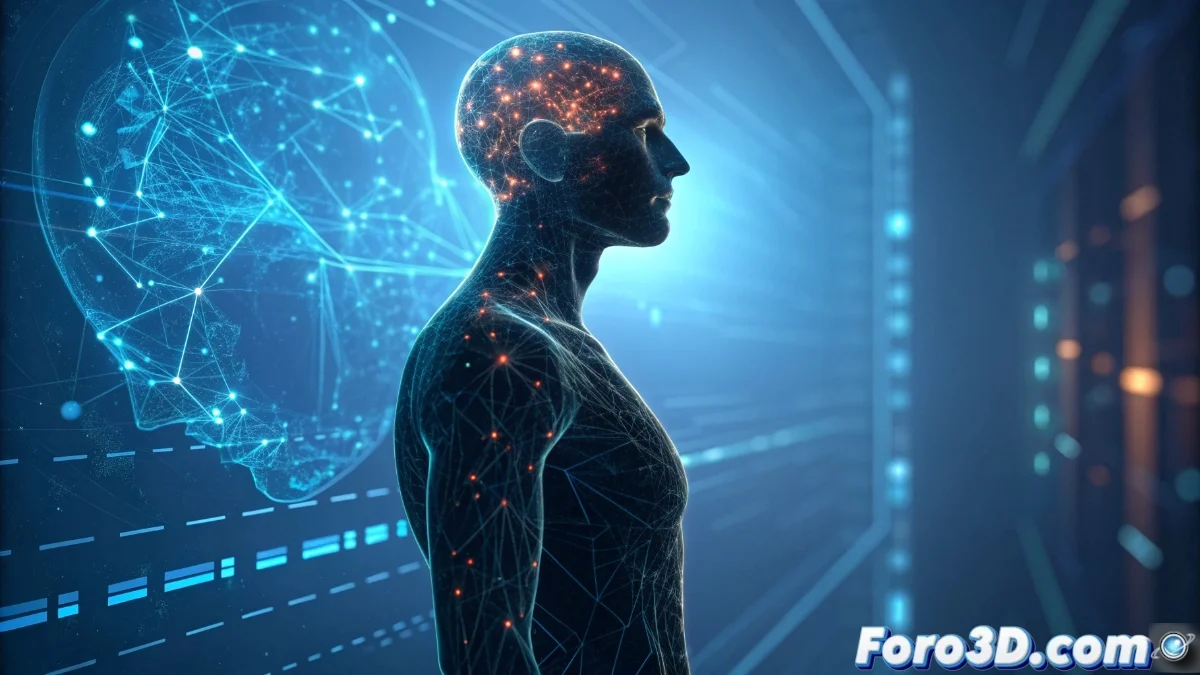
Homo Deus: Human Transformation According to Yuval Noah Harari
In his work Homo Deus, Yuval Noah Harari immerses us in a deep analysis of how technological advances are radically reconfiguring the essence of humanity. The author exhaustively examines how artificial intelligence and biotechnology are altering the fundamental concepts of existence, raising crucial questions about our destiny as a species in a world increasingly governed by data and algorithms. 🤖
The Convergence Between Biology and Technology
Harari projects a future scenario where humans begin to overcome their biological limitations through integration with advanced technological systems. Artificial intelligence not only enhances our mental capabilities but could eventually eclipse them, generating a new form of consciousness where the human experience is transformed at its foundations. This process revolutionizes basic notions such as mortality, happiness, and free will, challenging the pillars of our contemporary society.
Key aspects of this fusion:- Transcendence of biological limitations through implants and technological enhancements
- Cognitive enhancement through integrated artificial intelligence systems
- Reconfiguration of traditional human consciousness and experience
"Perhaps we will have to explain to our grandchildren that there was a time when humans made decisions without consulting algorithms"
Ethical Dilemmas and Social Transformation
The author delves into how these technological transformations generate profound moral dilemmas and restructure established social organizations. New forms of inequality emerge based on differential access to technological enhancements, while concepts like privacy and individual autonomy acquire completely novel meanings. Harari invites us to consider what it will mean to be human when artificial intelligence performs most tasks better than us, and what sense life will have when machines cover all our fundamental needs.
Main social consequences:- New social gaps based on access to technological enhancements
- Reinterpretation of concepts like privacy and personal autonomy
- Redefinition of human purpose in a world of self-sufficient machines
The Human-Technological Horizon
In the near future, we might face the paradox of explaining to new generations that there was a time when humans made autonomous decisions without algorithm intervention, and where death from natural causes was the norm instead of programmed obsolescence. This final reflection synthesizes the essence of Harari's approach: we are on the brink of an unprecedented evolutionary transformation that will redefine what it means to be human in the coming centuries. 🌍