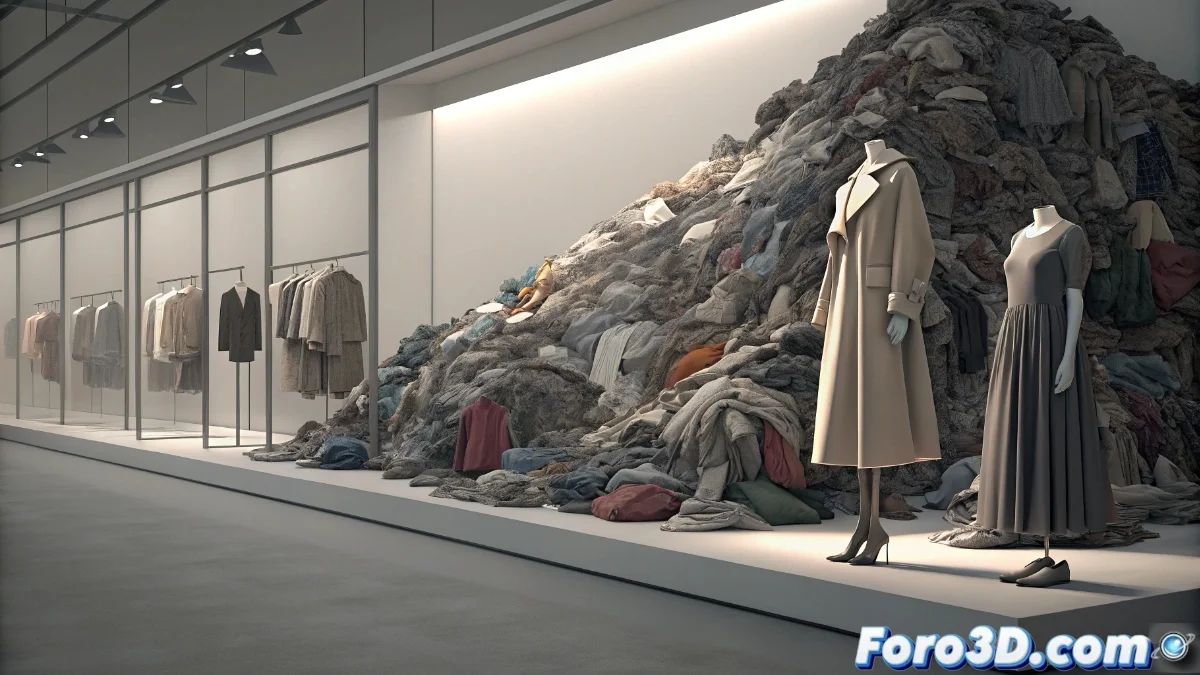
H&M and its Conscious Line: Real Ecology or Greenwashing?
The fashion chain H&M has launched its Conscious line as an effort to incorporate more responsible practices in the textile industry. Using organic cotton and recycled polyester, the company seeks to position itself as a benchmark in sustainability. However, critical consumers point out that these initiatives represent only a minimal percentage within its vast catalog. 🌱
H&M's Mass Production Model
Despite green advertising campaigns, H&M maintains a massive business model that prioritizes production in large volumes and rapid collection turnover. This approach generates a significant environmental impact, contradicting the supposed benefits of its eco-friendly line. The company manufactures millions of garments per year, questioning the coherence of its sustainable discourse. 📈
Key aspects of H&M's model:- Annual production of millions of garments with high resource consumption
- Rapid collection turnover that encourages excessive consumption
- Environmental impact amplified by the scale of operations
Sustainability is not achieved with a green collection, but with a radical change in the business model.
The Disconnect Between Marketing and Reality
The promotion of the Conscious line highlights recycled materials, but the standards are not applied uniformly throughout the supply chain. External organizations have criticized the ambiguity in sustainability criteria, allowing H&M to capitalize on the demand for eco-friendly products without implementing deep transformations. Customers demand transparency, but the lack of clear reports makes it difficult to verify real progress. 🔍
Problems identified in H&M's strategy:- Ambiguous criteria for defining what is "sustainable"
- Lack of independent and verifiable certifications
- Confusing communication that can mislead the consumer
Final Reflection: Green Marketing or Genuine Commitment?
H&M presents us with an ecological narrative while maintaining a production system that prioritizes volume over quality and durability. The Conscious line clothing, although well-intentioned, is overshadowed by the rest of the collections that follow fast fashion patterns. Consumers must be attentive to distinguish between genuine actions and greenwashing strategies. 🌍