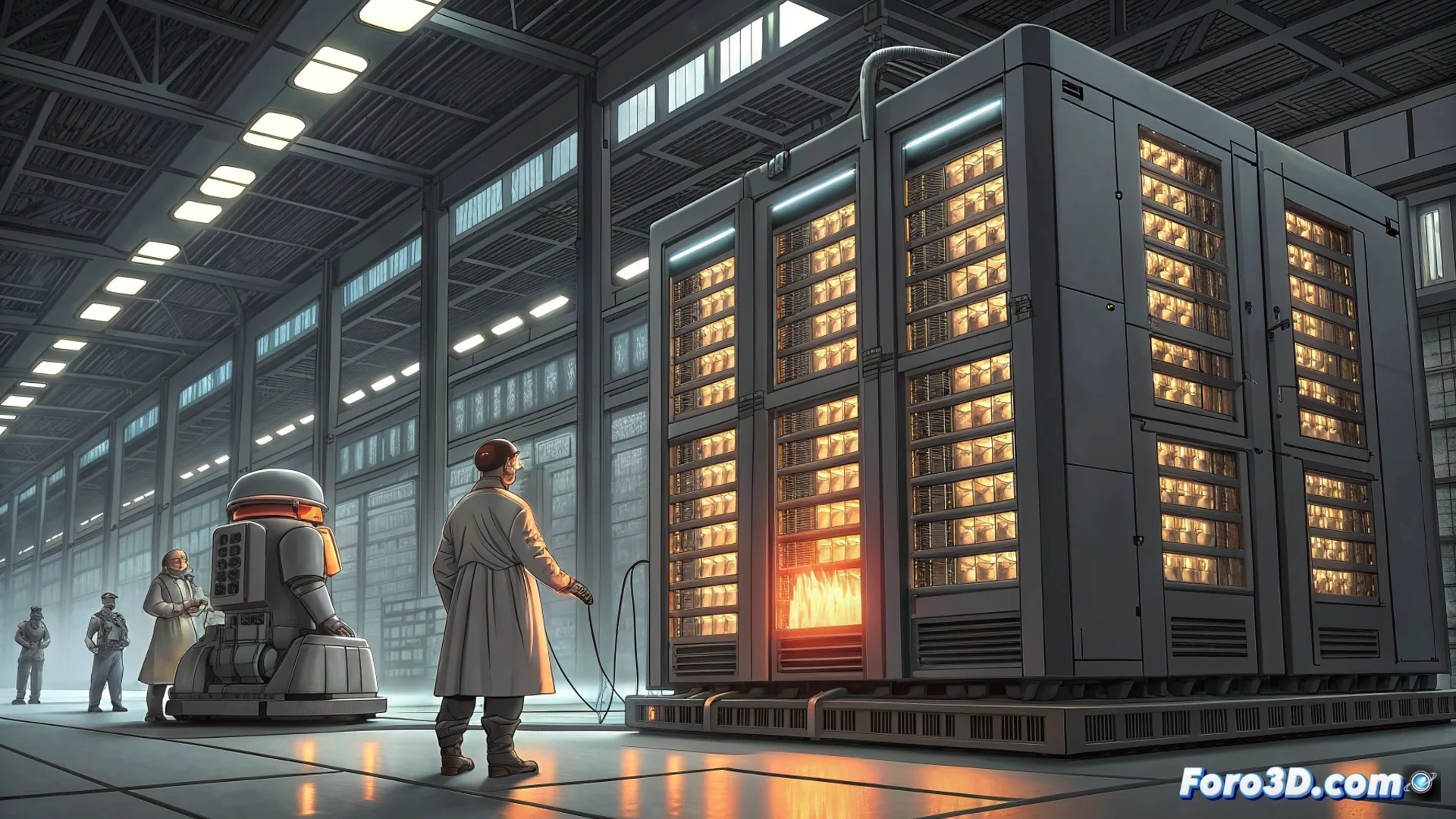
Hithium Launches 5 MWh Liquid-Cooled Energy Storage System
Hithium company has just unveiled a new solution for large-scale energy storage. It is a stationary system that integrates liquid cooling technology and offers an impressive capacity of 5 megawatt-hours. This development is designed for renewable energy projects, microgrids, and industrial complexes. 🔋
LFP Cell Core and Advanced Thermal Management
The heart of the system consists of lithium iron phosphate (LFP) cells with a capacity of 314 ampere-hours. The key innovation lies in its liquid cooling architecture, designed to precisely control the temperature of each individual cell. This method not only aims to make batteries last longer but also prioritizes operational safety.
Main technical features:- Uses long-life LFP cells with 314 Ah capacity.
- Architecture with liquid cooling for precise cell-level thermal control.
- Incorporates improvements in insulation and electrical protection for greater stability in operation.
The liquid cooling design aims to significantly improve safety and extend battery life.
Modular Approach to Reduce Long-Term Costs
Hithium has designed this system to be modular, which simplifies installation and maintenance. By focusing on increasing energy density and optimizing heat management, the company achieves more efficient use of space and resources. The end result points to a lower total cost of ownership throughout the product's lifecycle.
Advantages of the modular design and thermal management:- Facilitates installation and maintenance of the system thanks to its modular construction.
- Optimizes space usage by achieving a 46% higher energy density than previous solutions.
- Aims to provide a durable and reliable solution for applications requiring massive energy storage.
Positioning in the Energy Market
With this launch, Hithium positions itself directly in the large-scale stationary storage segment. The combination of high capacity, advanced thermal management, and a cost-reducing design makes it ideal for integrating intermittent renewables and providing resilience to industrial grids. The goal is clear: to provide battery infrastructure that is powerful, safe, and economically viable for decades. ⚡