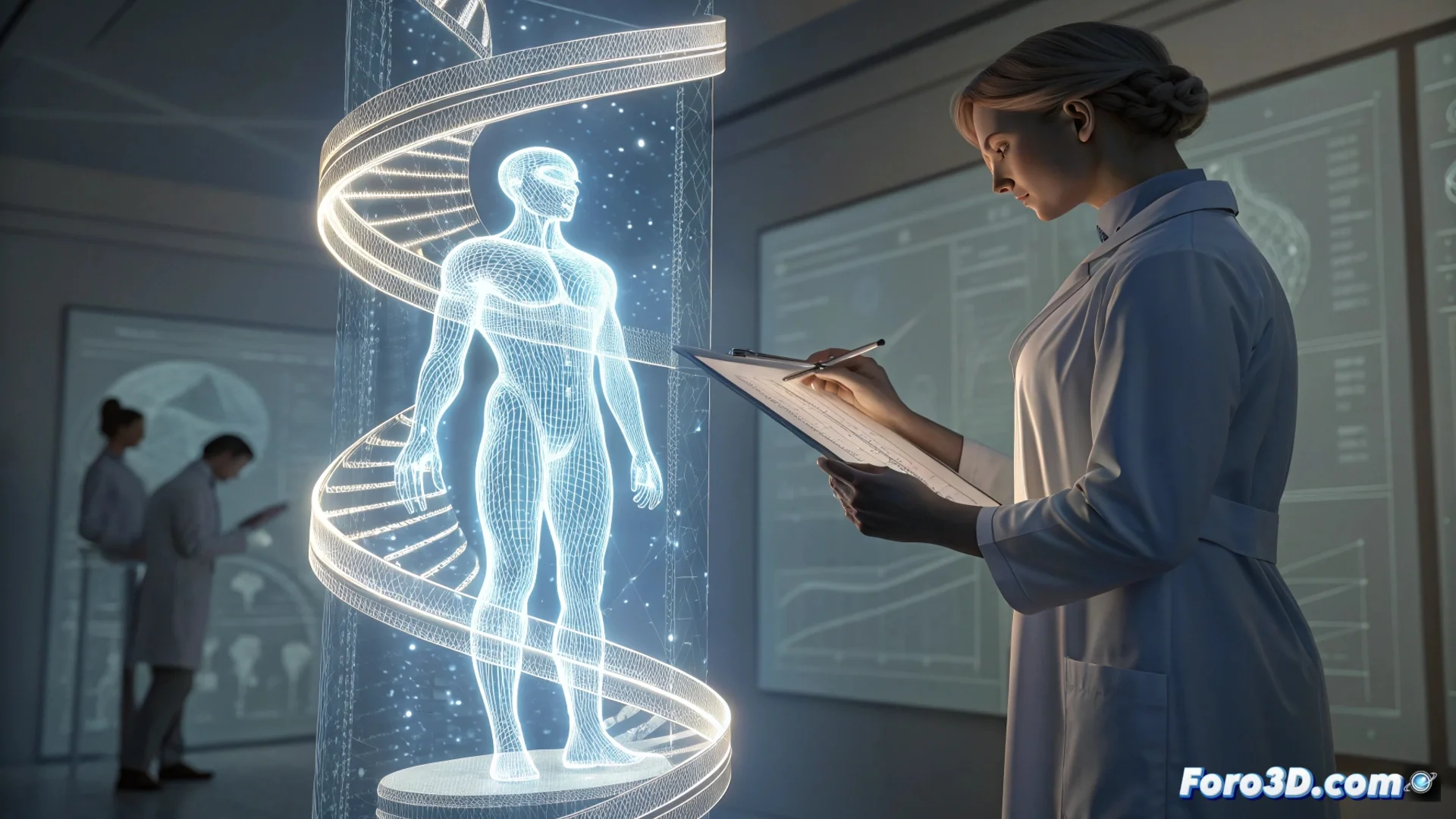
Hippocrates Reformulates the Oath for the Digital Era
The historical figure of Hippocrates examines the current landscape of mental health and the growing phenomenon of people self-diagnosing using the internet. 🔍 He identifies a key problem: many digital tools try to replace the professional instead of facilitating the patient finding them. His proposal is not to eliminate technology, but to reorient its fundamental ethical purpose.
An Ethical Code for Machines
The central solution he proposes is to create a Hippocratic Oath for Algorithms. This ethical framework would be programmed into an open-source diagnostic artificial intelligence. Its foundation would be the primordial principle of first, do no harm. The AI would never issue definitive diagnoses, as labeling a mental state is complex and requires human judgment. Instead, it would function as an assistant that employs a Socratic dialogue to help the user explore and understand their symptoms.
Key functions of the guide AI:- Avoid giving automatic and closed diagnostic conclusions.
- Use reflective questions for the user to analyze their own experience.
- Process the conversation to identify patterns and areas of concern.
The priority remains to do no harm, a principle that now must apply to algorithms.
Technology as a Connector, Not an End
The ultimate goal of this automated dialogue is not to offer a robotic response. After analyzing the interaction, the system generates a verified list of professionals in mental health available near the user's location. The design always prioritizes human intervention over any deduction made by the machine. Thus, technology ceases to be a substitute and transforms into a responsible bridge that connects the person with the specialist who can truly help them. 🤝
Features of the bridge system:- Updated and validated database of therapists and psychiatrists.
- Filtering by location, specialty, and working methods.
- The final result is always a recommendation to contact a human.
The Irony of Programming Prudence
The underlying paradox is that, to prevent a machine from diagnosing, it must first be programmed with a level of caution and prudence that many humans on the internet do not demonstrate. This approach reverses the current logic: instead of seeking for the AI to imitate the diagnostic speed (often erroneous) of the