Hip Hop Family Tree: The Graphic History of the Birth of a Movement
The work Hip Hop Family Tree by Ed Piskor has become an essential reference for understanding how hip hop culture emerged. This project, which began as a web series and was later published in physical volumes, traces a detailed map from the first street parties in the Bronx until the genre established itself as a global phenomenon. Piskor not only documents, but connects the lives of legendary figures like Afrika Bambaataa and Grandmaster Flash with the ecosystem of labels and media that propelled them. 🎤
A Visual Journey to the 70s and 80s
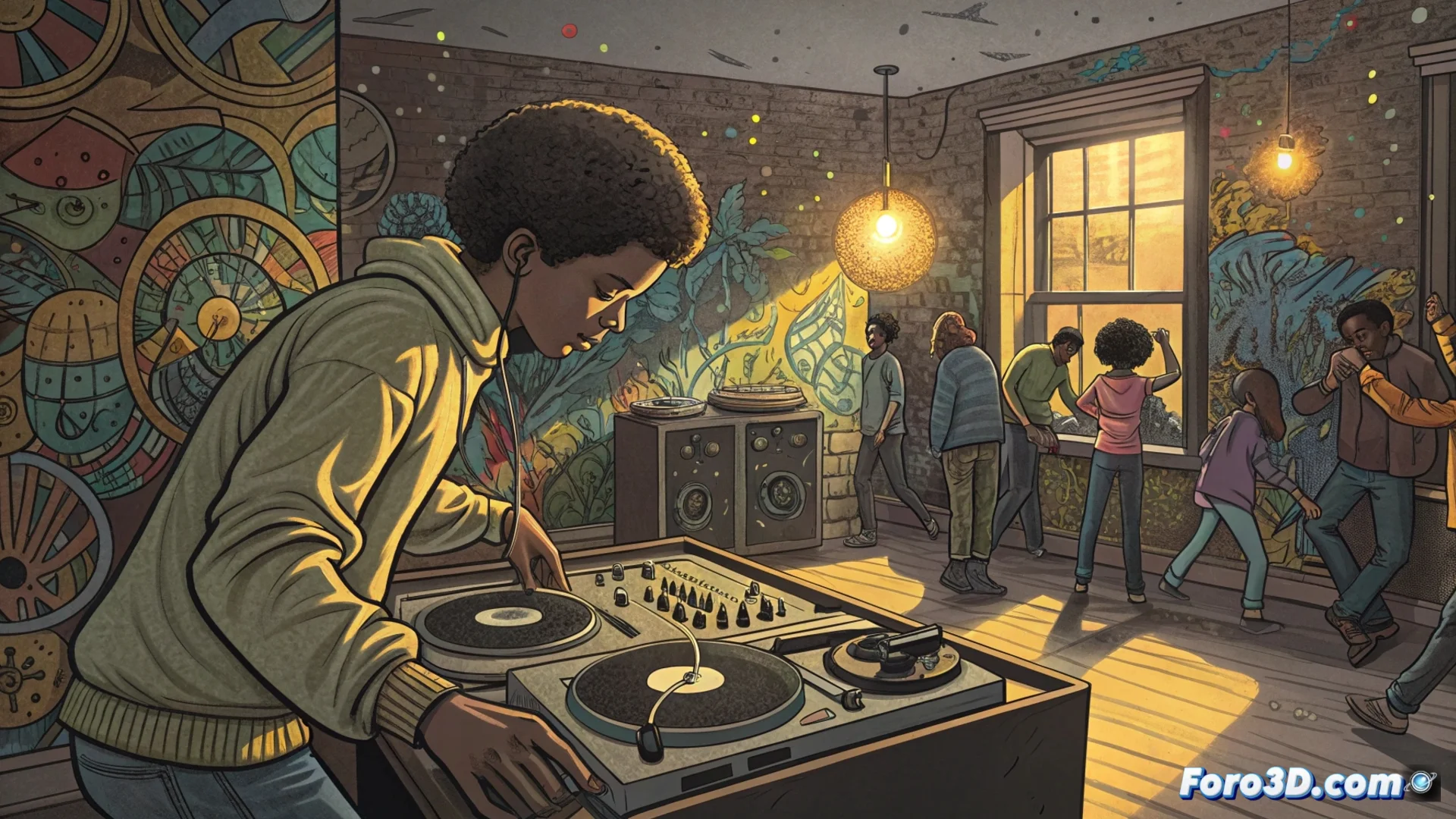
To fully immerse the reader, Piskor adopts an aesthetic that faithfully replicates the look of comics from the era. He uses sepia-toned paper, dot patterns to simulate color, and a deliberately faded palette. This artistic approach is not a mere whim; it serves to place the narrative in its historical context, making the reader perceive the pages as an artifact from that time. The linework, though personal, captures the essence and attitude of the real protagonists.
Key Features of the Graphic Style:- Use of dot patterns (Benday dots) to recreate old offset printing.
- Limited and earthy color palette that evokes past decades.
- Page design and typography that imitate fanzines and underground publications.
"Piskor builds a metaphorical family tree, showing how an idea in New York sprouted in Los Angeles."
Structure: Dynamic Encyclopedia
The author organizes the vast information with the precision of a historical chronicle, but presents it with the rhythm of a graphic novel. Each section focuses on a milestone: a breakthrough record, a key rivalry, or the birth of a new style. This structure allows for parallel and intertwined exploration of the four pillars of hip hop: DJing, MCing, breaking, and graffiti art. Piskor demonstrates how these elements influenced each other to form a cohesive movement.
Highlighted Structural Points:- Non-linear narrative that connects simultaneous events on different coasts of the US.
- Concise biographies that intertwine with the social and commercial context of the era.
- Emphasis on analog media (cassette tapes, flyers) that spread the culture.
The Legacy of a Foundational Culture
Hip Hop Family Tree functions as a vital document that preserves the memory of a cultural revolution born on the streets. Piskor achieves more than listing dates and names; he weaves the complex web of relationships, influences, and chance moments that allowed hip hop to transcend its local origins. The work is a powerful reminder that, before the digital era, culture spread from hand to hand, with the distinctive sound of a scratching vinyl as its soundtrack. 📼