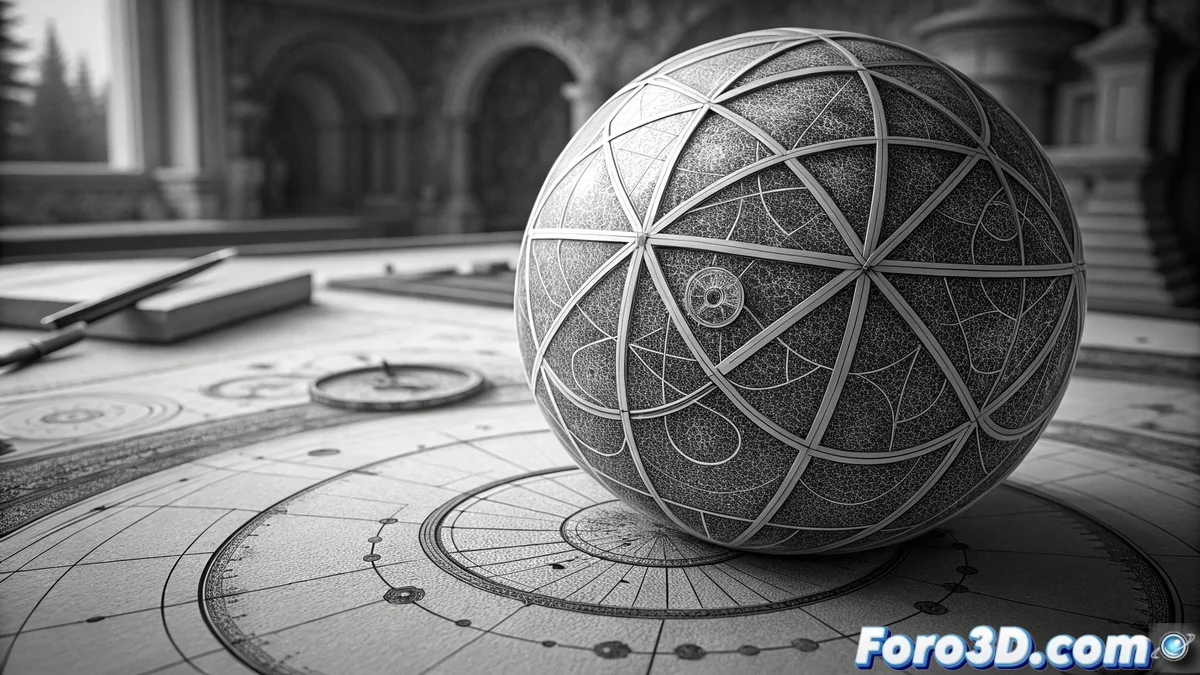
Hatching and Cross-Hatching in Traditional Illustration
The artistic hatching constitutes an essential methodology where the creator develops tonal values through calculated linear arrangements. These strategies transform two-dimensional surfaces into convincing volumetric representations through modifications in density, thickness, and orientation of the marks, producing everything from subtle transitions to intense contrasts without employing conventional blending techniques. 🎨
Fundamentals of Basic Hatching
Simple hatching uses sequences of parallel strokes that maintain directional uniformity while regulating intensity through adjustments in their spacing. When the lines are densely concentrated, they generate dark areas that indicate deep shadows, while their gradual distribution creates intermediate tones that define lit areas.
Applications of Basic Hatching:- Flat or gently curved surfaces where texture remains secondary to volume
- Meticulous control over light transitions through organized rhythmic patterns
- Reinforcement of object anatomy following natural structural directions
The linear direction frequently follows the anatomical conformation of the element, enhancing its three-dimensionality and responding to imaginary light sources that delimit zones of clarity and darkness.
Advanced Evolution with Cross-Hatching
Cross-hatching incorporates superimposed layers of lines at various angles, generally between 30° and 90° relative to the initial layer, forming a mesh of marks that progressively increases tonal density. Each new layer of strokes darkens the area while adding visual complexity, allowing for very dark values while preserving the distinctive linear texture.
Characteristics of Cross-Hatching:- Variable angulation according to the object's morphology for controlled transitions
- Implementation of acute angles for smooth and progressive gradients
- Use of pronounced angles to demarcate abrupt changes or intense shadows
The Contemporary Paradox
The fundamental irony lies in the fact that the more time you dedicate to perfecting these methodical techniques, the greater the tendency to attribute your artistic work to automated digital filters. This paradox reflects the growing disconnection between traditional manual processes and contemporary perceptions of visual creation. ✏️