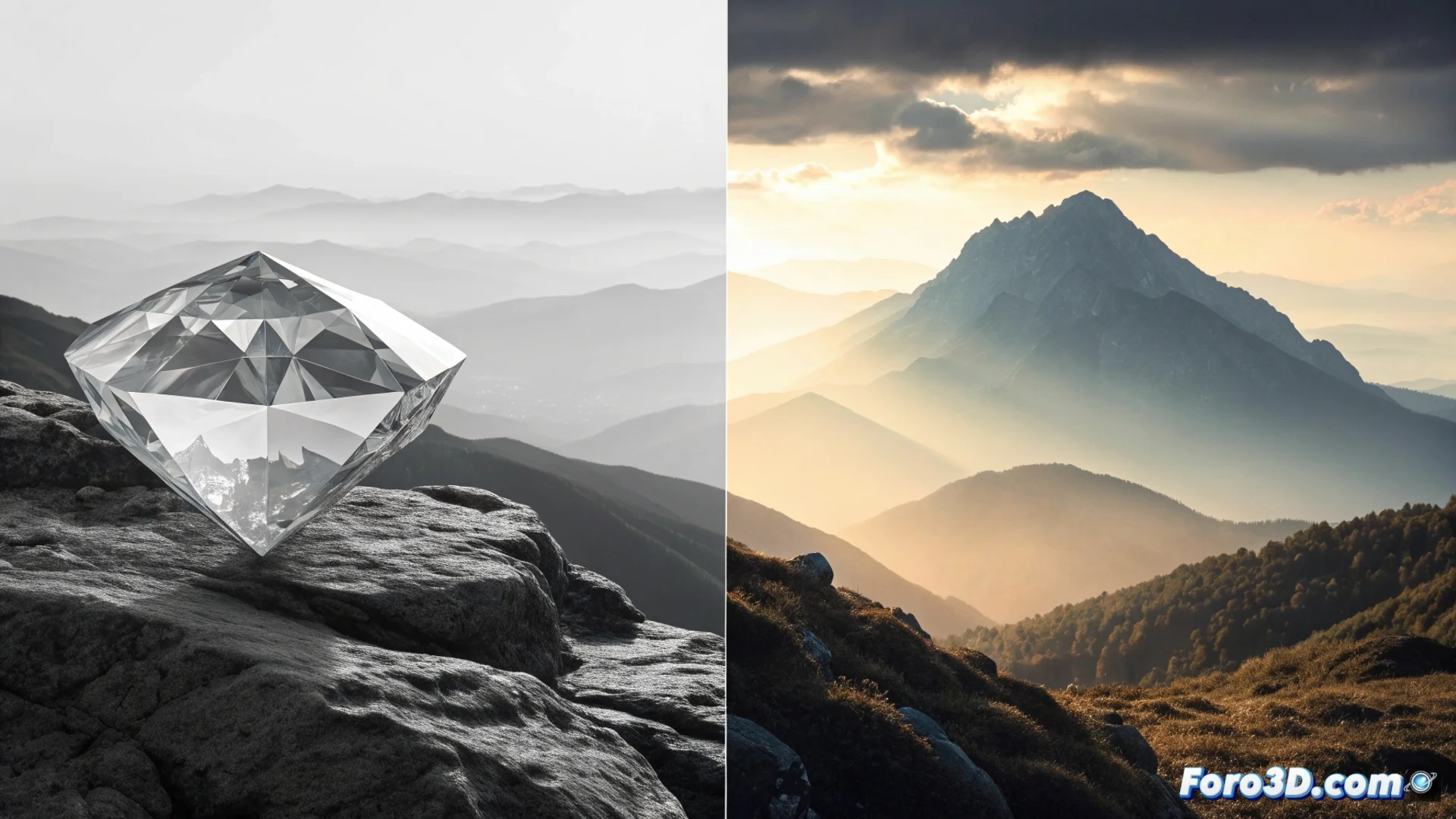
Hard and Soft Edges in Digital Painting: Guiding the Gaze
In digital art, edges are fundamental. They not only mark where one shape ends and another begins, but they also communicate crucial information about space and the importance of elements. A hard edge establishes a clear boundary, while a soft edge creates a gradual transition. The painter consciously chooses between them to direct how the viewer explores the image 🎨.
The Power of Defining with Hard Edges
Hard edges act as powerful visual signals. Their sharpness captures the gaze instantly, so they are used to highlight focal points in a composition or elements in the foreground. By using a hard edge, the artist indicates that something is crucial, solid, or close to the observer. This choice helps to organize the scene and give clarity to primary shapes.
Main uses of hard edges:- Delineate the silhouette of a nearby object with precision.
- Separate two colors abruptly and definitively.
- Establish visual hierarchy, making important elements stand out.
A novice artist sometimes paints everything with such hard edges that the image looks like a laser-cut map, where even the fog has steel outlines.
Suggesting Atmosphere with Soft Edges
In contrast, soft edges are experts at suggesting. By blurring the boundary between areas, they mimic the effects of atmosphere, scattered light, or distance. They are typically applied in backgrounds, shadows, or to blend tones subtly. A soft edge can make an object appear distant, integrated into its environment, or less defined, contributing to creating volume and a more organic feel.
Main uses of soft edges:- Simulate depth in background or distant elements.
- Create natural transitions in cast shadows or reflections.
- Avoid making the image look flat, adding realism and atmosphere.
Balancing to Master the Image
True mastery in digital painting lies in knowing how to balance both types of edges. Not everything needs to shout to be seen. Combining hard edges to direct attention and soft edges to build space and atmosphere is what separates a flat work from one with pictorial depth. Mastering this mix allows the artist to fully control the visual narrative and guide the viewer's experience from start to finish ✨.