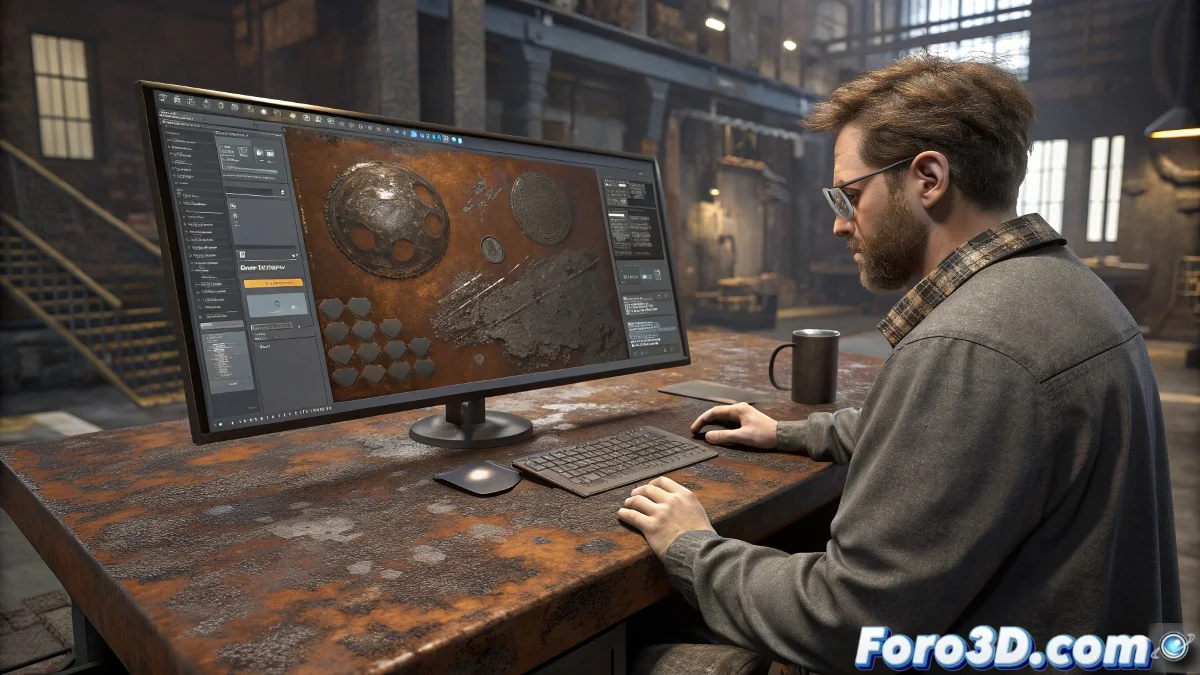
When Artificial Intelligence Meets the PBR World
Texture and material generation using AI is posing a fundamental question for 3D artists and developers: are we witnessing the end of the era of intensive manual work in creating textual assets?. Advances in generative AI for computer graphics are reaching a point where systems can produce complex and physically accurate PBR maps from simple text descriptions, or automatically complete missing areas in existing textures with a level of coherence that rivals - and in some cases surpasses - expert manual work. This evolution not only promises to drastically accelerate workflows but also potentially redefines the most valuable skills in visual content creation.
What makes this technology particularly transformative is how it democratizes access to high-quality materials without requiring advanced technical expertise. Where previously creating convincing textures required deep knowledge of specialized software, photography techniques, and understanding of physical material principles, now an artist can simply describe what they need in natural language and obtain professional results. This accessibility could level the playing field between large studios with dedicated texturing resources and independent creators or small teams.
Revolutionary Capabilities of Generative AI for Textures
- Generation of complete PBR sets from textual descriptions
- Intelligent expansion of existing textures maintaining coherence
- Style transfer between different types of materials
- Automatic correction of inconsistencies in existing maps
The New Role of the Materials Artist
Far from making texture artists obsolete, generative AI could elevate their role from technicians to creative directors. Instead of spending hours painting repetitive details or searching for perfect reference photographs, artists can focus on the overall artistic vision, curating and refining AI outputs to ensure stylistic coherence across the entire project. This shift in responsibilities could make the texturing process more like working with an extremely talented assistant that executes the artist's ideas, rather than having to manually implement every detail.
AI won't replace texture artists, but artists who use AI will replace those who don't
The ability to generate coherent variations represents another significant advantage for production pipelines. Where previously creating multiple versions of a material - for example, different wear states or weather conditions - required substantial manual work, AI can produce these variations while maintaining physical and stylistic coherence. This is particularly valuable for open-world projects or immersive experiences where visual variety is crucial for credibility, but traditionally prohibitive in terms of time and resources.
Implications for Professional Workflows
- Drastic reduction in time on repetitive texturing tasks
- Greater consistency in materials across different artists and teams
- Ability to iterate quickly between different material looks
- New opportunities for massive asset customization
For the foro3d.com community, these developments represent both an exciting opportunity and a call to adaptation. The tools are changing, but the artistic eye, understanding of visual narrative, and ability to direct stylistic coherence will be more valuable than ever. Instead of fearing obsolescence, 3D artists could be on the verge of an era where they can focus on what they do best - creating compelling and exciting worlds - while delegating technically tedious tasks to algorithmic assistants that work under their creative direction. 🎨
And so, between text prompts and normal maps, we discover that the future of texture creation is not about stopping creating, but about creating more intelligently - though we'll probably miss those zen meditation moments while meticulously painting the same dirt pattern for the hundredth time, or maybe not. 🤖