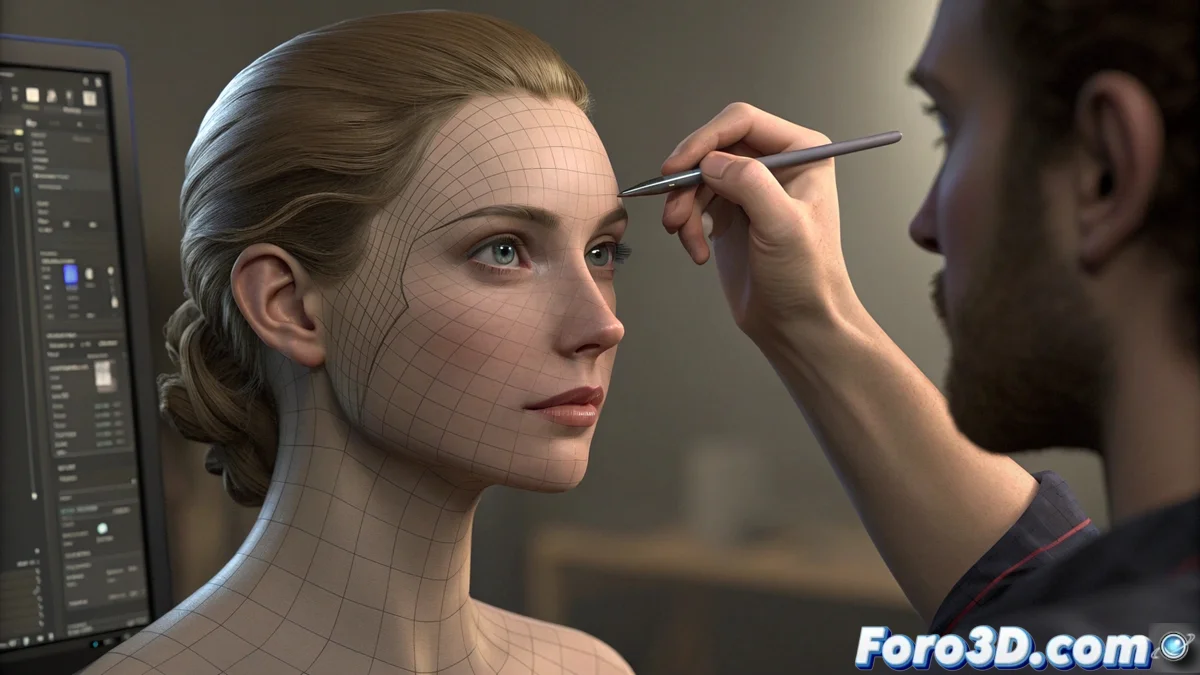
Hair Styling Defines Hair on 3D Characters
Creating realistic hair is a fundamental pillar in character modeling. The process begins by defining the base shape using guides or curves that an artist places on the digital scalp. These master lines determine the flow, length, and initial volume of the entire mane. 🎨
Guides Are the Skeleton of Digital Hair
Tools like XGen in Autodesk Maya or Blender's integrated system use these guides to generate millions of individual strands through interpolation. This method allows precise control over the global style before adding movement or fine details. Strategic placement of the guides is the first step to avoid an artificial-looking result.
Key Parameters Controlled from the Guides:- Density and Distribution: Defines how many strands are generated and where they are grouped.
- Direction and Flow: Establishes the natural hair growth pattern.
- Base Length and Variation: Provides the main length and randomness for an organic look.
A bad day styling hair can make your character look like it survived an electric hurricane, not an elegant photoshoot.
From Static Shape to Believable Movement
Once the shape is defined, visual and simulation properties are adjusted. Shader nodes assign how light interacts with each strand, creating reflections, transparencies, and color. For animation, physical forces like gravity, wind, or collisions with the body are applied. The software calculates these interactions frame by frame to produce natural movement, requiring a balance between detail and simulation time. 💨
Elements That Define the Final Appearance and Behavior:- Curl, Thickness, and Rigidity: Affect the visual shape and how the hair reacts to forces.
- Simulation Forces: Gravity, wind, and inertia that determine the dynamics.
- Collisions: Prevent hair from passing through clothing, the body, or other scene objects.
Managing Complexity When Rendering
Rendering millions of polygons in the form of strands can consume a lot of computational resources. To optimize this process, advanced techniques are used. Geometry instancing and levels of detail (LOD) reduce complexity when the hair is viewed from a distance. Some rendering engines have specific methods for processing hair, which speeds up calculating lighting and shadows. Planning a good guide structure from the start is vital to avoid problems and keep render times within manageable limits without sacrificing essential visual quality. ⚡