Habibi: a graphic novel that fuses Arabic calligraphy and narrative
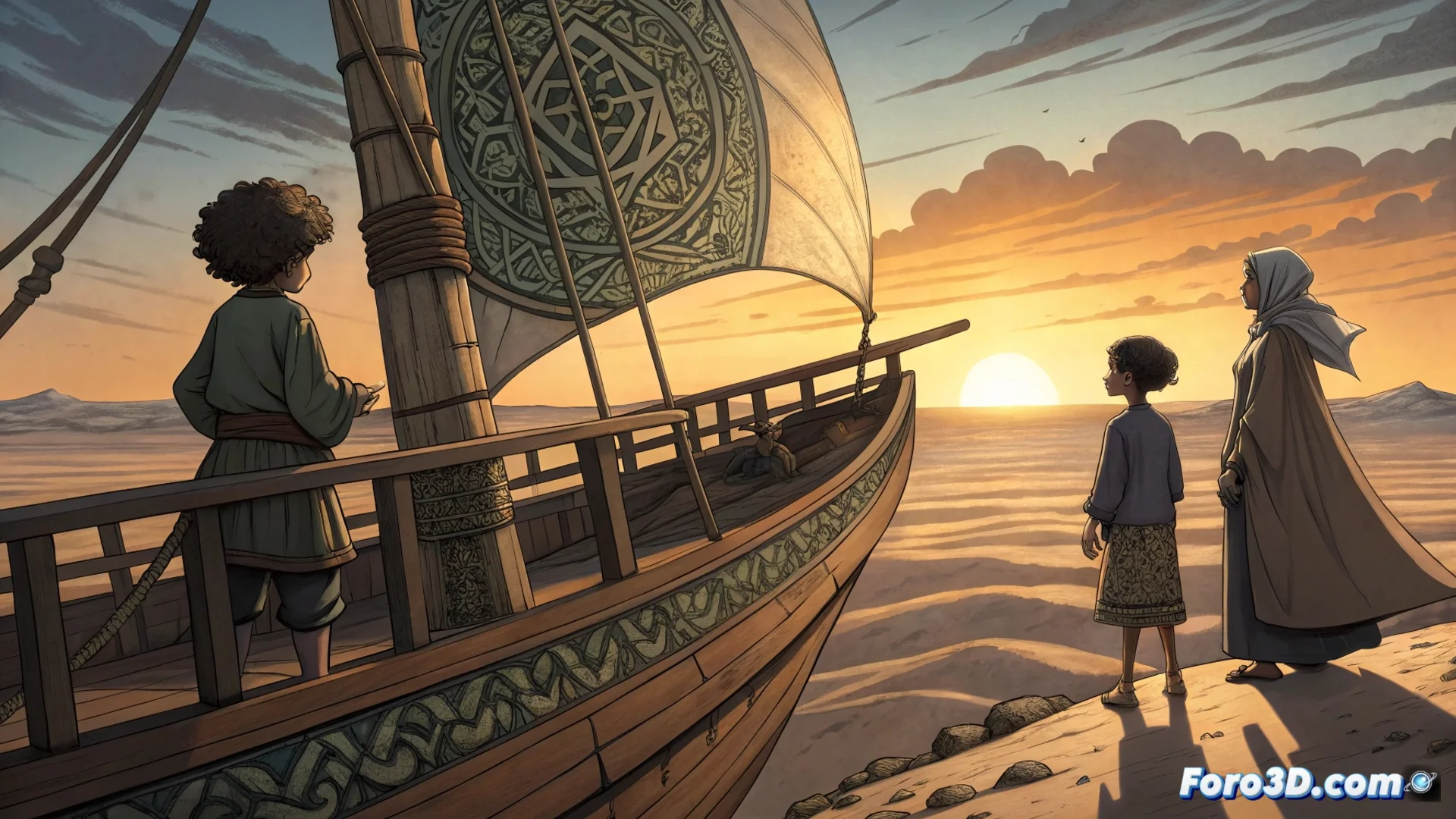
The work Habibi, created by Craig Thompson, recounts the journey of two young slaves who escape and find refuge on a ship stranded in the middle of the dunes. Their paths separate and cross again in a world that blends ancient mythology with current issues. 🏜️
A visual and emotional journey
Dodola and Zam, the protagonists, must survive and grow in a hostile environment. The story delves into their connection, loss, and the constant search for each other. Thompson weaves references to the Quran and the tradition of storytelling into the main plot.
Central elements of the narrative:- Two children who flee slavery and forge a home on a desert ship.
- A separation during adolescence that marks parallel destinies of pain and longing.
- A setting that combines a historical Middle Eastern ambiance with modern conflicts.
A ship in the desert sounds like the worst idea for a cruise, but for them it was the only possible home.
Aesthetics inspired by Islamic calligraphy
The artistic approach is meticulous and ambitious. Each section is organized around a character from the Arabic alphabet. The stroke of the drawing has a fluidity that recalls illuminated manuscripts, generating pages of enormous visual richness. ✨
Characteristics of the visual style:- A highly detailed graphic style that demands careful observation.
- Chapter structure based on the letters of the Arabic alphabet.
- Complex page compositions with inherent calligraphic elegance.
Exploring universal themes through art
Thompson employs the formal beauty of calligraphy and design to explore matters such as love, faith, and human survival. The union of ancient and contemporary components in the landscape serves to reflect on cultural traditions and the human condition. The work demonstrates how sequential art can address profound problems with a unique visual language. 📖