H. G. Wells' The War of the Worlds: Invasion and Legacy
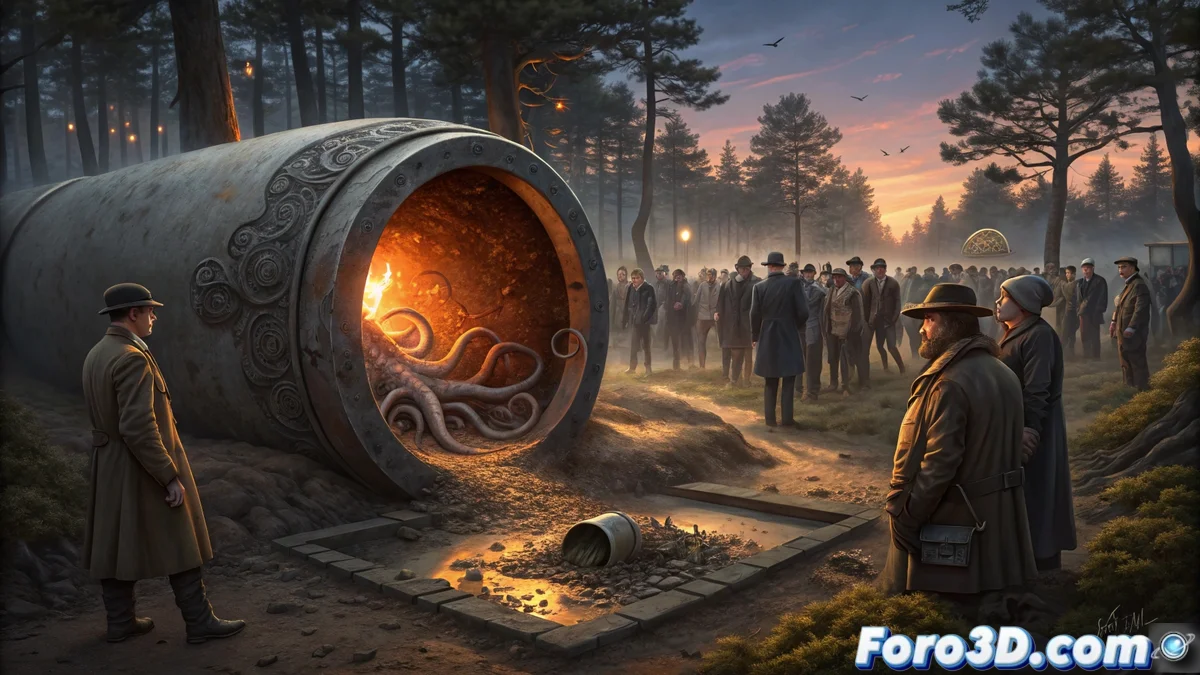
H. G. Wells publishes a story where Martian cylinders crash into the English countryside. From these artifacts emerge beings that assemble war machines in the shape of tripods. Armed with a devastating heat ray and a cloud of toxic black smoke, these machines begin to systematically eliminate the population. An anonymous narrator, a man of science, recounts in the first person the chaos and collapse of civilization in the face of an apparently unstoppable force. 👽
A Powerful Allegory about Colonialism
Wells constructs a direct critique of British imperialism of his time. The Martians arrive on a planet they deem inferior, replicating the attitude of European powers toward other continents. They do not attempt to communicate, only to dominate and exploit resources. Humanity, which previously colonized, now faces a technologically superior entity that treats it like a plague. The novel forces reflection on the ethics of conquest and how fragile the supposed superiority of a civilization is.
Key Elements of the Critique:- Role Reversal: Those who colonized become the colonized.
- Contempt for the Different: The Martians see humans as insects, without intrinsic value.
- Resource Exploitation: The ultimate goal is not to coexist, but to extract and consume.
The novel invites reflection on the ethics of conquest and the fragility of supposed civilizational superiority.
Establishing the Extraterrestrial Invasion Genre
This work lays the foundations of the alien invasion subgenre. It introduces concepts that would become archetypal in science fiction, such as cylinder-shaped ships, legged war machines, and directed energy weapons. Its realistic and almost journalistic tone, combining scientific details with a personal survival narrative, influences generations of subsequent writers and artists. The plot demonstrates that human technological progress does not guarantee security if a more advanced threat arises.
Legacy in Science Fiction:- Visual Archetypes: The tripods and space cylinders.
- Documentary Narrative: The use of a witness narrator to lend verisimilitude.
- Superior Threat: The idea of an enemy with overwhelming technology.
The Final Irony and an Enduring Lesson
It is profoundly ironic that the greatest threat to the invaders, microscopic organisms against which they have no immunological defenses, was always present on Earth. Sometimes, the solution to an apocalyptic-scale problem does not lie in a larger or more complex weapon, but in something minuscule and disregarded. This outcome underscores the unpredictability of nature and offers a humbling lesson on technological arrogance. 🦠