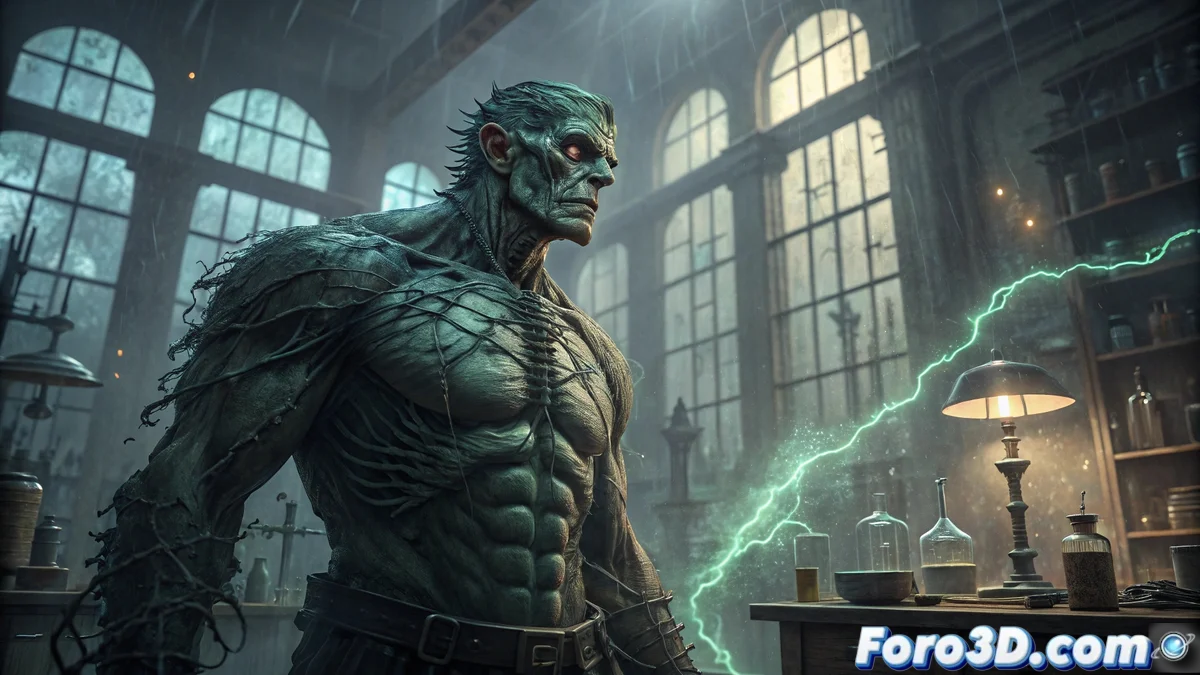
The Gothic Rebirth of a Classic Monster
Guillermo del Toro has delivered his unique vision of Frankenstein with a $120 million budget wisely invested in fusing traditional craftsmanship with cutting-edge technology. The film stands out for its meticulous approach to creating the creature and building a gothic atmosphere that pays homage to both the original novel and classic monster cinema. A perfect balance between the tangible and the digital that defines the Mexican director's visual philosophy.
The Dream Team of Visual Effects
The production brought together some of the most prestigious studios in the industry, each contributing their unique specialty. Herne Hill Media handled the practical effects and physical design of the creature, while Industrial Light & Magic, under the supervision of Ivan Busquets, coordinated the digital integration. The result is a symbiosis where it's hard to tell where the practical effects end and the digital ones begin.
Specialized Studios and Their Contributions
- Herne Hill Media: practical effects and physical creature
- Industrial Light & Magic: digital integration and animation
- Ticket VFX: digital environments and atmosphere
- Hotspring: water and fluid simulations
The Design That Revives an Icon
The creature, portrayed by Jacob Elordi, was designed by the legendary Doug Jones, a frequent collaborator of del Toro. The process combined advanced prosthetics by Mike Hill with ILM digital refinements to create a being that is both familiar and completely new. An interpretation that respects the essence while incorporating the director's characteristic visual sensitivity.
Del Toro's Practical Philosophy
- Prefers practical effects whenever possible
- Uses VFX to complement rather than replace
- Maintains organic and tangible textures
- Integrates digitally only when necessary
A masterful demonstration of how visual resources, when used well, can serve the narrative rather than dominate it, regardless of their technical nature.
For VFX professionals and filmmakers, this production represents an ideal case study on how to approach classic adaptations with simultaneous respect and innovation. The decision to prioritize practical effects for key interactions and use digital for extensions and environments creates an authenticity that resonates with audiences 🎬.
And all this while demonstrating that, even with a $120 million budget, sometimes the best visual solution is good prosthetic makeup and a convincing performance... though having ILM as backup doesn't hurt for those impossible shots either 😅.