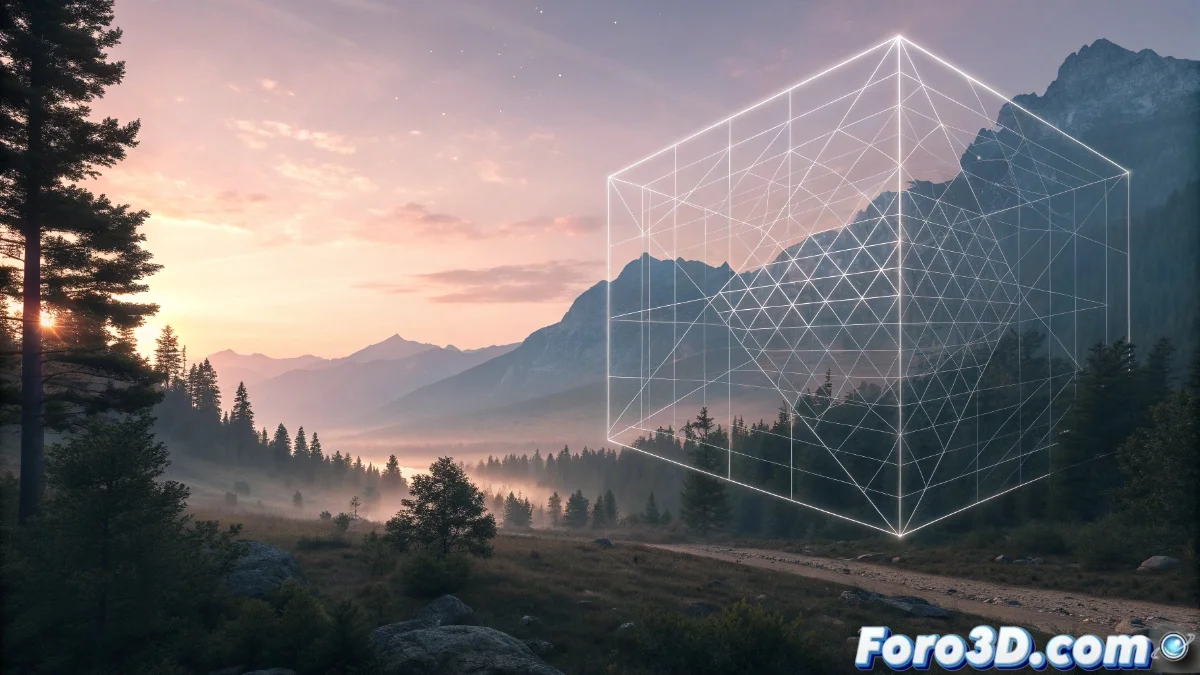
Grid ghosting: the invisible technique of visual composition
Grid ghosting is a composition method where non-visible grid structures act as guides for distributing visual components. These ghost grids remain hidden in the finished product but define the exact location of each element, generating balance and aesthetic coherence without the observer detecting the underlying structural base 🎨.
Fundamental principles of ghost grids
Grid ghosting grids are frequently built on traditional proportions such as the rule of thirds, the golden ratio, or adapted modular systems. Designers and artists overlay these translucent guides in their digital environments, synchronizing essential components with main crossings and axes to establish natural points of interest and harmonious visual transitions. This methodical approach prevents disorganized compositions, even when the result appears spontaneous or asymmetrical.
Key aspects of implementation:- Selection of base proportions such as thirds, golden ratio, or custom modular patterns
- Alignment of critical elements with intersections and master lines
- Creation of intuitive visual flows without revealing the hidden structure
The ghost grid is like the skeleton of a work: invisible, but its absence is immediately felt in unbalanced compositions.
Implementation in various creative media
In photography, grid ghosting guides the arrangement of subjects and environmental elements according to invisible guidelines. For motion graphics, video games, and user interfaces, these grids coordinate dynamic and static components, preserving spatial coherence during animations or interactions. Filmmakers use multi-layered versions to plan camera movements, lighting schemes, and actor positioning, while architects apply them in renders to balance volumes and voids.
Highlighted fields of application:- Photography: alignment of subjects with invisible guide lines
- Motion graphics and UI: maintenance of spatial consistency in dynamic elements
- Film and architecture: advanced planning with multiple layers of grids
The invisible challenge
The main difficulty lies in remembering that, despite its invisibility, the absence of a ghost grid manifests instantly in compositions that seem randomly organized. The hidden structure is the foundation that sustains visual excellence, and its omission leads to chaotic results lacking direction 🏗️.