The anime series Sakamoto Days features a surprising combination of action and comedy, following the life of a retired assassin who must confront his past while leading a quiet life with his family. Premiered on January 11, the series stands out not only for its intriguing story but also for its visual approach that effectively blends genres.
Character Design
The character design plays a crucial role in showing the evolution of Sakamoto. The protagonist, previously a slim and muscular assassin, is now a married man and father, with a more relaxed appearance and a pink t-shirt that symbolizes his retirement. This physical change not only reflects his transformation but also highlights the depth of his personality, between the violence of his past and the calm of his present.
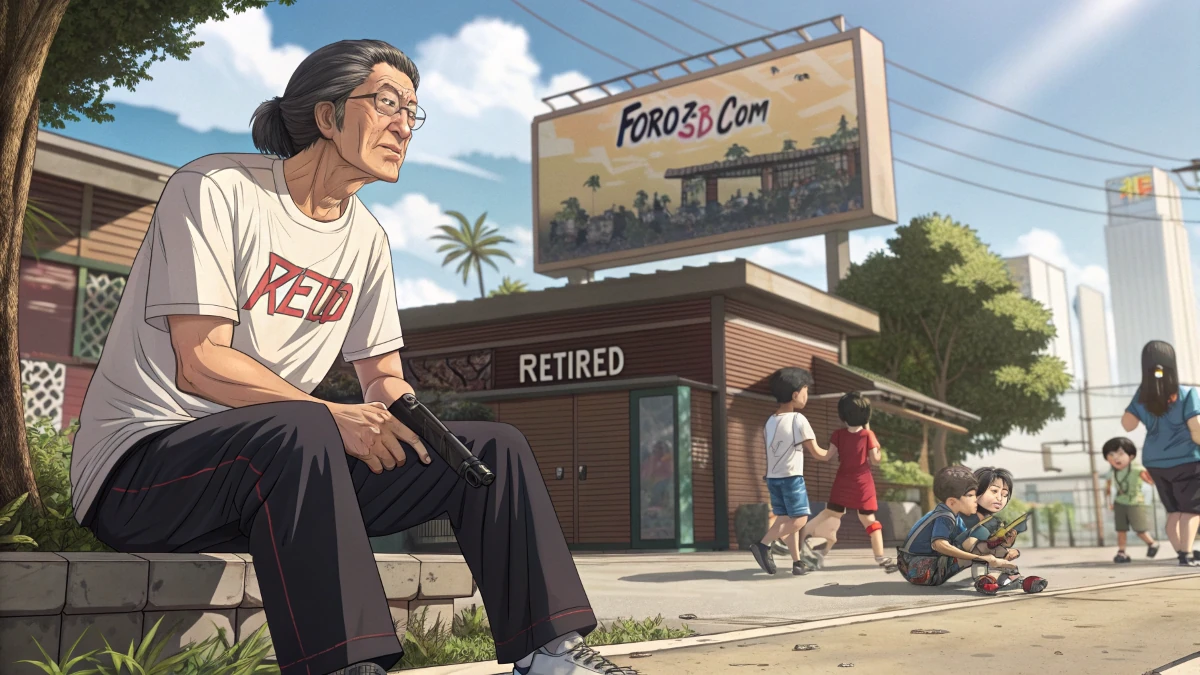
Sakamoto's Visual Contrast
- Violent Past: Sakamoto appears as a slim, muscular, and lethal man, reflecting his skill as an assassin.
- Quiet Present: His transformation into a man leading a family life, with extra weight and a pink t-shirt, symbolizes his retirement and desire for peace.
Action Sequences
The action sequences are another strong point of the series, with dynamic fights that make use of strategies rather than brute force. The animation flows smoothly, using angles and camera movements to increase tension. This fluidity in combat scenes contrasts with softer and more relaxed moments during everyday interactions, where the pace slows down to give space to the characters.
Action and Comedy Elements
- Fluid Animation: Fights are meticulously choreographed to showcase agility and strategy.
- Contrasting Rhythm: Everyday interactions are balanced with action scenes to create a dynamic atmosphere.
Colors and Background Style
The graphic style of Sakamoto Days is vibrant in action scenes, while it softens in family moments, creating a warm atmosphere. The backgrounds, although detailed, do not overshadow the main characters, allowing attention to focus on their evolution and interactions between them.
Duality in Backgrounds
- Vibrant Action: Colors are bright and energetic in fight scenes.
- Everyday Scenes: Tones soften to create a sense of tranquility in family life.
Direction and Production
The direction by Masaki Watanabe, known for his skill in combining action and drama, is reflected in the series' narrative rhythm. Transitions between Sakamoto's active life and his quiet moments are carefully balanced. Additionally, the character design by Yo Moriyama successfully captures both the comedic and serious aspects of the story.
Animation Process
TMS Entertainment, known for its high-quality animation, employs both traditional and digital techniques. Action sequences are meticulously animated, while more emotional and comedic scenes develop more slowly, allowing character interactions to feel natural and profound.
The Original Manga
The original manga Sakamoto Days is created by Yuto Suzuki, a mangaka who debuted with this series as his first major work. The work was first published in 2020 in Shonen Jump magazine, quickly gaining a fanbase thanks to its blend of action and comedy. Suzuki's style is clear, with well-defined characters and settings ranging from dark and serious to everyday and comedic.
Graphical Reflection of Genre Blend
- Action: Fight sequences are intense and detailed, reflecting Sakamoto's past.
- Comedy and Slice-of-Life: Sakamoto's daily life and family are represented in a warm and simple way.