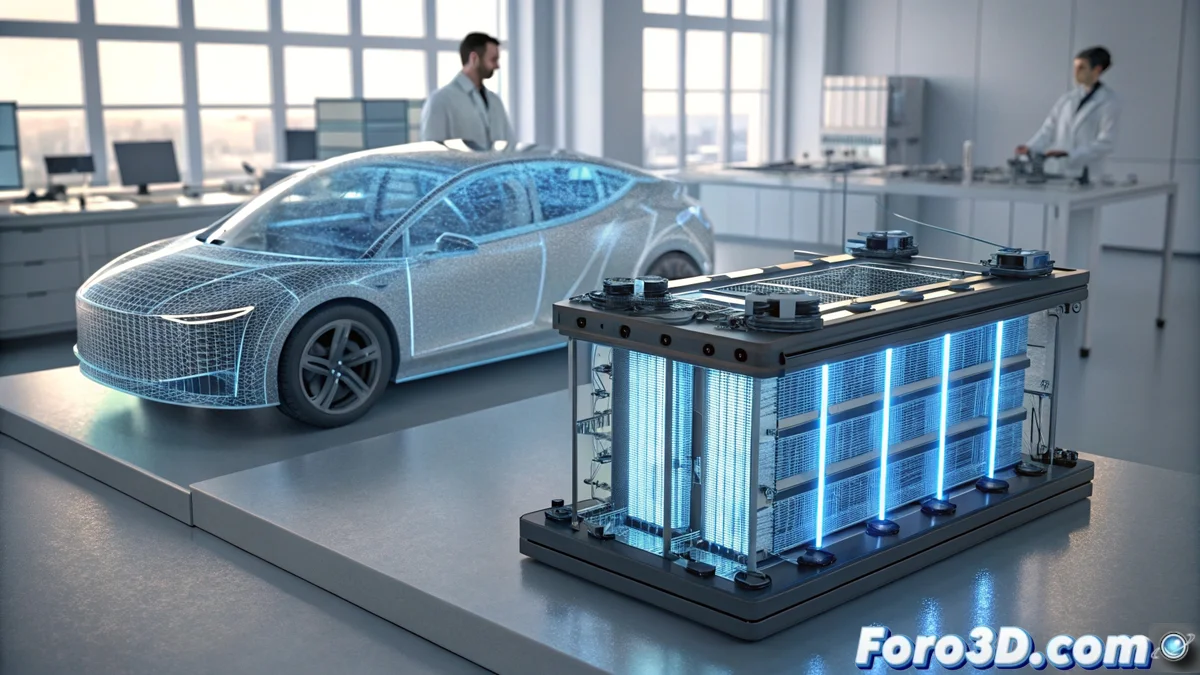
Graphene Supercapacitors: Storing Energy Between a Battery and a Capacitor
These devices represent a hybrid technology that fills the gap between chemical batteries and traditional capacitors. Their core uses graphene sheets, a material one atom thick, which allows handling energy in previously impossible ways. 🚀
How do these devices work?
The key lies in the enormous specific surface area of graphene. Unlike a battery, which relies on slow chemical reactions, these supercapacitors store electrical charge electrostatically at the material interface. This mechanism allows them to deliver extreme power in fractions of a second and accept charge at the same speed.
Main advantages over batteries:- Almost unlimited life cycles: They can charge and discharge millions of times without significantly degrading their performance.
- Transfer speed: Complete full cycles in seconds, not hours.
- Power efficiency: Ideal for applications that demand intense and brief energy peaks.
Energy density is the challenge they aim to solve. The goal is to combine the longevity and power of the supercapacitor with a battery's ability to store a lot of energy.
Where can they be applied?
Their performance profile makes them candidates for sectors where speed and durability are critical. They do not seek to replace batteries, but to complement them in systems where each technology shines.
Current and future fields of application:- Stabilizing electrical grids: They compensate for rapid fluctuations in demand, acting as an energy buffer for the grid. ⚡
- Electric transportation: In vehicles, they provide instant power for acceleration and efficiently capture energy during regenerative braking.
- Consumer electronics: Research is being conducted to charge portable devices in extremely short times.
The future of energy storage
Graphene supercapacitors define a new category in energy storage. As research advances to improve their energy density, their role in creating more efficient, faster, and more durable systems is already a reality. They represent an essential component for the transition to more agile and resilient energy management. 🔋