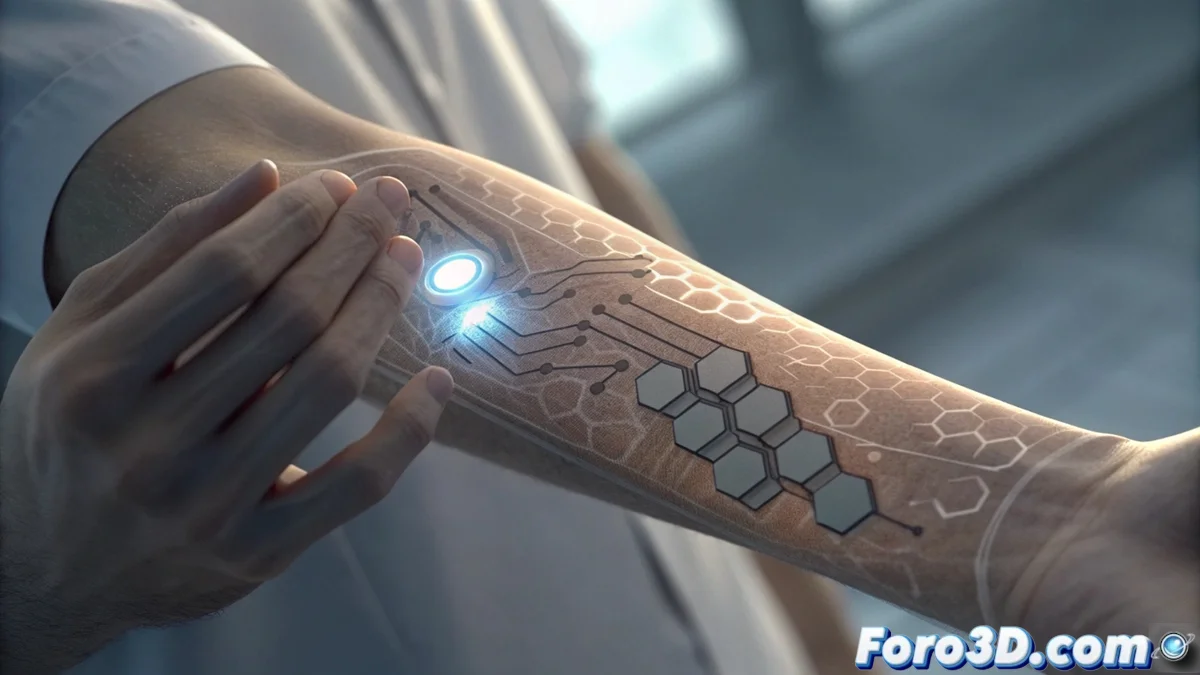
Graphene Electronic Tattoos for Health Monitoring
The boundary between technology and the human body is blurring with the advancement of revolutionary epidermal sensors. A team of scientists has developed electronic tattoos based on graphene, sheets so thin that they integrate with the skin and function as real-time biometric monitoring centers. Their purpose is to capture vital signs such as heart rate, skin hydration level, or body temperature continuously and without invading the body. This innovation allows collecting physiological data with great accuracy while the person goes about their daily life normally. 🩺
Graphene, the Material That Makes Invisible Sensors Possible
The essential component is graphene, a layer of carbon one atom thick. This characteristic gives it extreme flexibility, high conductivity, and minimal weight. To manufacture the sensors, graphene is deposited on a polymer film that dissolves in water. When the device is placed on the skin and moistened, the polymer support disintegrates, and the graphene transfers and adheres directly to the epidermis. The result is an almost imperceptible sensor that flexes with the skin's natural movements and does not obstruct perspiration.
Key Advantages of the Technology:- Perfect Adhesion: It integrates with the skin's topography without causing irritation.
- Superior Comfort: The user does not perceive its presence, unlike traditional wearables.
- Breathability: It allows the skin to breathe normally, ideal for prolonged use.
The idea of a tattoo that betrays you to your doctor if you don't follow instructions could be the future of preventive medicine.
Applications That Transform Health and Performance
The potential of these smart tattoos spans from the clinical field to high-level sports. They can radically change how a person's well-being is tracked.
Main Areas of Use:- Personalized Medicine: They facilitate remote and continuous monitoring of patients with chronic diseases, which can reduce the need for frequent hospital visits.
- Sports and High Performance: Athletes can optimize their training and recover better using real-time data on their physiological state during activity.
- Daily Wellness: Their utility is being researched for assessing stress levels or analyzing sleep quality, incorporating monitoring into the routine without bulky devices.
Current Challenges and the Future of Monitoring
The main virtue of these devices is unprecedented comfort. However, researchers are still working to overcome certain limitations, such as making them resistant to prolonged water exposure (e.g., long showers) and efficiently integrating two key components: an autonomous power source and a system to wirelessly send data without compromising their ultra-thin profile. Overcoming these obstacles will establish these electronic tattoos as a fundamental tool for more predictive and personalized medicine, where data flows directly from the skin to healthcare professionals. 🔋