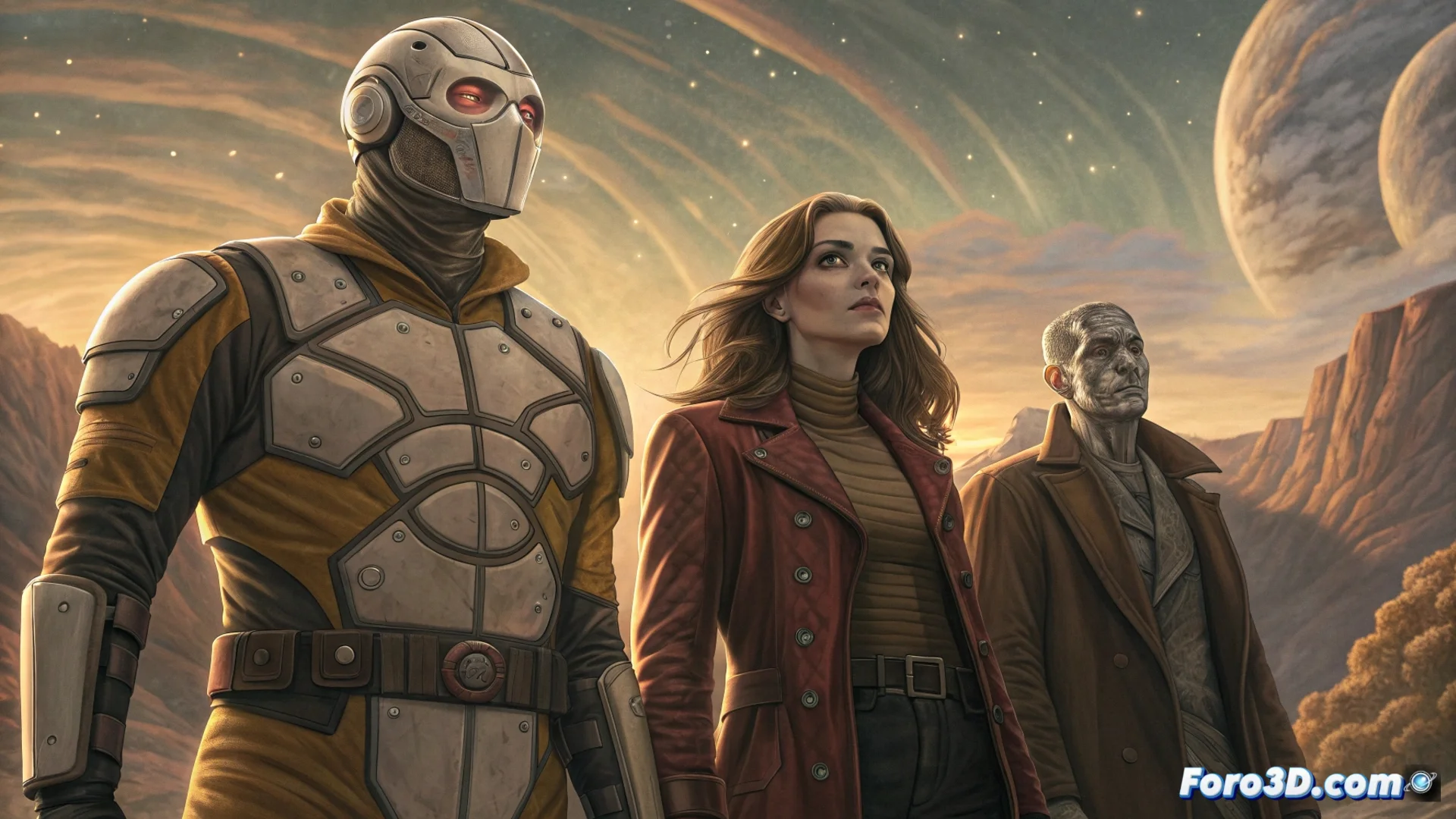
Grant Morrison's Run Redefines Doom Patrol
When Grant Morrison took the helm of Doom Patrol in the late 80s, the superhero comic experienced an unprecedented shake-up. The Scottish writer transformed the series into a laboratory for exploring metaphysical ideas and non-linear narratives, challenging every convention of the genre. This run not only revitalized the group of misfits but also expanded the boundaries of what could be told in a DC comic. 🌀
A Narrative That Embraces Chaos and the Abstract
Morrison left behind typical conflicts against criminals or alien invaders. Instead, Doom Patrol faced antagonists that personified philosophical and artistic concepts. The plot prioritized the reader's sensory and emotional experience, forcing them to actively participate in deciphering the multiple layers of reality presented. Traditional logic was replaced by a celebratory absurdity that became the new norm.
Main Conceptual Threats from This Run:- The Brotherhood of Dada: A surreal entity capable of absorbing entire realities into a painting, challenging the perception of space.
- The Scissor Men: Beings whose sole reason for existence is to cut things, representing a purely abstract and philosophical threat.
- Candlemaker: A manifestation of fear and trauma that inhabits one of the characters' minds, fighting against internal psychological concepts.
“Metaphysical chaos is not easily documented on standard forms.” – An ironic reflection on trying to explain the Patrol's adventures in a report for the Justice League.
Richard Case's Unique Visual Style
To bring these complex scripts to life, artist Richard Case developed a distinctive graphic tone that broke from the superheroic standard of the time. His angular and expressive linework did not attempt to beautify the grotesque but presented it with a clarity that made the bizarre believable. Case achieved the difficult goal of giving visual form to ideas that seemed undrawable, like realities that fold or emotions turned into physical entities.
Key Characteristics of Case's Art in Doom Patrol:- Expressive Character Design: Robotman, Crazy Jane, and Negative Man were redesigned with a more organic and psychological focus, reflecting their trauma.
- Unconventional Page Layout: Page designs often broke the traditional grid to reflect the narrative chaos.
- Visualization of the Abstract: He managed to illustrate metaphysical concepts and alternate realities in a tangible and comprehensible way for the reader.
A Legacy That Transformed the Medium
The collaboration between Morrison and Case proved that superhero comics could be a vehicle for exploring deeply experimental narrative terrain. This run not only redefined Doom Patrol but influenced generations of creators by showing that surrealism, psychology, and metaphysics could be mixed into the mainstream. Its approach celebrated weirdness and proved that the most powerful stories are sometimes those that refuse to explain themselves simply. 🤯