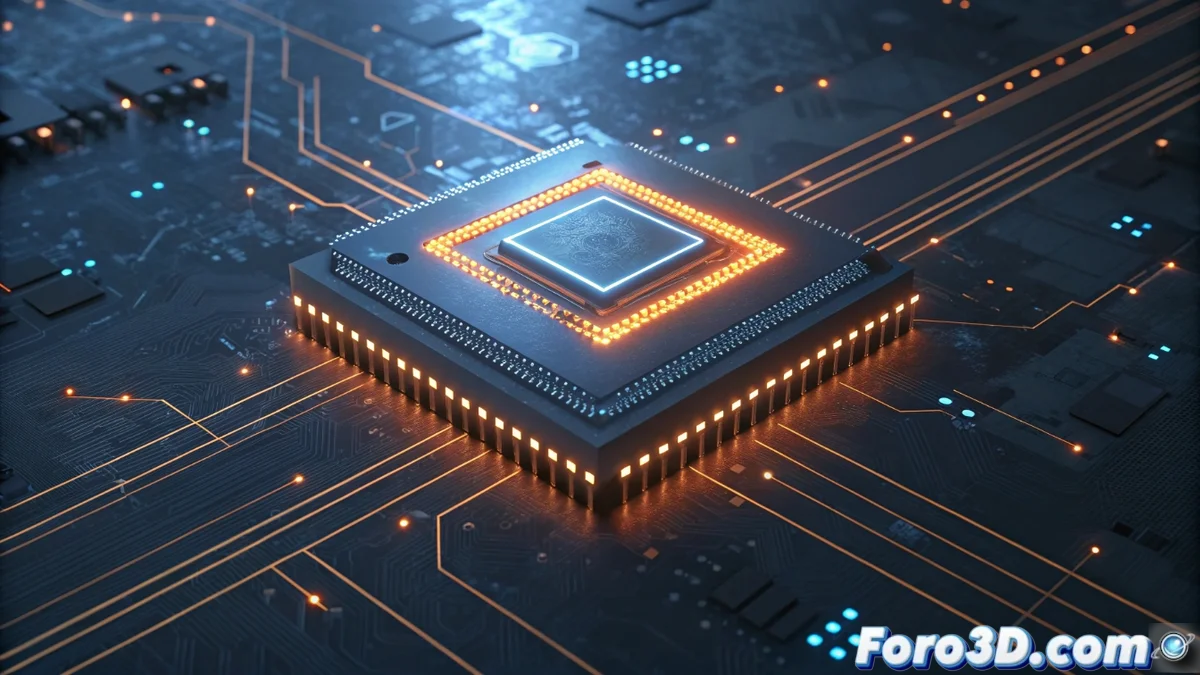
Google Revolutionizes Artificial Intelligence with Its Custom Tensor Chips
The technology company Google is marking a milestone in the artificial intelligence landscape with the development of its Tensor Processing Units (TPUs), processing units designed exclusively to optimize machine learning tasks. These solutions offer superior performance compared to generic options, achieving significant reductions in operational costs and increases in energy efficiency. Thanks to this innovation, Google can provide faster and more accessible AI services through its cloud infrastructure, consolidating its leadership and forcing other industry players to evolve in specialized hardware. 🚀
Key Advantages of Custom Tensor Processors
Google's TPUs stand out for their ability to handle intensive workloads in matrix calculations, fundamental to neural networks and deep learning algorithms. By dispensing with superfluous components present in conventional GPUs, these chips achieve exceptional speeds in training and inference of AI models. This is reflected in services like Google Search, Assistant, and Translate, which respond with greater precision and agility. Hardware customization allows Google to tailor the design to the specific needs of its applications, creating an integrated and highly efficient ecosystem. 💡
Main Benefits of TPUs:- Optimization of matrix calculations for complex neural networks
- Reduction of latency in AI services like search and translation
- Energy and cost savings in cloud infrastructures
Innovation in specialized hardware is redefining the limits of artificial intelligence and its application in everyday services.
Impact on the Industry and Competitors' Responses
Google's bet on custom chips has triggered a technological race where companies like Amazon, Microsoft, and NVIDIA are intensifying their investments in AI hardware. This rivalry fosters innovation and accelerates the advancement of technologies like natural language processing and computer vision. However, challenges arise in terms of standardization and accessibility for smaller-scale developers, who may be forced to depend on these giants' platforms. In the long term, this trend could reconfigure how artificial intelligence is built and distributed globally. 🌍
Effects on the Technology Ecosystem:- Intensification of competition in specialized AI hardware
- Acceleration in the development of advanced technologies like NLP and computer vision
- Potential entry barriers for independent developers
Final Reflections on the Future of AI
As Google celebrates its advances with TPUs, questions arise among users about whether these chips will improve the contextual understanding of virtual assistants, such as distinguishing between "set the alarm for 7" in the morning or evening. This scenario underscores the importance of combining specialized hardware with software advances to achieve truly intuitive and effective artificial intelligence. Continuous evolution in this field promises to transform not only technology but also human interaction with machines. 🔮