Google Irregularly Updates Android Distribution Data
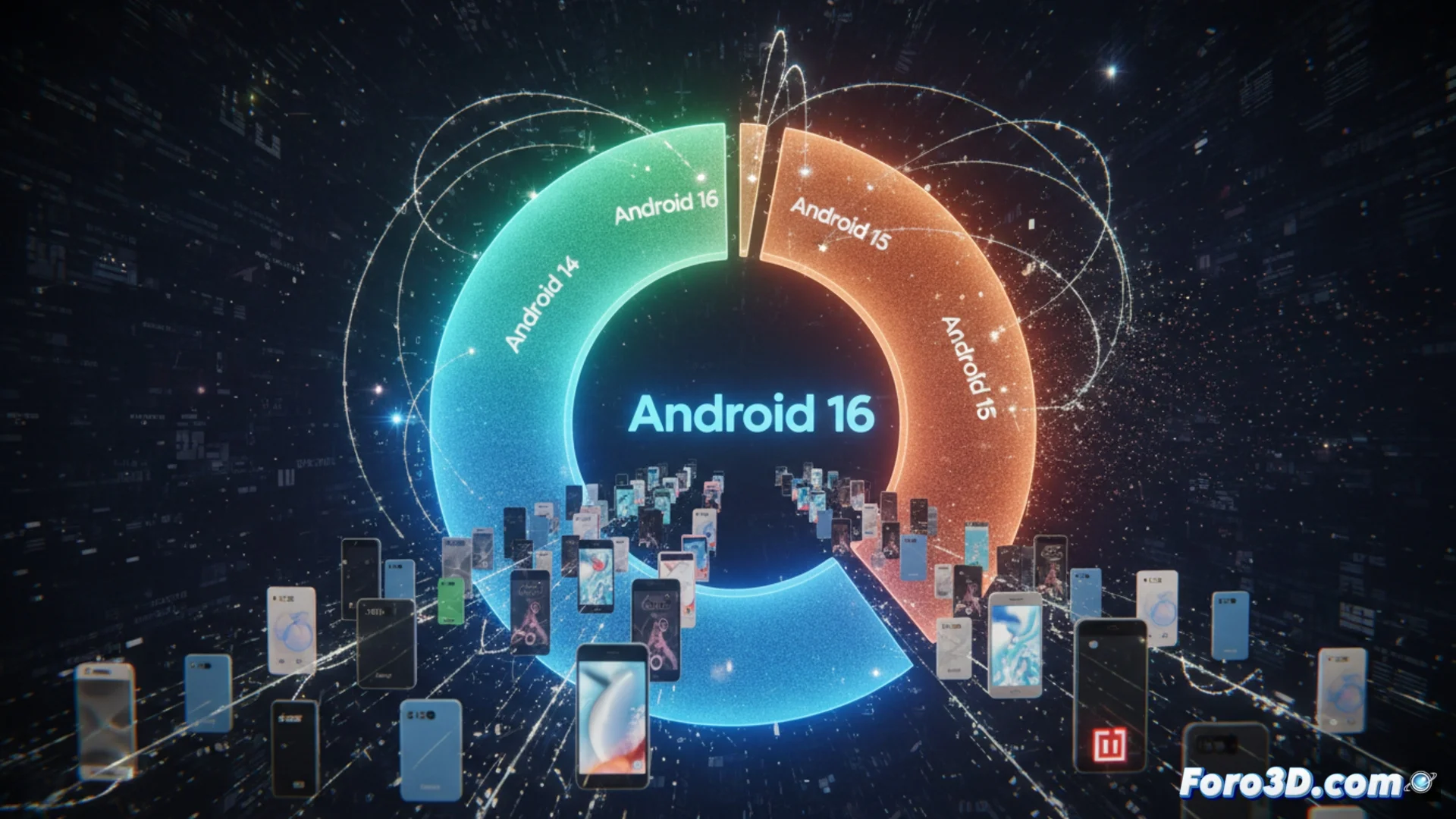
The company Google has once again shared figures on how the different Android versions are distributed across active devices, information that it does not publish on a fixed schedule. The last time it did so was in April 2025. The new data, corresponding to December 1, reveal a changing landscape with a clear protagonist. 📈
A Notable Jump in Android 16 Adoption
If in the spring of 2025, Android 14 led with 27.4% and Android 15 only reached 4.5%, the situation has evolved. Seven months after its launch, Android 16 is already present in 7.5% of devices. This percentage, although not yet majority, indicates a faster rollout pace compared to the previous version over a similar period. 🚀
Manufacturers Driving the Update:- Google Pixel were the first devices to receive the native update.
- Samsung rolled out its One UI interface based on Android 16 during September.
- Brands like Oppo and OnePlus began updating many of their models toward the end of 2025.
It seems that only the phones you just bought win the race to update; the others take their time to think if they really want to change.
Fragmentation, a Persistent Challenge
The fact that the process for distributing new versions may be improving does not eliminate the underlying problem: fragmentation of the ecosystem. End users depend entirely on their manufacturer deciding to adapt and release the update for their specific model, which creates a huge disparity in access time to system novelties. ⏳
Adoption Rate Comparison:- Android 15: Reached 4.5% after a similar period from its launch (April 2025).
- Android 16: Achieves 7.5% in a comparable timeframe, showing an upward trend.
- The growth suggests that manufacturer partners may be streamlining their adaptation processes.
What to Expect in the Future?
Android 16 adoption will continue to grow as more mid-range and older devices receive the update. However, Google's irregular data underscores the complex and decentralized nature of updates in Android. For the user, patience remains a virtue, as the speed to receive the latest operating system version is intrinsically linked to the manufacturer and the specific model of their smartphone. 📱