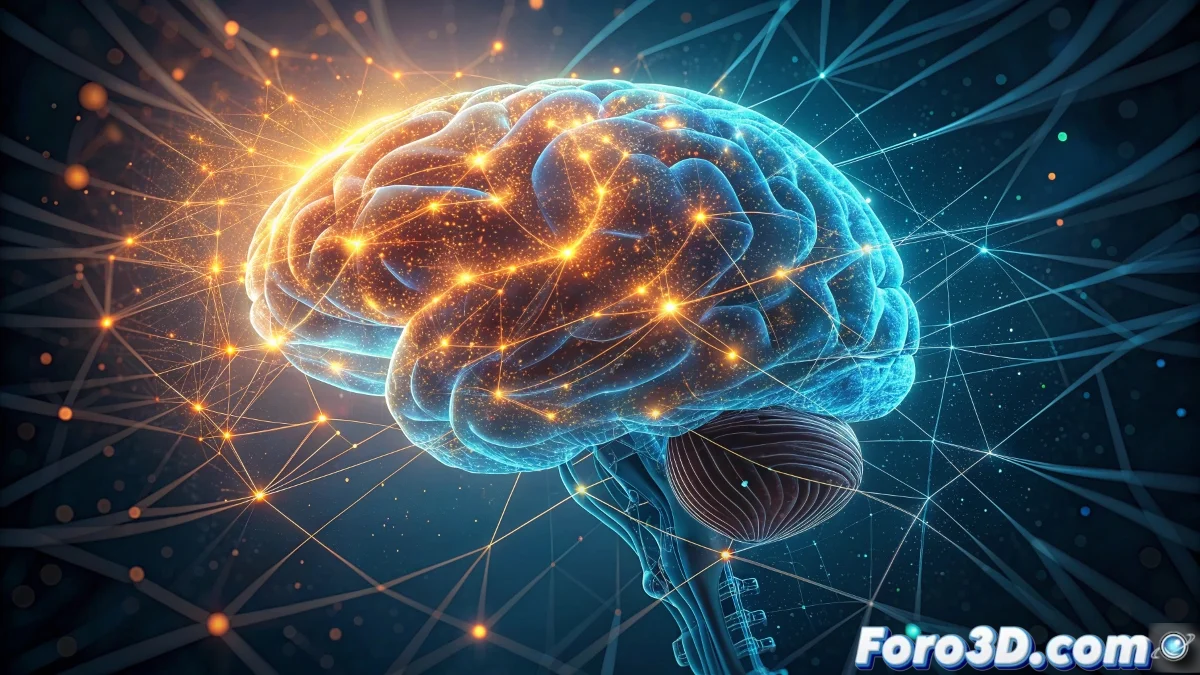
Google Advances Toward Universal AI for Gemini: Context Understanding, Planning, and Execution
Google redefines its strategic vision by betting on the development of a universal AI that fundamentally transforms Gemini's capabilities. This approach integrates deep contextual understanding, advanced planning systems, and autonomous execution capability, with the ultimate goal of completely reinventing the search experience. 🧠
Configuration of the Universal AI Architecture
To visualize this evolution, we begin by designing a modular system that shows how the different components of universal AI progressively integrate into the Gemini platform.
Basic Visualization Structure:- Create layered diagram showing evolution from specialized AI to universal
- Design interconnected modules for understanding, planning, and execution
- Establish data flows between components of the enhanced Gemini system
Universal AI represents the convergence of multiple artificial intelligence capabilities into a cohesive system that understands, plans, and acts autonomously
Representation of Advanced Contextual Understanding
The core of the evolution lies in Gemini's ability to understand context in a multidimensional way, overcoming the current limitations of language models.
Contextual Understanding Components:- Long-term memory system to retain context between interactions
- Multimodal understanding modules that integrate text, audio, and image
- Situational inference capability and understanding of implicit intentions
Visualization of Complex Planning Systems
The planning capability allows Gemini to decompose complex tasks into executable subtasks, creating adaptive plans based on defined objectives.
Planning Architecture:- Hierarchical decomposition algorithms for complex problems
- Systems for evaluation and optimization of multiple alternative plans
- Dynamic adjustment mechanisms based on real-time feedback
Implementation of Autonomous Execution and Agents
The execution capability transforms Gemini from a conversational assistant into an autonomous agent that can act across multiple platforms and services.
Execution Systems:- Integration with APIs and services to execute real-world actions
- Verification and confirmation mechanisms before critical executions
- Rollback and error correction systems during execution
Reinvention of the Search Ecosystem
This evolution toward universal AI has the main objective of fundamentally transforming how users interact with Google search, moving from static results to interactive and resolution-oriented experiences.
New Search Experience:- Transition from result lists to actionable and complete responses
- Ability to perform complex tasks directly from search
- Deep contextual personalization based on history and preferences
Impact on the Competitive AI Landscape
Google's universal AI strategy represents a significant shift in the race for artificial intelligence supremacy. By focusing on integrating understanding, planning, and execution within Gemini, Google seeks to establish a new standard for what AI assistants can achieve, potentially completely redefining our relationship with digital technology. 🌐