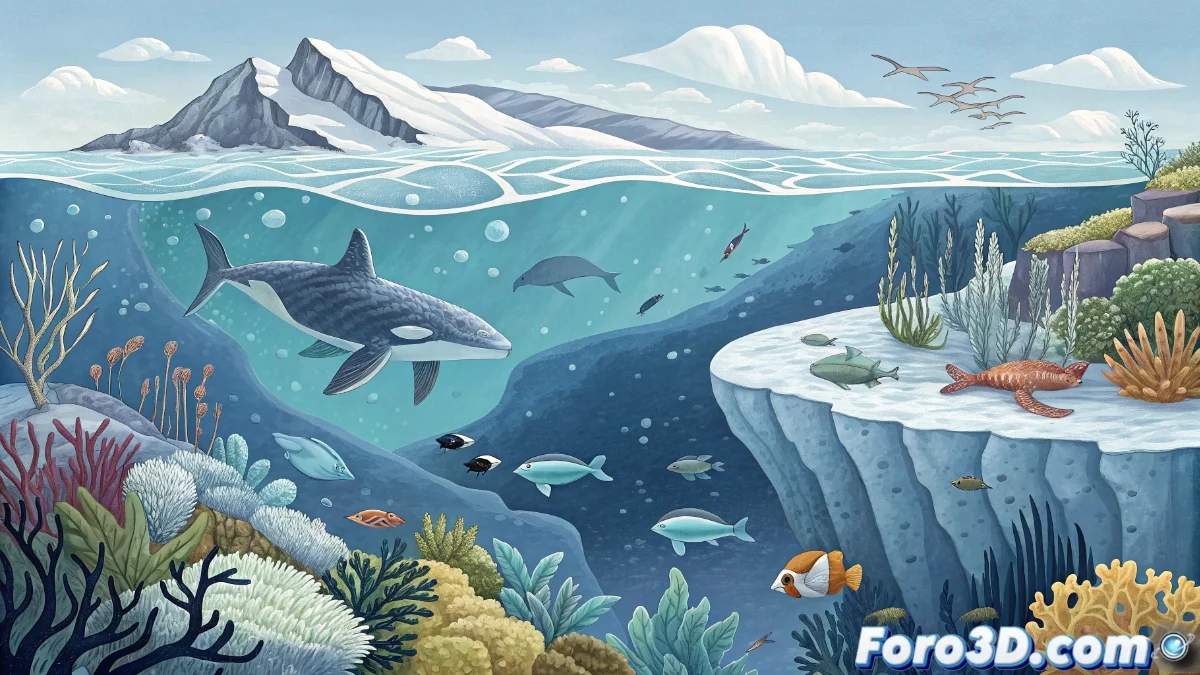
Global Warming Reaches the Abyssal Depths of the Arctic
What we once considered a surface phenomenon has demonstrated its ability to infiltrate the deepest regions of the Arctic Ocean. Scientific studies reveal that the thermal increase now affects even the abyssal zones, transforming ecosystems that maintained their stability for thousands of years 🌡️.
Transformation of Deep Marine Habitats
Creatures adapted to the extreme conditions of the Arctic depths face an unprecedented existential challenge. Organisms such as cold-water corals and various benthic species are experiencing alterations in their fundamental biological cycles.
Documented Effects on Marine Life:- Modification of reproductive patterns in abyssal species
- Critical reduction in the availability of essential nutrients
- Cascade alteration of deep-sea food chains
Many of these life forms, survivors of past glaciations, could become extinct before science manages to properly record them
Repercussions on the Global Climate System
The warming of deep waters accelerates critical submarine geological processes, including the thawing of oceanic permafrost which releases stored methane, significantly enhancing the greenhouse effect.
Identified Global Consequences:- Alteration in the formation of dense waters that drive ocean circulation
- Direct impact on the climate patterns of mid-latitudes
- Possible acceleration of extreme weather phenomena
A Climate Tipping Point
The Arctic is consolidating itself as a critical epicenter for the planet's climatic future, where each thermal increase generates disproportionate effects. The irony lies in the fact that we are modifying ecosystems we don't even fully know, demonstrating the full extent of our environmental influence 🌊.