Global CO₂ Emissions Continue to Rise Despite Energy Transition Efforts
Worldwide atmospheric pollution maintains a worrying trajectory, with projections indicating a 1.1% increase in carbon dioxide emissions for 2025, raising the total volume to 38.1 gigatons annually. This upward trend highlights the persistent global dependence on fossil fuels, despite international agreements and climate commitments. 🌍
Global Overview of Pollutant Emissions
The pace of energy transition toward cleaner sources is clearly insufficient to offset the steady growth in energy demand across multiple regions of the planet. The inability to decouple economic development from the use of polluting fuels represents one of the greatest environmental challenges of our era.
Key Factors in the Global Increase:- Industrial expansion in emerging economies prioritizing low-cost energy sources
- Insufficient deployment of renewable infrastructures on a massive scale
- Persistence of fossil fuel subsidies in numerous countries
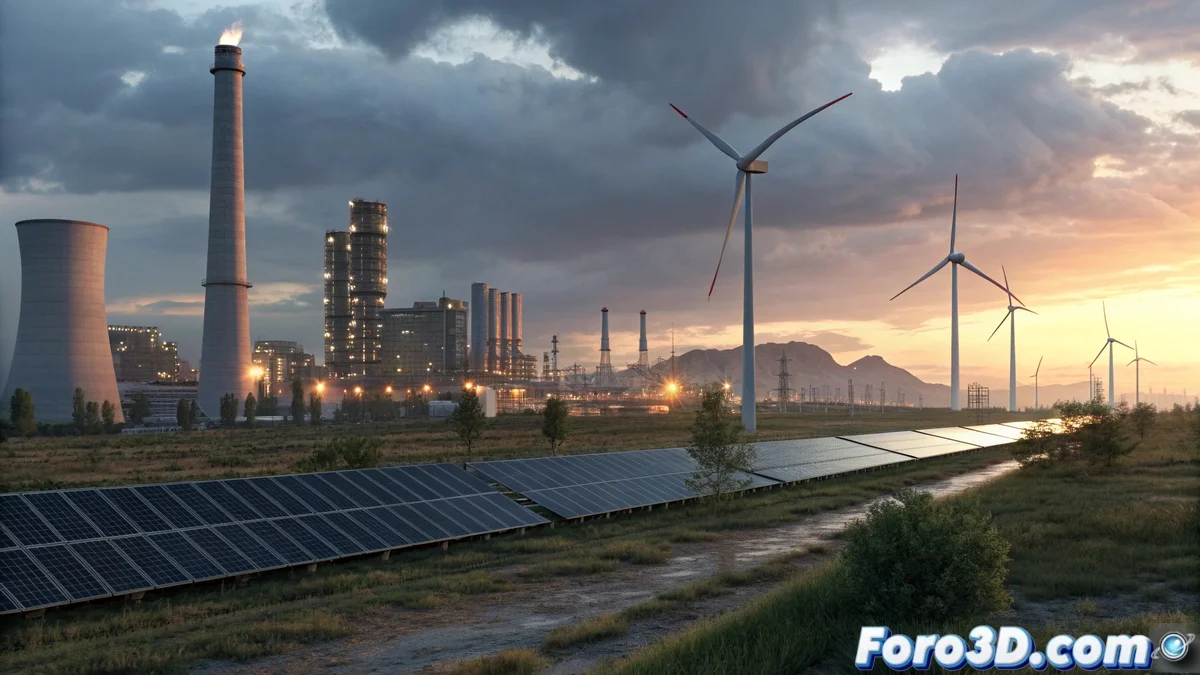
The global energy transition advances at two speeds: while some regions accelerate toward decarbonization, others intensify their dependence on polluting sources.
The Particular Case of China: A Trend Change?
China, historically the largest global emitter of greenhouse gases, begins to show encouraging signs with a notable stabilization in its pollution levels after decades of exponential growth. This change of course is fundamentally attributed to the massive implementation of renewable energies within its national energy matrix. 🇨🇳
Highlighted Achievements in China's Transition:- Consecutive records in installed solar and wind energy capacity
- Billion-dollar investments in sustainable infrastructures and smart grids
- Government policies favoring progressive decarbonization
Renewables: Engine of Change but with Pending Challenges
The exponential growth of clean energies in the Asian giant has proven to be a determining factor in containing emissions, although it presents important technical challenges. The characteristic intermittency of sources like solar and wind requires innovative storage and grid management solutions to ensure a stable supply. ⚡
The energy transformation not only reduces dependence on coal - traditionally dominant in China - but also drives technological innovation and generates skilled jobs in green sectors. However, the efficient integration of these variable sources into the national electricity system remains the main obstacle to accelerating complete decarbonization.
Final Reflections on the Global Landscape
The evident disparity between climate commitments and the reality of global emissions underscores the need to urgently accelerate concrete actions. While industry maintains polluting patterns, the transition to low-carbon economies requires coordinated efforts on an international scale, massive investments in clean technologies, and more ambitious energy policies. 🌱